
Population
~130,000 (Chiang Mai city); ~1.2 million (metro / Chiang Mai province ~1.8M)
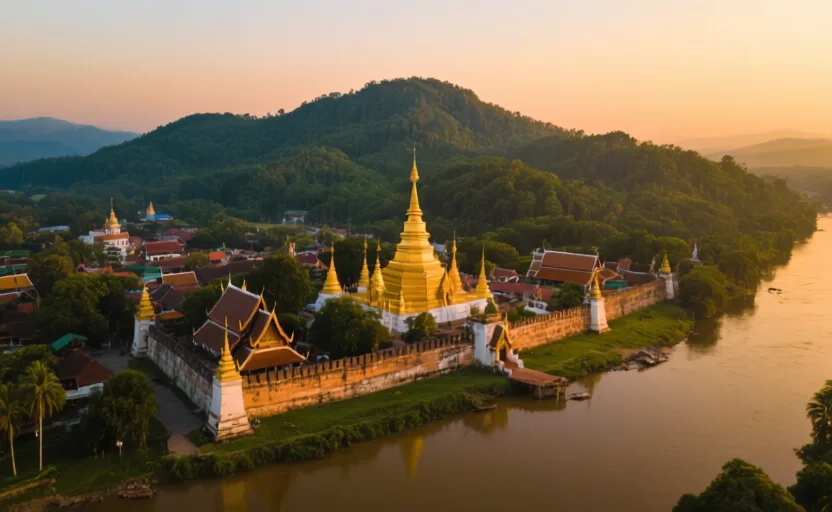 AI city illustration · Artistic impression
What people learn after moving
~130,000 (Chiang Mai city); ~1.2 million (metro / Chiang Mai province ~1.8M)
Thai (official); Northern Thai / Kham Muang (Lanna) dialect; English in tourism & nomad areas
Thai Baht (THB); approx 35 THB = US$1 (2026)
Indochina Time (GMT+7), no daylight saving
AI city illustration · Artistic impressionCost of living in Chiang Mai
Check your eligibility
Pick your passport to see entry rules and the long-stay routes we have researched.
Pick your passport to see whether you can enter Thailand — and what it takes to stay.
For most nomads in Chiang Mai the headline route is the DTV (Destination Thailand Visa), launched July 2024: a 5-year multiple-entry visa for remote workers, freelancers and 'soft power' applicants (Muay Thai, Thai cooking), ~10,000 THB fee, 500,000 THB savings proof, each stay up to 180 days and extendable once. Wealthier/skilled applicants take the 10-year LTR via BOI; long-term students take the Non-ED Thai-language route popular in Chiang Mai; over-50s take a retirement Non-O; employees take Non-B + work permit; short-stayers use visa-exempt entry, currently 60 days but mid-reform (Cabinet approved a cut to 30 days in May 2026, awaiting Royal Gazette publication — check before you fly). Whatever your visa, two ongoing duties apply, and they are different obligations owned by different people: the TM30 residence notification is your landlord's or accommodation operator's duty, while the 90-day address report (form TM47) is yours. Buy re-entry permits before leaving if your visa is single-entry — all handled at the Chiang Mai Immigration Office (now near the airport, not the old Promenada location).
Chiang Mai has no metro or commuter rail. Daily life runs on red songthaews (shared pickup-truck taxis you flag down, ~30-50 THB a hop inside the old-city moat and nearby Nimman), Grab and Bolt ride-hailing, a limited RTC city bus (~20-30 THB), tuk-tuks, and above all the motorbike/scooter — the way most nomads and locals actually move. The legal catch foreigners miss: riding a scooter requires a motorcycle-class licence. A car-only International Driving Permit does NOT cover a scooter, and police checkpoints around the moat and Nimman routinely stop foreigners and fine the unlicensed (~500 THB). Worse, travel/health insurers deny scooter-accident claims if you had no valid motorcycle licence or weren't wearing a helmet — and Thailand has one of the world's highest road-death rates. For stays beyond your IDP's validity, convert your home licence (or test) at the Chiang Mai Department of Land Transport (DLT) office on Hang Dong Road; car and motorcycle are separate licences, the first valid 2 years, then 5-year renewals.
Thailand has no central rule that bars foreigners from banking, but each branch sets its own bar. Officially the big banks want a long-stay visa and proof of a Thai address (a Certificate of Residence from Chiang Mai Immigration, or a work permit). In practice, the most reliable route in Chiang Mai is Bangkok Bank (the most foreigner-friendly) at a branch used to expats, or paying a visa agent ~1,500-3,000 THB to walk you in. You get a passbook savings account, a debit card (~200-300 THB/yr), a mobile app, and — crucially — PromptPay, the QR system Thailand runs on. Same-day if accepted.
You won't be on Thai universal care — as a foreigner you self-pay or insure. The upside: Chiang Mai's private hospitals (Bangkok Hospital, Chiang Mai Ram, Lanna, McCormick, CMU's Sriphat) are excellent and cheap by Western standards. The catch nobody warns you about is the burning season, when the air becomes a genuine health hazard.
Thailand has excellent, cheap 4G/5G, now effectively a two-player market — AIS (biggest, best coverage) and True (TrueMove H, which absorbed dtac in the 2023 merger) — plus the small state operator NT. A SIM takes minutes: passport registration is legally required and since August 2025 includes a live biometric face check, but shops handle it on the spot. Prepaid is what almost every nomad uses; a generous 30-day data package runs ~300-600 THB. Postpaid contracts are cheaper per-GB but need a long-stay visa/work permit and usually a Thai bank account for autopay. Home fibre is fast and cheap (~500-800 THB/month for 300-1000 Mbps), though many Chiang Mai condos and co-livings already include it.
Thailand taxes by residency, not visa: 180+ days in the country in a calendar year makes you a Thai tax resident, filing with the Revenue Department (rd.go.th) under a Thai Tax ID (TIN). Residents pay progressive PIT from 0% (first 150,000 THB / ~US$4,200) up to 35% (over 5M THB). The pivotal, fast-moving story is foreign-source income: since Order Por. 161/162 took effect 1 Jan 2024, money you earn abroad and remit into Thailand while resident is taxable in the year you bring it in — regardless of when it was earned, killing the old 'wait a year, bring it in tax-free' loophole. A 2025 Revenue Department proposal to exempt income remitted in the same year or the following year was floated but, as of mid-2026, was NOT enacted (it stalled amid political upheaval), so the stricter Por. 161/162 rule still governs your 2025 filing. Many Chiang Mai nomads underestimate this. Treaties and foreign tax credits can reduce or eliminate double taxation — get advice before remitting large sums.
Each guide has verified costs, timelines, required documents, and the non-obvious gotchas — sourced from official government pages. Last verified 2026-06-29.
Reading a list isn’t learning it. Globe Quest turns these into a trainer — hear each phrase spoken, drill them with spaced repetition, and get scored as you say them out loud.
Chiang Mai is Thailand's digital-nomad capital, and the Destination Thailand Visa (DTV, launched 2024) is the headline route: 5 years, multiple-entry, ~500,000 THB savings proof, up to 180 days per stay. Apply from OUTSIDE Thailand. Whatever your visa, two ongoing duties trip people up, and they are not the same thing: the 90-day address report (form TM47) is your own obligation, while the TM30 residence notification is the legal duty of your landlord or accommodation operator under s.38 of the Immigration Act — but a missing TM30 gates your extension, so it becomes your problem. The Chiang Mai Immigration Office moved from Promenada to Airport Road; file the 90-day report online to skip the queue.
For weeks in the dry season, agricultural and forest burning push Chiang Mai's PM2.5 to among the worst air quality on earth — a genuine cardiopulmonary risk, not an inconvenience. Long-term residents plan for it: a HEPA air purifier per room, N95/KN95 masks, a PM2.5 app (IQAir), and often the budget and flexibility to simply leave town for a month or two. Factor it into when you arrive and where you live.
Spend 180+ days in Thailand in a calendar year and you're a tax resident. Since Order Por. 161/162 (effective Jan 2024), foreign income you bring into Thailand while resident is taxable in the year you remit it — the old 'wait a year, bring it in tax-free' loophole is gone, and a 2025 proposal to soften it had not been enacted as of mid-2026. Many nomads underestimate this. Pre-2024 savings are generally exempt; keep records, get a TIN, and take advice before remitting large sums.
Thailand's '30-baht' universal scheme is for Thai nationals; foreigners self-pay or insure (employed foreigners join Social Security). The upside: Chiang Mai's private hospitals (Bangkok Hospital, Chiang Mai Ram, Lanna, McCormick, CMU's Sriphat) are excellent and cheap — a GP visit is ~500–1,000 THB. Many nomads use international plans (SafetyWing, Cigna) or local insurers (Pacific Cross, Luma); O-A retirement and LTR visas legally REQUIRE health cover.
Chiang Mai is one of the world's best-value cities: a central Nimman condo runs 10,000–20,000 THB, a bowl of khao soi 50–70 THB. Daily payment is by PromptPay QR (set it up with a Thai account) — few places want cash. Getting around means red songthaews, Grab, and the ubiquitous rented scooter (~2,500–3,500 THB/month). Critical: a scooter legally needs a motorcycle licence (a car IDP doesn't count), and crashing uninsured/unlicensed is the classic, ruinous nomad mistake — get the licence, wear the helmet.
Chiang Mai is the gentle, temple-dotted heart of the old Lanna kingdom: 300+ wats, a walkable moated Old City, mountains on the doorstep, and a famously relaxed 'sabai sabai' rhythm. Three seasons shape the year — cool and lovely (Nov–Feb), smoky (Feb–Apr), and green-and-rainy (May–Oct). Festivals are magical (Yi Peng lantern festival, Songkran). It rewards a slower, community-minded approach over big-city hustle.
A vast coworking scene — Punspace, Yellow, CAMP, Alt_ChiangMai, Heartwork
Chiang Mai is one of the world's original and largest digital-nomad hubs — cheap, connected and community-rich. The DTV visa, dense coworking, and a deep network of remote founders, freelancers and creators define the local economy.
Boutique hotels, trekking and tour operators, the Old City and Nimman F&B scene
A pillar of the Northern economy — temples, mountains, festivals and cuisine draw millions. Hospitality, guiding, F&B and wellness tourism offer abundant work and a common entry point for foreign residents.
San Kamphaeng / Bo Sang artisans — silver, silk, woodcarving, umbrellas, ceramics
Chiang Mai is Thailand's craft capital, with centuries-old Lanna artisan traditions and a thriving modern maker-and-design scene. Handicrafts, design studios and creative small businesses cluster here.
Chiang Mai University, international schools, and many licensed Thai-language schools
A major university city and education hub. International schools serve expat families, and licensed Thai-language schools underpin the popular ED-visa route for long-stayers.
Akha Ama, Doi Chaang, Ristr8to — Northern Thai specialty coffee and highland farms
The Northern highlands grow Thailand's best coffee (a Royal Project legacy), and Chiang Mai's third-wave café scene is world-class. Coffee, tea, fruit and flower agriculture anchor the rural economy.
Private hospitals, wellness retreats, spas, traditional Lanna medicine and massage
Cheap, high-quality private healthcare plus a deep wellness culture (retreats, yoga, traditional massage) make Chiang Mai a medical- and wellness-tourism magnet — and a growing employer.
Landmark · Doi Suthep mountain (west)
The golden mountaintop temple that watches over the city — a glittering chedi, 309 naga-staircase steps, and a panorama across the Chiang Mai valley.
Local tip: Go early morning (before the tour buses and the haze) or for the monks' chanting at dusk. Hire a songthaew from near Chiang Mai University, or ride up — the mountain road is gorgeous. Dress respectfully (shoulders and knees covered).
Culture · Old City (within the moat)
The walled, moated heart of old Lanna — dozens of wats within walking distance, crowned by the massive ruined chedi of Wat Chedi Luang and the revered Wat Phra Singh.
Local tip: Wander the quiet back lanes between the big temples; many wats welcome a respectful visit and some host 'monk chats' where you can talk with novices. Rent a bicycle to loop the moat. Cover up and remove shoes inside the viharns.
Neighborhood · West of the Old City
The trendy, leafy district that is digital-nomad ground zero — specialty coffee, coworking, design shops, craft beer, the Maya mall and the One Nimman plaza.
Local tip: Base yourself here as a newcomer: it's walkable, café-dense and English-friendly. Explore the numbered 'soi' lanes off the main strip for the best independent coffee and food. It's livelier (and pricier) than the Old City, with the city's best work-cafés.
Food · Old City / Ratchadamnoen Rd
The city's great street-food-and-craft theatre — the Sunday Walking Street fills the Old City with stalls, while the Warorot market and night bazaar run all week.
Local tip: Come hungry to the Sunday market: khao soi, sai ua (Northern sausage), mango sticky rice and roti, plus Lanna crafts straight from makers. Go early evening before the crush. The temple courtyards along the way host food gardens — a calmer place to eat.
Nature · ~2 hrs south-west (day trip)
Thailand's highest peak and a cloud-forest wonderland — twin royal pagodas, waterfalls, misty trails, hill-tribe villages and rice terraces.
Local tip: Go in the cool season for the wildflowers and the famous 'frost' at the summit; the Kew Mae Pan nature trail (open Nov–May, with a local guide) is the highlight. Combine with a stop at a Karen village coffee farm. Start early — it's a long, winding drive.
Nature · Mae Taeng / surrounding hills
The hills around Chiang Mai host genuine rescue sanctuaries (Elephant Nature Park and others) where you observe and care for elephants — no riding, no shows.
Local tip: Choose a true no-riding sanctuary (Elephant Nature Park is the pioneer) and book ahead. A day of feeding, walking and mud-bathing with rescued elephants is the most memorable thing many do here — and your money funds rescue, not exploitation.
Side-by-side cost of living, language, climate and careers — to help you choose.