
Population
≈1.49 million and slowly falling — Kobe has been overtaken by Fukuoka and Kawasaki and the city treats the decline as a policy problem
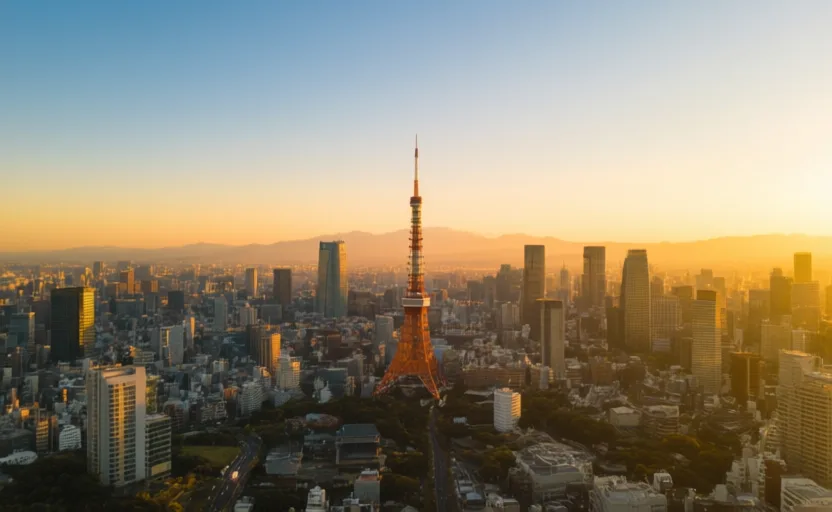 AI city illustration · Artistic impression
What people learn after moving
≈1.49 million and slowly falling — Kobe has been overtaken by Fukuoka and Kawasaki and the city treats the decline as a policy problem
Japanese in Kansai dialect, softer than Osaka's. Kobe has Japan's longest-established foreign communities, so English, Chinese and Korean are more present than the size suggests
Japanese yen (JPY)
JST (GMT+9) — Japan does not observe daylight saving
AI city illustration · Artistic impressionCost of living in Kobe
Check your eligibility
Pick your passport to see entry rules and the long-stay routes we have researched.
Pick your passport to see whether you can enter Japan — and what it takes to stay.
Japan hands you the residence card at the airport, which is efficient and misleading, because the card by itself unlocks nothing. What unlocks everything is the move-in notification filed at the correct one of Kobe's nine ward offices within fourteen days. Kobe's specific complications are geographic: the city is a narrow strip with a vast mountain ward behind it, and its immigration business is split between a district office on the waterfront and the regional bureau in Osaka.
Converting a foreign licence — gaimen kirikae — requires a knowledge check and, unless your country is on the exemption list, a practical test on a closed course judged on Japanese procedural form, and the whole procedure was tightened nationally on 1 October 2025. The three-month presence rule blocks more applications than the test does. Kobe adds two local realities: the licence centre is in Akashi rather than in the city, and the Rokkō range means that anyone living in the northern wards pays a tunnel toll or takes a long detour every single day.
Several major Japanese banks will not open a full account until you have six months of residence — internal policy rather than law, and never explained at the counter. Japan Post Bank and the online banks do not apply it, so they are almost every foreign resident's first account. Kobe's local institution is Minato Bank, the SMBC-group regional bank with the deepest Hyōgo network. And this is the one Japanese city where the advice to keep physical cash at home is not paranoia but a lesson learned in 1995.
Enrolment is a legal obligation. You pay 30% of most treatment at the counter and the scheme pays the rest, with a monthly ceiling that stops a serious illness becoming a financial one. Pension enrolment is equally compulsory and partly refundable if you leave Japan. Kobe adds a public health dimension nowhere else in this set has: this city's hillsides carry formal landslide hazard designations, its disaster medicine infrastructure was rebuilt around the 1995 experience, and knowing your designated evacuation site is treated here as basic adult competence.
Japanese mobile was expensive for years until government pressure produced low-cost sub-brands and a healthy MVNO market riding the same towers. You need a residence card and, for most postpaid plans, a Japanese bank account or a Japanese-issued credit card. Home fibre is fast and cheap, with the usual caveat about what actually reaches your flat. The Kobe-specific piece is the disaster layer: the 171 voice message dial and the carriers' emergency message boards exist in their current form because the phone network here collapsed under call volume in January 1995.
Most employees never file a return, because the employer's December year-end adjustment settles it. The two things that catch foreign residents everywhere in Japan are residence tax, assessed on last year's income and billed from the following June, and the non-permanent resident category that shields foreign income until it quietly expires. Hyōgo adds a wrinkle of its own: a small prefectural forest levy sits on the residence tax bill alongside the national forest environment tax, so a Kobe bill does not match a friend's in Osaka line for line.
Each guide has verified costs, timelines, required documents, and the non-obvious gotchas — sourced from official government pages. Last verified August 2026.
Reading a list isn’t learning it. Globe Quest turns these into a trainer — hear each phrase spoken, drill them with spaced repetition, and get scored as you say them out loud.
Kobe has nine wards and you must register at the one covering your address within fourteen days of moving in. That registration produces the jūminhyō certificate, starts your My Number, and is the precondition for health insurance, most bank accounts and a phone contract. Kita-ku is the trap: it covers the whole mountain hinterland including Arima Onsen, so a Kobe address can be forty minutes and a tunnel away from Sannomiya. Fourteen days is a statutory deadline.
Hyōgo, Osaka and Kyoto traditionally use hoshōkin — a large deposit, often three to six months — with a fixed shikibiki deduction taken out at the end, rather than Tokyo's separate shikikin and reikin. The Supreme Court has upheld shikibiki clauses where they are clearly stated and not excessive, so they are enforceable. Modern Kobe listings increasingly use the Tokyo format, so read which system you are being offered rather than assuming, and get the deduction in writing.
Japan's shin-taishin seismic standard applies to buildings whose construction confirmation was granted from June 1981, and a block completed in 1982 or 1983 may well have been approved under the old code. The 1995 earthquake struck this city directly and the difference in how the two generations of building performed is the reason the standard is trusted. A second line matters for wooden houses: the 2000 revision added foundation, ground survey and hold-down requirements after Kobe.
Jūminzei is assessed on the previous calendar year's income and billed from the following June, so your first year is nearly free and your second is the real number. Hyōgo adds a small prefectural forest levy on top of the standard prefectural portion, alongside the national forest environment tax introduced in 2024. Neither is large; both are visible on the bill and confuse people comparing it to a friend's in another prefecture.
If your employer runs shakai hoken it is handled for you. Freelancers, part-timers and anyone between jobs enrol in National Health Insurance and the National Pension themselves at the ward office, and back-payments can be demanded. The pension carries a lump-sum withdrawal claimable within two years of leaving Japan, worth a real sum after a few years, and it is forgotten by most people who leave.
Hankyu runs along the mountain side, JR takes the middle and is fastest — Sannomiya to Osaka in about twenty minutes on a special rapid — and Hanshin runs nearest the sea. Rents fall as you go downhill across a few hundred metres of the same neighbourhood. Working in Osaka while living in Kobe is entirely normal, but it does not make any of your administration Osaka's: your ward office, your health insurance and your residence tax stay in Hyōgo.
Kawasaki Heavy Industries, Mitsubishi Heavy Industries, Kobe Steel
Kawasaki Heavy is headquartered here and still builds submarines at its Kobe yard. Kobe Steel, aerospace components and rolling stock make this one of Japan's oldest industrial concentrations.
Kobe Biomedical Innovation Cluster, RIKEN, Sysmex
Port Island holds Japan's largest biomedical cluster, several hundred organisations deep, alongside RIKEN's supercomputer centre. Sysmex, headquartered in Kobe, is a global leader in haematology diagnostics.
P&G Japan, Nestlé Japan, Eli Lilly Japan
An unusual concentration of foreign companies' Japanese headquarters for a city this size — a legacy of the treaty port and of deliberate city policy. It is the main reason English-language corporate roles exist here at all.
ASICS, Onitsuka, Kobe's chemical shoe industry
ASICS began in Kobe in 1949 and is still headquartered here. Nagata ward's shoe manufacturing was devastated by the 1995 fires and has only partly recovered.
Nada sake breweries, UCC Ueshima Coffee, Morozoff, Juchheim
The Nada district produces a large share of all Japanese sake using the local Miyamizu water. Japan's Western confectionery and coffee industries also began here with the opening of the port in 1868.
Port of Kobe, Hanshin Port operators, Kobe Airport
Kobe was among the world's busiest container ports until the 1995 earthquake destroyed the quays and the traffic went elsewhere permanently. It remains a major Japanese port and the city has never stopped trying to rebuild the position.
Neighborhood · Chūō-ku, on the slope above Sannomiya
The hillside of Western merchant houses built after the port opened in 1868, still lived in as well as visited.
Local tip: Most of the paid ijinkan interiors are thin. The free things are better: the walk itself, the views back down over the port, and the Kobe Mosque on Nakayamate-dōri — built in 1935, Japan's oldest, and standing through both the 1945 firebombing and the 1995 earthquake.
Food · Chūō-ku, between Motomachi and the water
Japan's most compact Chinatown — three short streets of street food descended from the port's nineteenth-century Chinese community.
Local tip: Eat standing at the stalls rather than sitting down in the restaurants; the buta-man and the fried dumplings are what people actually queue for. Go on a weekday, because at weekends it is genuinely impassable.
Landmark · Chūō-ku waterfront
The port park with the tower and the maritime museum, and a preserved stretch of quay that was never repaired.
Local tip: Sixty metres of the wharf have been left exactly as the 1995 earthquake left them — buckled, tilted, lamp posts still leaning. It is free, it takes ten minutes, and it explains why every conversation about buildings in this city starts with what year they were approved.
Culture · Nada and Higashinada wards, along the Hanshin line
Five brewing villages producing a large share of Japan's sake, using the mineral-rich Miyamizu water discovered here in the 1840s.
Local tip: Several breweries run free museums with tasting at the end — Hakutsuru, Kiku-Masamune and Sawanotsuru are all within a walk of each other from Hanshin Ōishi or Uozaki. Most Kobe residents have never done the walk. Go in winter when the brewing is actually happening.
Nature · Directly above the city
A 900-metre ridge along the whole length of Kobe, with waterfalls, a herb garden and one of Japan's classic night views.
Local tip: Nunobiki Falls is a fifteen-minute walk from Shin-Kobe Shinkansen station — you can arrive by bullet train and be at a waterfall in a gorge before your bag is unpacked. Kikuseidai on the ridge is the view everyone photographs; the ropeway from Shin-Kobe is the least effort.
Nature · Kita-ku, over the mountain — still Kobe city
One of the oldest hot spring towns in Japan, with iron-red kinsen and clear ginsen waters, in a valley of old wooden inns.
Local tip: Almost nobody realises Arima is administratively part of Kobe. Thirty minutes from Sannomiya by subway and bus, or over the ridge by ropeway from Rokkō. Day-use bathing at most inns costs a fraction of a night's stay, and the two municipal bathhouses are cheaper still.
Side-by-side cost of living, language, climate and careers — to help you choose.