
Population
≈2.4 million in the city; ≈3.9 million across the metropolitan region — Brazil's largest Northeastern capital
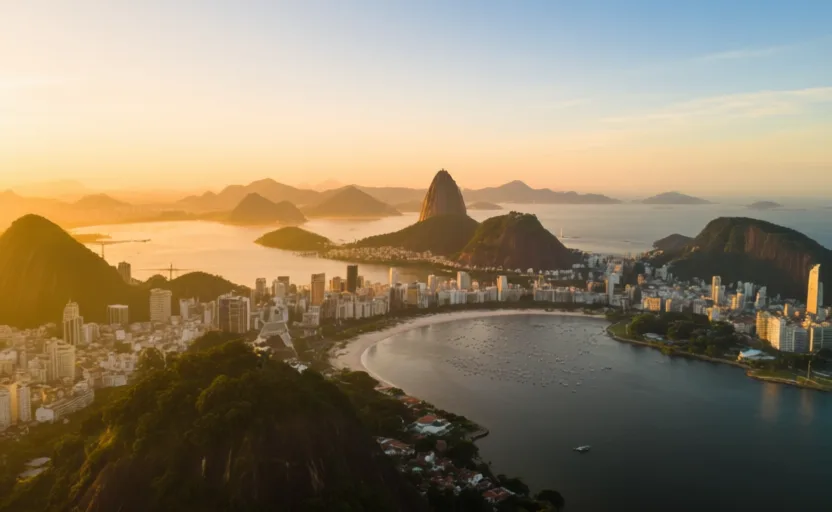 AI city illustration · Artistic impression
What people learn after moving
≈2.4 million in the city; ≈3.9 million across the metropolitan region — Brazil's largest Northeastern capital
Portuguese, with a vocabulary and cadence noticeably distinct from the south and a substantial Yoruba layer through Candomblé
Brazilian real (BRL)
BRT (GMT−3) — no daylight saving since 2019
AI city illustration · Artistic impressionCost of living in Salvador
Check your eligibility
Pick your passport to see entry rules and the long-stay routes we have researched.
Pick your passport to see whether you can enter Brazil — and what it takes to stay.
Register with the Polícia Federal and collect your CRNM within 90 days of entering Brazil on that visa — or within 30 days of publication in the Diário Oficial where residence was authorised from inside the country. The CPF comes before everything and has no immigration prerequisite. What is locally relevant is capacity: the Bahia superintendency at Água de Meninos handles migration registration for the whole state, the largest in the Northeast, so slots are competed for by applicants travelling in from across an area larger than France.
A foreign licence is good for a maximum of 180 days of regular stay, on the basis of the road traffic conventions Brazil has ratified and of reciprocity, in practice carried with an International Driving Permit. Conversion through DETRAN-BA then requires a sworn translation, a medical fitness examination and a compulsory psychological assessment that nobody from Europe or North America expects. What is locally distinctive is the terrain: Salvador is built on a 70-metre escarpment with an upper and a lower city, the road network is a set of avenidas de vale running along the valley floors, and the useful mental map is vertical rather than a grid.
The CPF is the hard gate. Past it, digital banks onboard foreigners in days where traditional branches want documents you will not have for months. Pix, the central bank's free instant transfer rail, is what you use daily — and in Salvador it is what the acarajé stand, the beach vendor and the man who fixes your air conditioning all take. The other half of Brazilian payments is the boleto, a barcoded payment slip still used for rent, condomínio, IPTU and many services.
SUS will treat you free whatever your paperwork says, and registering at the health unit covering your address is what puts you inside it. Most professionals also carry a private plano de saúde, and the thing that determines its value is which hospitals it admits you to. What is locally distinctive is the disease calendar: Salvador is hot and humid all year with a wet season from April to July, and Aedes-borne dengue, chikungunya and Zika are a standing municipal public-health concern rather than an exotic risk — Salvador is where the Zika epidemic was first characterised in 2015.
Vivo, Claro and TIM all cover the city and the choice is essentially a price decision. Fixed broadband is the part that needs care: coverage in Salvador is uneven street by street because of the terrain and the age of the building stock, and the condominium rather than the street decides which operators can actually reach your flat. In a city with Brazil's highest lethal-violence rate, the single highest-value telecom action is registering on Celular Seguro before anything happens.
You become a Brazilian tax resident immediately on arrival with a permanent visa or a local employment contract, or — on a temporary visa — on the day you complete 184 days of presence, more than 183, inside a twelve-month period, and residence means worldwide income. Foreign-source income is paid monthly through carnê-leão, not settled at filing. The municipal layer is where cities diverge, and Salvador diverges in name as well as rate: the transfer tax here is the ITIV, Imposto sobre a Transmissão Inter Vivos, levied at 3% of the transaction value with a reduced 1% band for qualifying popular housing.
Each guide has verified costs, timelines, required documents, and the non-obvious gotchas — sourced from official government pages. Last verified August 2026.
Reading a list isn’t learning it. Globe Quest turns these into a trainer — hear each phrase spoken, drill them with spaced repetition, and get scored as you say them out loud.
Receita Federal issues CPFs online and through consulates to people with no visa, no address and no presence in Brazil. Since 2023 it is the single identification number across every federal, state and municipal database. Bank account, phone chip, lease, health card, gym membership: all gated on it. Landing in Salvador without one converts your first fortnight from a checklist into a dependency chain where every item waits on the same queue.
The clock starts at your arrival stamp under that visa, not at issue. The Bahia superintendency in Salvador covers the largest state in the Northeast — roughly fourteen million people across an area bigger than France — from one building at Água de Meninos, and applicants travel in from Feira de Santana, Vitória da Conquista and the far west to use it. Book in your first week and move the appointment later if documents slip; the reverse order does not work.
Ipea's Atlas da Violência dos Municípios put Salvador at 66.4 homicides per 100,000 residents for 2022 — the worst figure of any Brazilian state capital, against 8.9 in Florianópolis and 21.0 in Curitiba in the same table. That is a citywide average and it is not evenly spread: the tourist and middle-class corridor along the Atlantic coast behaves very differently from the periphery. It should shape which neighbourhood you rent in, how you move around at night and whether you own a visible car, and it should not stop you coming — but you should arrive knowing the number rather than discovering it.
Salvador's wet season runs roughly April to July and is the reverse of what arrivals from the south of Brazil or the northern hemisphere expect. December and January are hot, bright and dry; May and June are grey, humid and genuinely wet, with days of steady rain. There is no cold season at all — the range across the year is roughly 23 to 31 degrees. Plan a viewing schedule and a holiday around that, not around a European calendar.
Salvador runs one of the largest street carnivals in the world along fixed circuits through Barra, Ondina and Campo Grande. Roads close, buses reroute, rents on the circuits spike, and if you live on one you will not sleep. This is wonderful if you came for it and a serious operational problem if you did not know your street was on a circuit. Ask about it before signing a lease, whatever month you arrive in.
Two lines, 21 stations and about 38 km, run by CCR Metrô Bahia with integrated bus terminals — clean, air-conditioned and genuinely useful if your commute maps onto it. It does not reach Barra, Rio Vermelho or most of the coastal strip where foreigners tend to live. Check your actual commute against the map before you assume the metro solves the transport question; for a lot of people here it does not.
BYD, and the supplier network at Camaçari
BYD opened its Camaçari complex in the Salvador metropolitan region in October 2025 on the site Ford abandoned in 2021, an investment reported at around R$5.5 billion across cars, bus and truck chassis, and battery-input processing. It is the single biggest change to the region's industrial base in a decade.
Braskem, Unipar, Acelen (Mataripe refinery), Deten
The Camaçari petrochemical complex, opened in 1978, is one of the largest integrated industrial poles in the southern hemisphere and still the backbone of Bahia's formal industrial employment. Engineering and process roles here have nothing to do with the tourist city.
Hotel groups along the Orla, carnival production companies, cruise operators
Salvador is one of Brazil's principal domestic and international leisure destinations, and carnival alone runs an events industry of production, security, logistics and licensing that employs seasonally at very large scale.
Axé and pagode labels, carnival bloco organisations, film and TV production
Salvador invented the trio elétrico and exports axé, pagode baiano and samba-reggae nationally. The creative sector here is a real employer rather than a cultural footnote, and it is unusually open to outsiders who can do production work.
Government of Bahia, UFBA, UNEB, Hospital das Clínicas, Sarah Kubitschek
The state government and UFBA anchor a large administrative and academic sector. Note that Brazilian nationality is a statutory requirement for the civil service, with a narrow exception for teaching and research posts at federal universities and research institutes.
Wilson Sons and Tecon Salvador, Porto de Aratu-Candeias operators
Salvador's container terminal and the bulk port at Aratu handle the state's chemical, agricultural and manufactured exports. The BYD plant adds substantial new volume, and logistics is one of the region's steadier white-collar employers.
Culture · Cidade Alta, historic centre
The UNESCO-listed colonial core — pastel townhouses, the gilded interior of São Francisco, and the drumming of Olodum on Tuesday nights.
Local tip: Pelourinho itself empties of locals outside events. Walk north along Rua Direita do Santo Antônio instead: the same architecture, working guesthouses and bars, residents rather than tour groups, and the bay view from the fort at the end.
Nightlife · Coastal, mid-city
The bohemian quarter — Largo da Mariquita and Largo de Santana, the acarajé stands, live music and the city's densest concentration of bars.
Local tip: The two acarajé stands at Largo de Santana are the famous ones and they are genuinely good, but the queue is shortest before six. The 2 February Iemanjá festival starts here at dawn and is the most extraordinary thing in the Salvador calendar after carnival.
Landmark · Between Cidade Alta and Cidade Baixa
A 1873 public lift dropping 72 metres between the two halves of the city, landing beside the crafts market on the bay.
Local tip: Ride it for the view down onto the Baía de Todos os Santos, then keep walking to the Mercado Modelo's lower level and the ferry terminal. Locals use the lift as ordinary transport, which is the point — it costs a few centavos, not a ticket price.
Nature · Across the bay, by ferry from Bom Despacho
The largest bay on the Brazilian coast, with an island of beaches, mangroves and quiet fishing villages an hour from the centre.
Local tip: Take the lancha from the Terminal Náutico rather than the car ferry if you are on foot — it is faster and the approach to the island is the better view. Go on a weekday; Bahians fill it at weekends.
Nature · North coast, about 80 km
A former fishing village with the Projeto Tamar sea-turtle station, and the start of the protected coastline running north to Sergipe.
Local tip: Everyone stops at Praia do Forte. Keep driving another forty minutes to Imbassaí or Praia do Forte's northern neighbours and the beaches are the same water with a tenth of the people.
Nature · Central Salvador
A lake ringed by sculptures of the orixás, beneath the Arena Fonte Nova, and the city's largest inner park up on the ridge.
Local tip: The Dique is best at sunset when the orixá sculptures are lit and the running track fills. Parque da Cidade on a Sunday morning is where Salvador actually exercises — it is free, safe, shaded and almost never mentioned to visitors.
Side-by-side cost of living, language, climate and careers — to help you choose.