
Population
~15.7 million (metro) — Türkiye's largest city
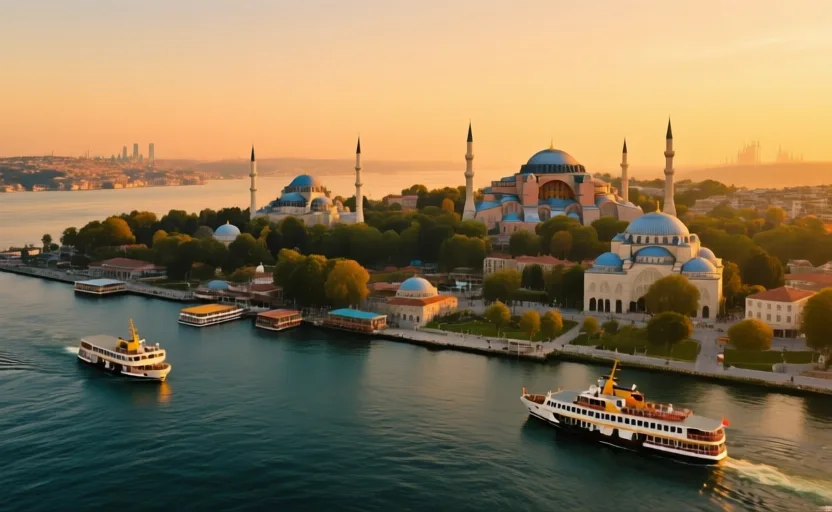 AI city illustration · Artistic impression
What people learn after moving
~15.7 million (metro) — Türkiye's largest city
Turkish (English common in expat/tourist areas)
Turkish Lira (TRY, ₺) — high inflation
TRT (GMT+3), no daylight saving
AI city illustration · Artistic impressionCost of living in Istanbul
Check your eligibility
Pick your passport to see entry rules and the long-stay routes we have researched.
Pick your passport to see whether you can enter Turkey — and what it takes to stay.
Most Western nationals enter Türkiye visa-free for 90 days in any 180; anything longer requires a residence permit (ikamet izni), applied for online via e-İkamet. The realistic civilian route is the short-term permit (kısa dönem), but the rules tightened sharply: purely touristic applications and renewals are now routinely refused, and Istanbul has CLOSED DISTRICTS (kapalı mahalle) where the foreign-resident share is too high and no new foreigner may register an address. Your lease must sit in an OPEN neighbourhood or the application is refused outright. Once approved you receive a Yabancı Kimlik Numarası (YKN) — an 11-digit ID starting with 99 — which is the master key to a bank account, tax number, SIM card, healthcare and the e-Devlet government portal.
Most expats don't drive in Istanbul — the public-transport network is vast and the traffic is genuinely among the world's worst. One tap-and-go İstanbulkart covers the metro, tram, Metrobüs (BRT), the under-Bosphorus Marmaray rail, city buses, funiculars and the famous cross-continent ferries, so for daily life you rarely need a car. If you do want to drive, you can use your home licence (with a notarized Turkish translation or an International Driving Permit) for up to 6 months. After that — or once you hold a residence permit — you must exchange it for a Turkish licence (sürücü belgesi), and thanks to reciprocity agreements most nationalities do this with no driving test. Türkiye drives on the right.
In Türkiye the order is everything: first get a free Turkish tax number (vergi kimlik numarası), which you can do online with just your passport before you even have residency — no account opens without it. Then you open a bank account in person, typically needing your passport, that tax number, proof of a Turkish address and a Turkish mobile number; since 2025-26 banks tightened KYC/AML and many branches now also want a residence permit (ikamet) or foreigner ID (YKN), though this still varies by bank and even by branch. Garanti BBVA and İş Bankası are the names most often cited as foreigner-friendly. Once in, the bigger money skill is not holding idle lira: with high inflation and the lira sliding, most expats keep savings in USD/EUR (döviz) accounts and only convert to lira what they need to spend.
In your first year you almost certainly use private health insurance: a compliant policy is mandatory to get (and renew) a residence permit, and basic plans are cheap by Western standards. If you work for a Turkish employer you're enrolled in SGK (public insurance) automatically from day one; otherwise you can only opt into SGK voluntarily after holding a residence permit for one full year. SGK gives near-free access to public hospitals plus SGK-contracted private ones, but public facilities are crowded with real language barriers. Istanbul's private hospitals (Acıbadem, Memorial, American Hospital, Liv, Medical Park) are modern, often JCI-accredited and English-speaking — and the same system makes the city a world-class, low-cost medical-tourism hub for dental, hair transplants, eye and cosmetic surgery.
Local SIMs are cheap and 4.5G is excellent, but the killer issue is the handset rule: a foreign phone's IMEI works on Turkish networks for only ~120 days, then gets permanently blocked unless you pay a steep government registration fee (over 54,000 TL / about US$1,260 in 2026). Land connected with a data-only eSIM (Airalo/Holafly), but buy it BEFORE you fly — BTK has blocked most foreign eSIM apps inside Türkiye since mid-2025. For a real Turkish number, buy a prepaid SIM at an official carrier store with your passport; a tourist welcome pack runs roughly US$30-55 for ~20 GB. Turkcell has the widest, strongest coverage (and the highest prices); Vodafone and Türk Telekom are cheaper. 5G went live nationally in 2026 and is rolling out across Istanbul.
Your vergi kimlik numarası (tax number) is the free, passport-only gateway to banking, property, and utilities in Istanbul — you can get it online in minutes before you even have a residence permit. Once you have a residence permit, your foreigner ID number (YKN) doubles as your tax number. The big line to watch is residency: spend more than ~6 months (183 days) in a calendar year, or hold a legal residence here, and Türkiye taxes your WORLDWIDE income (non-residents are taxed only on Turkish-source income). Employees have tax withheld at source through payroll (stopaj) and usually never file; freelancers and remote workers typically open a sole proprietorship (şahıs şirketi), keep books via an accountant, charge/file VAT, and pay quarterly provisional tax.
Each guide has verified costs, timelines, required documents, and the non-obvious gotchas — sourced from official government pages. Last verified June 2026.
Reading a list isn’t learning it. Globe Quest turns these into a trainer — hear each phrase spoken, drill them with spaced repetition, and get scored as you say them out loud.
One rechargeable İstanbulkart covers the metro, trams, buses, the Marmaray under-Bosphorus rail and the iconic ferries. The ferry between the European and Asian sides is the city's best-value joy — commute by boat with tea in hand. Buy and top up the card at kiosks and station machines.
Turkish lira inflation is high, so prices change fast and furnished flats are often quoted in USD/EUR. Keep savings in dollars/euros and convert as you spend; exchange offices (döviz) give better rates than airports. Many places take cards, but carry some cash for small vendors and tea.
Anything over 90 days needs a residence permit applied for via the e-İkamet system. Critically, many Istanbul districts are CLOSED to new foreigner registration (they hit the foreign-population cap), so your address must be in an open district or the application fails. Get the ikamet right and your foreigner ID + tax number follow.
Istanbul sits near a major fault and a significant quake is expected. Favour newer or retrofitted buildings (post-2000, built to updated codes), ask about the building's deprem (earthquake) compliance, and know your exits. It's the single most important safety question when renting.
Hospitality is serious here — you'll be offered çay everywhere, and refusing isn't rude but accepting builds rapport. In the Grand Bazaar and markets, haggling is expected and friendly; in shops and supermarkets, prices are fixed. A little Turkish goes a long way.
Istanbul traffic is among the world's worst, and crossing between the European and Asian sides at rush hour is painful. Live near where you work or study, lean on the Marmaray and metro for cross-Bosphorus trips, and embrace the ferries — often faster and far nicer than a car or bridge.
Getir, Trendyol, Peak Games, Dream Games, Insider
Türkiye's startup engine — home to several gaming and e-commerce 'unicorns' and a fast-growing tech scene.
Hotels, airlines, travel, F&B
One of the world's most-visited cities; tourism and hospitality are huge employers.
Banks, Papara, fintechs
Türkiye's financial capital, with major banks and a lively fintech sector born of inflation-era innovation.
Garment, automotive, white goods
A manufacturing and export powerhouse — textiles, cars and appliances flow to Europe and beyond.
TV (dizi), advertising, design
Turkish TV series (dizi) are a global export; Istanbul is the creative and media hub of the region.
Shipping, Turkish Airlines, freight
The literal bridge between Europe and Asia — a logistics, aviation and trade crossroads.
Landmark · Fatih (Old City)
The world-wonder Hagia Sophia faces the Blue Mosque across a park, with Topkapı Palace and the Basilica Cistern nearby.
Local tip: Go at opening to beat crowds and heat; visit the Blue Mosque outside prayer times and dress modestly (scarves provided).
Culture · Fatih
One of the world's oldest covered markets — thousands of shops of carpets, lamps, gold and spices.
Local tip: Haggle with a smile and compare a few stalls; the Spice Bazaar near Eminönü is smaller, tastier and less overwhelming.
Nature · The Bosphorus
A public ferry up the strait passes palaces, fortresses and waterfront mansions between two continents.
Local tip: Take the cheap public ferry (İstanbulkart), not a pricey tour boat; stop at Ortaköy for a waterfront kumpir (loaded baked potato).
Landmark · Beyoğlu
A medieval tower with panoramic views above the hip cafés, galleries and design shops of Karaköy.
Local tip: Skip the tower queue and get the same view with a coffee from a rooftop nearby; wander Karaköy's backstreets for the best brunch.
Food · Kadıköy (Asian side)
The buzzing market, meyhane (taverns) and seaside Moda promenade — real, secular, local Istanbul life.
Local tip: Do the Kadıköy food market then walk the Moda coast at sunset; the ferry over from Karaköy is half the fun.
Culture · Fatih
Steep lanes of rainbow-coloured houses, antique shops and Greek-Orthodox and Jewish heritage.
Local tip: Come for golden-hour photos and a coffee; it's photogenic but residential, so be respectful around homes.
Side-by-side cost of living, language, climate and careers — to help you choose.