Start with geography
Too much water, then none
Mainland Southeast Asia has a monsoon climate: a wet season that delivers most of the year's rain in a few months, and a dry season that delivers almost none. For farming, the problem is not the total. It is the distribution.
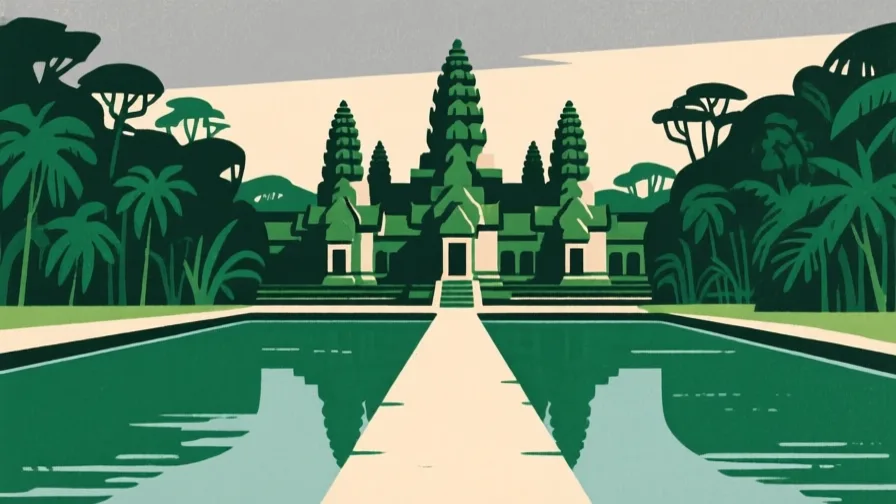
If you can store wet-season water and release it in the dry season, you can grow more than one crop a year on the same land, and support far more people than the rainfall pattern would otherwise allow. Angkor's builders did exactly that, at very large scale, on a plain north of the Tonlé Sap lake.
On the map
Answer the check to continue.
Sources for this chapter
- UNESCO · AngkorUNESCO World Heritage Centre · checked 2026-09-07