Start with geography
The river turns north
The Ganges runs broadly south-east across the northern Indian plain. At Varanasi it swings, and for a stretch runs north. In a tradition where the river's source lies in the Himalaya to the north, a reach that appears to flow back toward its source is read as significant.
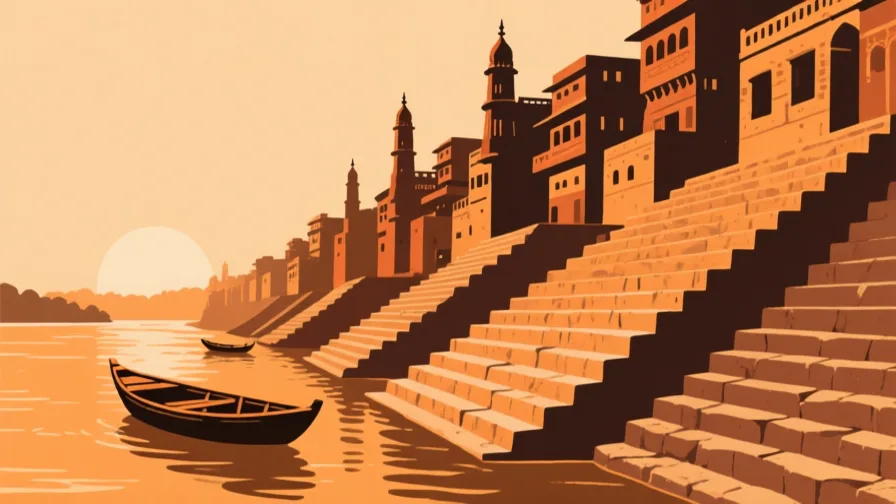
The city is built along the outer, higher, western bank of that bend, which is where the stone steps — the ghats — descend to the water in a nearly continuous line for several kilometres. The opposite bank is low sand, flooded in the monsoon, and largely empty. The asymmetry is not planning taste. It is what a river does to its banks.
On the map
Answer the check to continue.
Sources for this chapter
- NASA Earth Observatory · Flooding on the Ganges RiverNASA Earth Observatory · checked 2026-09-07