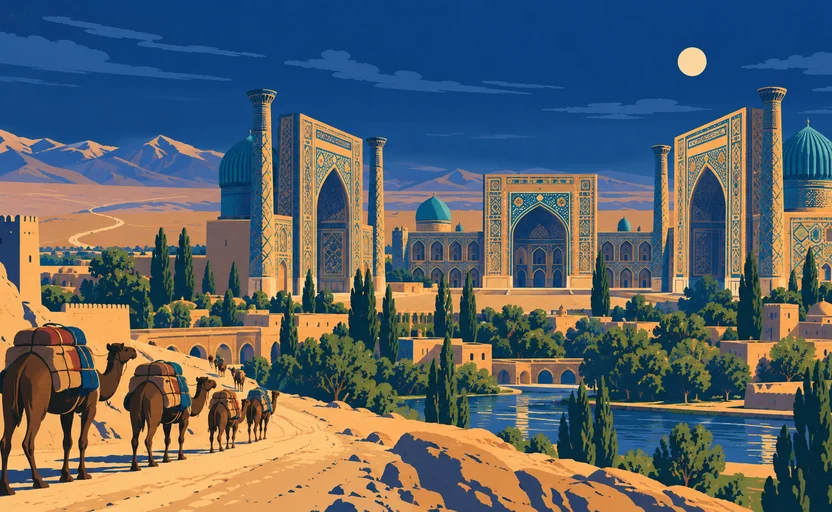
 Samarkand · AI illustration, not a photograph
Journey · 5 stops
Routes, and the towns that taxed them
How places with nothing to sell got rich on other people's cargo.
What does a place actually need in order to profit from trade it does not produce?
What you should be able to do after this: Identify the recurring requirements of an entrepôt — a chokepoint or transfer point, water and supplies, security, and neutrality enough for rivals to use it — and see why that advantage is never permanent.
Themes: Trade & exchange · Seas & navigation · How cities work
- Stop 1 · Samarkand · Central AsiaAn oasis is a decisionWhy a city in a desert became one of the busiest places in Asia.0 of 4 chapters read · about 10 minSamarkand · AI illustration, not a photograph
Samarkand's advantage was water in an arid corridor: a caravan route is a chain of places where you can drink. Follow the corridor east to the valley the routes are named from.
- Stop 2 · Xi'an · East AsiaThe valley that kept being the capitalChang'an, the Wei river, and the eastern end of the overland routes.0 of 4 chapters read · about 9 min
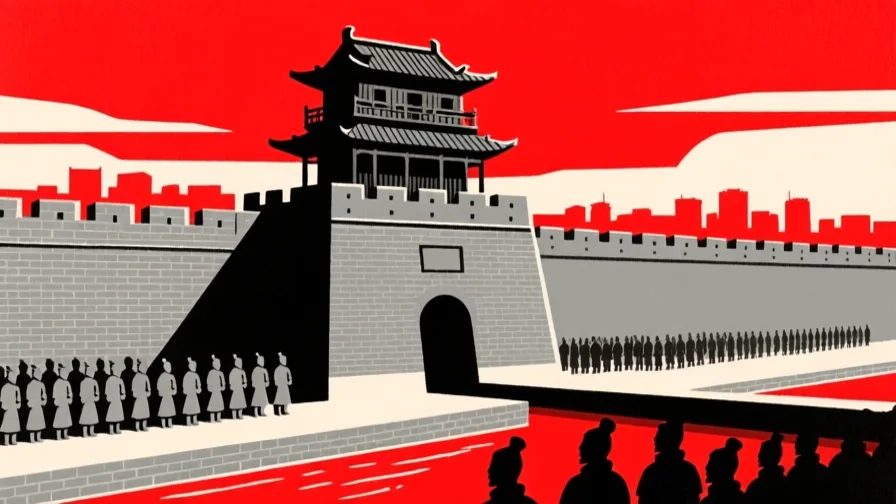 Xi'an · AI illustration, not a photograph
Chang'an was a capital as well as a terminus, which changes the incentives — it wanted to control the route, not just profit from it. Now cross to a transfer point with no empire behind it at all.
- Stop 3 · Timbuktu · AfricaWhere the river meets the desertA port for camels, and a city that measured its wealth in manuscripts.0 of 4 chapters read · about 10 min
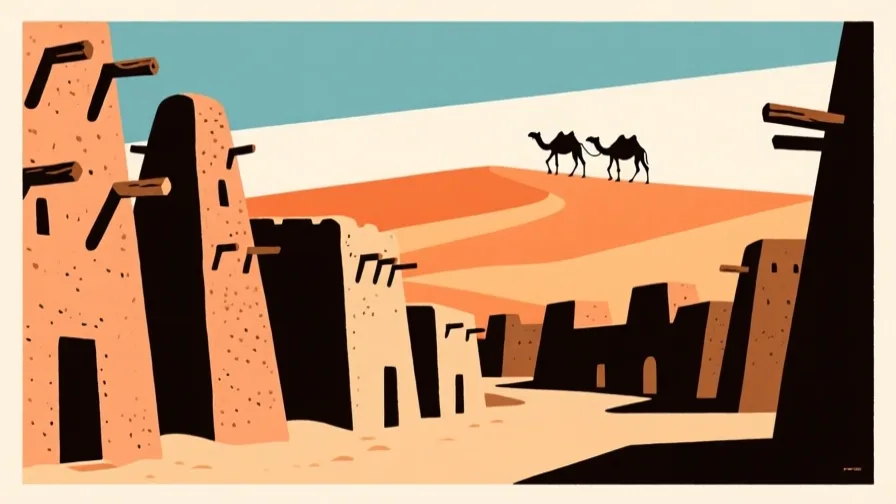 Timbuktu · AI illustration, not a photograph
Timbuktu shows the same logic on a desert edge instead of a mountain one, and adds something the others share: where goods move, texts and ideas move on the same animals. Venice made that its whole business model.
- Stop 4 · Venice · EuropeA city that chose the waterWhy a lagoon was safer than land, and what that costs now.0 of 4 chapters read · about 9 min
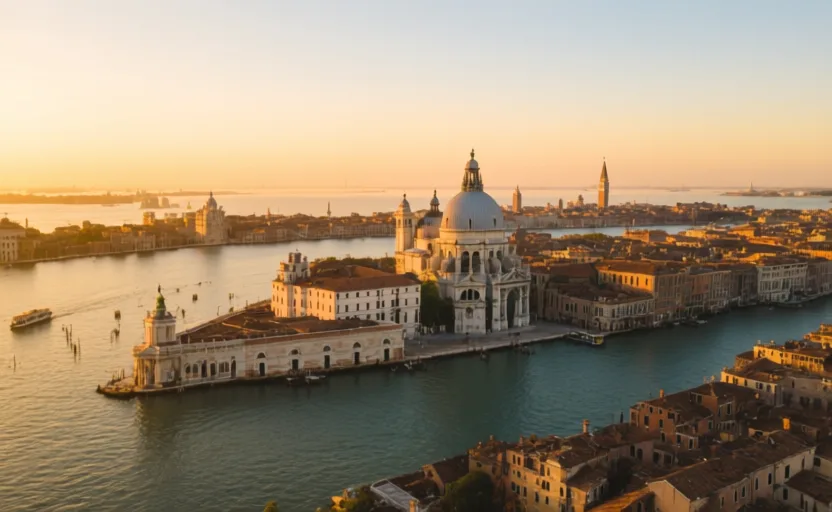 Venice · AI city illustration · Artistic impression
Venice lost its advantage when a sea route opened that did not pass through it. Singapore is the modern version of the same bet — and is still, so far, winning it.
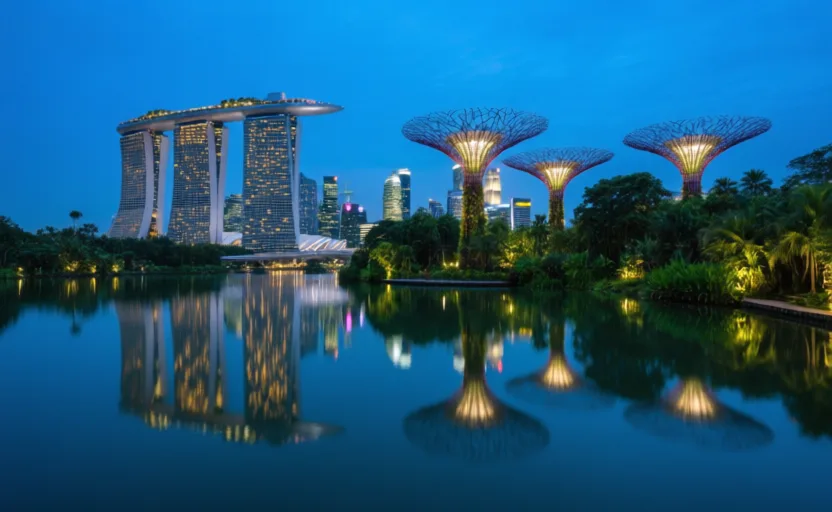
Where this ends up
The synthesis is hidden until you have read the stops — it gives away the pattern the journey is asking you to notice. 5 to go.
Assembled by Globe Quest editorial, last reviewed 2026-09-07. Each stop carries its own sources.