 Globe Quest
 Human Quest · LearningSign in
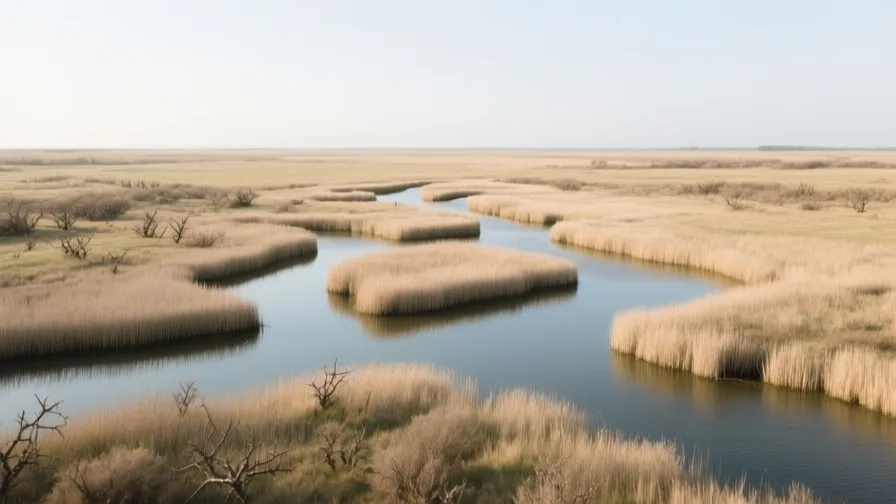 Botswana · AI landscape illustration · Artistic impression
Country · Africa
Botswana
Saved in this browser — no account needed. Sign in later and it comes with you.
Where it is
Botswana is a landlocked tableland of about 582,000 square kilometres, flat to gently undulating, with roughly 70 per cent of it under the Kalahari. The highest point, Monalanong Hill, reaches only about 1,490 metres, and the lowest, where the Limpopo meets the Shashe, is 513 metres. Rain is short and seasonal and falls mostly in the north and east, so most surface rivers stop flowing in the dry months. Water is the organising fact: people live where it is, in the south-east and east, and about three-quarters of the people and livestock depend on groundwater, much of it from boreholes.
The land and water around it
The Kalaharidesert
A vast sandy basin that covers most of the country, especially the centre and south-west. It is semi-arid, not true desert, with grassland and scrub. Its dry southern rivers, the Molopo and Nossob, have not been recorded reaching the Orange since the 1880s.
The Okavango Deltadelta
A river that never reaches the sea: the Okavango spreads across the Kalahari in the north-west into channels, lagoons, islands and seasonal wetlands, among the biggest inland deltas anywhere. It supports much of the country's wildlife, and environmentalists report concern about its drying under heavy livestock grazing.
The Makgadikgadi Panslake
Salt pans in the north-centre, the largest being Nwetwe, Sua and Nxai. They are the remains of a vast palaeolake, Lake Makgadikgadi, which began to shrink about 50,000 years ago, and early people lived around its shores.
Its history, in short
The Kalahari was home to San and Khoe hunter-gatherers for tens of thousands of years, and from about 2,000 years ago herding, pottery and farming arrived with new peoples. Bantu-speaking Kalanga and Tswana settlers came in waves, bringing iron and copper tools, and trade with the Indian Ocean reached the region by the seventh century. Cattle became the measure of wealth, and Tswana society was organised into chiefdoms under dikgosi who consulted their people in the kgotla. In 1885 Britain declared the Bechuanaland Protectorate, which the chiefs welcomed as protection against German and Afrikaner expansion and against Cecil Rhodes; three of them went to London in 1895 to resist transfer to his company. Botswana was one of the poorest countries in Africa at independence in 1966, and the discovery of diamonds in 1967 changed that. It has held multiparty elections without interruption since, and the long-ruling party lost power in 2024.
Timeline
Dates are shown on a timeline rather than as changing shapes on the map. The globe draws modern boundaries only, and tinting a modern outline to stand for a historical one would state something we cannot source.
Classical world
c. AD 400
Tswana ancestors arrive
Bantu-speaking Kalanga settle around AD 200 and the ancestors of the Tswana about two centuries later, bringing iron and copper tools and permanent villages.
Post-classical world
11th century
The Toutswe cattle chiefdoms
Having arrived in the 11th century, the Toutswe grow into the dominant power of the region on the strength of their herds, with main villages such as Toutswemogala ruling smaller ones. The culture declines in the 13th century, but the prestige of cattle remains.
Approximate dateWikipedia
Industrial & imperial
1885
Bechuanaland Protectorate
Britain declares a protectorate over the Tswana lands, partly to block German and Afrikaner expansion, and the chiefs largely support the arrangement. The chiefs keep considerable authority.
Well attestedWikipedia1895
Three chiefs go to London
Khama III, Sebele I and Bathoen I persuade the British government not to hand the protectorate to Rhodes's British South Africa Company. The mission is remembered as an early example of Tswana unity.
Well attestedWikipedia
Contemporary
30 September 1966
Independence
Botswana becomes a parliamentary republic under Seretse Khama. Traditional institutions such as the kgotla are kept but placed under national law. The country has almost no infrastructure and depends on cattle and on South Africa.
Well attestedWikipedia1967
Diamonds
The discovery of diamonds, and a partnership with De Beers through Debswana, gives the state a large revenue stream that funds roads, schools and services.
Well attestedWikipedia2003
Treatment for HIV/AIDS
After life expectancy fell sharply, the government begins a programme of free or cheap generic antiretroviral drugs, together with an information campaign.
Well attestedWikipedia
Places that carry meaning
Gaboronefounded 1964
A capital built from scratch in the 1960s, in the south-east corner near the South African border. Almost half of Botswana's citizens live within about 100 kilometres of it.
Kolobeng Mission1845
Where David Livingstone set up a mission in 1845, an early sign of heavier European involvement. Robert Moffat had already produced the first Setswana text with consistent spelling, and by 1857 both Testaments could be read in the language.
Toutswe villages11th–13th centuries
Bosutswe, Sung and Toutswemogala were the three main villages of the cattle-owning Toutswe, each with smaller villages around it.
Languages here
Places are usually multilingual. This lists what is actually spoken, not one language per border.
SetswanaBantu family
The national language, spoken across the country.
Its noun-class prefixes explain the country's vocabulary: Bo for the country, Ba for the people, Mo for one person and Se for the language. The Tswana make up nearly 80 per cent of the population.
EnglishGermanic family
The official language, used in government, courts and higher education.
A legacy of the protectorate, kept after independence alongside Setswana.
KalangaBantu family
The language of the largest minority, about 11 per cent of the population.
Spoken mainly in the north-east. Other languages include Ndebele, Kgalagadi, Tswapong and Yeyi, with Afrikaans in some parts.
San languages
Spoken by the San, about 3 per cent of the population.
Sarwa and Taa are among the San languages still used. Fewer than 10,000 San people still live a traditional hunter-gatherer life, and many were moved from their land to reservations.
Learn the language here
Check yourself
What is unusual about the Okavango Delta?
It is an inland delta where a river spreads out across the Kalahari instead of reaching the sea
The Okavango River ends in the Kalahari in a maze of channels, lagoons and islands, and supports more wildlife than the dry country around it.
Why did Tswana chiefs support British protection in 1885?
They feared German and Afrikaner expansion and takeover by Rhodes
The chiefs preferred distant British protection to settler colonialism and incorporation into South Africa. Britain exercised relatively limited direct control, so the chiefs kept considerable authority.
Worth arguing about
- Botswana has had uninterrupted elections since 1966, yet one party governed until 2024. What does a long-lived democracy owe to its institutions and what to a single dominant party?
- Diamond income made the state rich while farmland stayed dry and the San were moved off their land. How should a country weigh national wealth against the rights of its smallest communities?
What we have not established
These are open questions, listed rather than filled in. We would rather show a gap than a plausible guess.
How far did life expectancy fall during the AIDS epidemic?
One account says life expectancy at birth fell from 65 to 35 years by 2006, while another puts the low at 49 years in 2002. Different estimates and years are in use, so the depth of the fall is not settled here.
Sources
- Wikipedia · BotswanaWikipedia · encyclopedia · checked 2026-11-24
- Wikipedia · History of BotswanaWikipedia · encyclopedia · checked 2026-11-24
- Wikipedia · Geography of BotswanaWikipedia · encyclopedia · checked 2026-11-24
Reviewed by Globe Quest editorial on 2026-11-24. Drafted with AI assistance and checked against the sources above before publication.