 Globe Quest
 Human Quest · LearningSign in
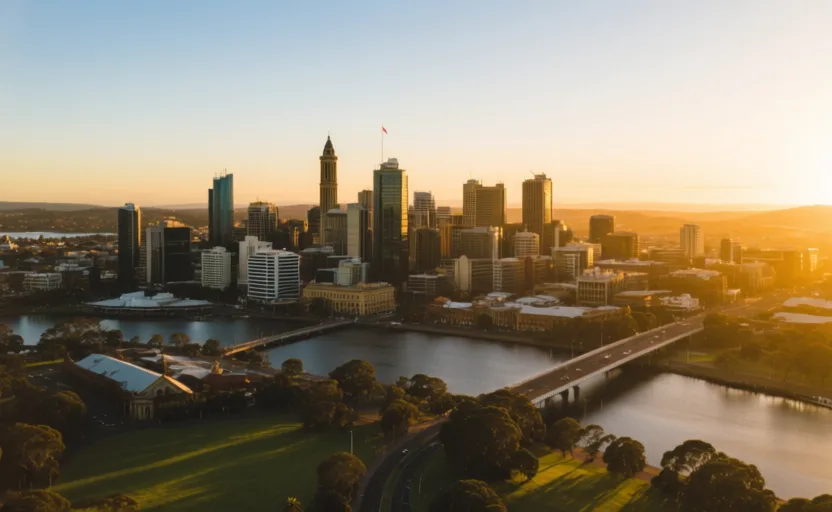 Newcastle NSW · AI city illustration · Artistic impression
City · Oceania
Newcastle NSW
Saved in this browser — no account needed. Sign in later and it comes with you.
Where it is
Where the Hunter River meets the Pacific, the city occupies the hilly southern bank and leaves the northern side to sand dunes, swamps and braided river channels. Beneath much of it lie the coal measures of the Sydney Basin, which is why the harbour, the suburbs and the old mining villages in the hills all grew where they did. The villages have since merged southward into one built-up area that reaches Lake Macquarie. A green belt on the Watagan side holds the city in from the west. The climate is humid subtropical, tempered by the ocean, with storms called east coast lows.
The land and water around it
The Hunter River mouthestuary
The river reaches the sea on the city’s doorstep. The south bank is high enough to build on, and the north bank is dune and swamp, so the harbour, the port and the town have all been confined to one side. Stockton, across the water, is linked to the centre by ferry or by a road journey of about 20 kilometres.
The coal measures of the Sydney Basinplain
The city lies on the Sydney Basin, towards its centre and east, and the coal under it and under the Hunter Region beyond decided what the place would be. The first settlers came for coal, the convicts dug it, and the coal-mining villages in the hills eventually joined into a single urban area.
East coast lowsclimate
Storms that form off the coast bring winds above 100 kilometres an hour and heavy rain, usually for a couple of days. The storms of May 1974, 2007 and April 2015 are the extreme examples. Cold fronts, by contrast, arrive from the west and clear quickly because the city lies in the lee of the Great Dividing Range.
Its history, in short
Awabakal and Worimi people knew this coast as Mulubinba, and archaeologists have found Aboriginal occupation here for at least 6,500 years. The first colonial visits in the 1790s were about coal: fishermen blown into the harbour in 1796 found it lying on the beach, and Lieutenant John Shortland named the Hunter River the next year. Coal from the river became the colony’s first export. After a failed first attempt, a convict settlement was founded in 1804 as a place of secondary punishment, with Irish rebels among the first prisoners. Commandants alternated between harshness and relative mercy, and the colony was closed in 1826 after free settlement opened in 1822. Industry followed the coal: the Australian Agricultural Company received a monopoly on the town’s coal traffic in 1833, copper smelting and soap-making came later, and BHP built its steelworks in 1911. When heavy industry declined from the 1970s, the port stayed, and it is now the largest coal-exporting harbour in the world.
Timeline
Dates are shown on a timeline rather than as changing shapes on the map. The globe draws modern boundaries only, and tinting a modern outline to stand for a historical one would state something we cannot source.
First cities & states
At least 6,500 years ago
Occupation at Cottage Creek
A 2009 dig on the former Palais Royale site on Hunter Street recovered 5,534 Aboriginal artefacts from three periods of occupation, the earliest about 6,700 years before the present. Stone tools made there were probably traded across many countries.
Approximate dateWikipedia
Early modern & oceanic
September 1797
Shortland names the Hunter
Lieutenant John Shortland, searching for convicts who had seized a vessel, enters the river and names it for the governor. Coal becomes the colony’s first export in the following years.
Industrial & imperial
1804
A secondary-punishment settlement
A convict settlement, known first as Coal River, is founded in March under Lieutenant Charles Menzies and receives its Irish rebel prisoners from the Castle Hill rising. The name Newcastle comes from the English city.
Well attestedWikipedia1819
Morisset and harsher punishment
After the Bigge inquiry recommends a tougher regime, Major James Morisset takes command and floggings, solitary confinement and chain gangs become more common.
Well attestedWikipedia1826
The convict colony closes
Free settlement had opened in 1822. Prisoners are moved to Port Macquarie and the town begins to look like an ordinary colonial port.
Well attestedWikipedia3 May 1833
The coal monopoly
The Australian Agricultural Company receives land grants at Newcastle and a 31-year monopoly on the town’s coal traffic, and coal mining begins in earnest.
Well attestedWikipedia1911
BHP steelworks
BHP chooses Newcastle for its steelworks because coal was abundant, taking prime land on the southern edge of the harbour.
Well attestedWikipedia8 June 1942
Shelled by a submarine
A Japanese submarine briefly fires on the dockyards, the steelworks, the breakwall and the ocean baths. There are no casualties and little damage.
Well attestedWikipedia
Places that carry meaning
Cottage Creek and the Palais Royale siteAbout 6,700 years ago
The 2009 excavation at the site on Hunter Street was judged to be of high to exceptional cultural and scientific significance. It shows an Aboriginal tool-making place near the harbour thousands of years before the town.
King Edward ParkDesignated 1863
A coastal park with a sunken garden and a Victorian rotunda, set aside only four decades after the penal colony closed.
Newcastle MuseumFounded 1988
The old Great Northern Railway headquarters holds it, and its displays cover coal mining, steel, Aboriginal history and the history of the area.
Languages here
Places are usually multilingual. This lists what is actually spoken, not one language per border.
EnglishGermanic family
The everyday language of the metropolitan area.
About 88.2 per cent of people spoke only English at home at the 2021 census. Most residents were born in Australia, with England, New Zealand, China, India and the Philippines the main other birthplaces.
Awabakal
The Aboriginal language of the Newcastle and Lake Macquarie area.
The missionary Lancelot Threlkeld worked with Biraban, an Awabakal man from Lake Awaba, in the 1820s to record it. The people of Newcastle have been called the Awabakal since 1892, and the neighbouring Worimi are also recognised as traditional owners.
Community languages
Languages of post-war and recent migration.
After English, the languages most often spoken at home are Mandarin (0.7 per cent), then Macedonian, Italian, Greek and Cantonese, each below one per cent.
Learn the language here
- 1Understand which languages are spoken hereNewcastle NSW is multilingual. Start with which languages are used, by whom, and for what — the phrase list only covers one of them.Written by Globe Quest
- 2Learn 12 phrasesCurated everyday phrases for Newcastle NSW, with audio and a written form.Written by Globe Quest
- 3Say them out loudSpeaking practice with pronunciation feedback, one phrase at a time.Globe Quest material, your own additions
- 4Come back to themSpaced review, so what you learned this week is still there next month.Written by Globe Quest
Check yourself
What was New South Wales’s first export from the Hunter River area?
Coal
Coal mined near the river mouth was the colony’s first export, which is why a convict settlement and later a steelworks were put here.
When did the Newcastle convict colony close?
1826
Free settlement opened in 1822, but the convict colony itself closed in 1826 after prisoners were sent to Port Macquarie.
Worth arguing about
- A city built around coal and then steel now has to work out what its harbour is for. What should replace an industry that defined a place for 200 years?
- The name Newcastle appears in several countries. What does a borrowed name carry with it, compared with the name Mulubinba?
What we have not established
These are open questions, listed rather than filled in. We would rather show a gap than a plausible guess.
How large is Newcastle?
The suburb of Newcastle had 3,852 people in 2021, while the wider area of five local government areas had 682,465. The figure quoted for the city depends entirely on which boundary is used.
Sources
- Wikipedia · Newcastle, New South WalesWikipedia · encyclopedia · checked 2026-11-24
- Wikipedia · History of Newcastle, New South WalesWikipedia · encyclopedia · checked 2026-11-24
Reviewed by Globe Quest editorial on 2026-11-24. Drafted with AI assistance and checked against the sources above before publication.