 Globe Quest
 Human Quest · LearningSign in
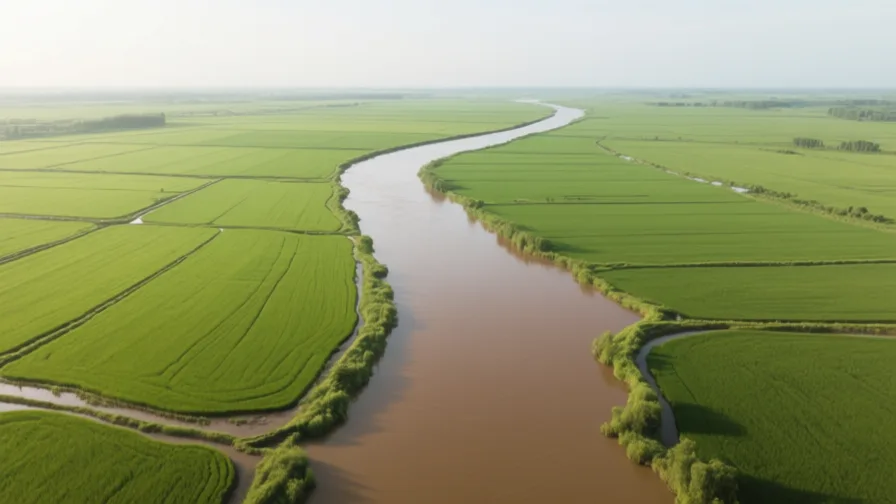 Bangladesh · AI landscape illustration · Artistic impression
Country · South Asia
Bangladesh
Saved in this browser — no account needed. Sign in later and it comes with you.
Where it is
Water decides everything in Bangladesh. Roughly 80 per cent of the country is fertile alluvial lowland, the delta where the Ganges (the Padma here), Brahmaputra (the Jamuna) and Meghna come together before reaching the Bay of Bengal, and most of it lies below ten metres. Only the Chittagong Hills in the south-east, the Sylhet hills in the north-east and low uplifted blocks in the north and centre rise above the plain. Monsoon rain arrives from June to October, and floods and cyclones are annual events. Almost 180 million people share about 148,000 square kilometres, almost entirely ringed by India.
The land and water around it
The Ganges–Brahmaputra deltadelta
The three great rivers merge in Bangladesh and reach the Bay of Bengal through many channels. The delta plain occupies about 79 per cent of the country, and the water that brings fertile soil also brings the floods, so about 10,000 square kilometres are under water at any time and much more during the monsoon.
The Chittagong Hillsmountains
The country’s only significant hill system, the western fringe of the ranges of Myanmar and eastern India. Narrow ridges, running north to south, climb to Saka Haphong at 1,052 metres. Tibeto-Burman-speaking communities live here, especially in the south-east.
The Sundarbansmarsh
Mangrove and freshwater swamp forest on the delta’s southern edge, part of the world’s largest mangrove forest. Cyclones are a regular danger along this coast, and the storm of 1991 killed about 140,000 people.
Its history, in short
The delta was part of Maurya, Gupta and Harsha’s realms before the Buddhist Pala Empire ruled it from 750 to 1150. A Muslim conquest in 1204 led to rule by the Delhi Sultanate, an independent Bengal Sultanate from 1341, and the Mughals from 1576. Bengal was then one of the richest provinces of the empire, a producer of muslin and silk. The East India Company defeated the Nawab at Plassey in 1757 and took the right to collect revenue in 1765. Colonial rule brought deindustrialisation and repeated famines. Partition in 1947 made the region East Bengal, the eastern wing of Pakistan, separated from the western wing by more than 1,000 miles. A Bengali language movement, which peaked on 21 February 1952, a 1969 uprising and an Awami League landslide in 1970 led to the military crackdown of March 1971 and the war of independence. Bangladesh became sovereign on 16 December 1971. Military rule, assassinations and uprisings followed, parliamentary democracy returned in 1991, and Sheikh Hasina was ousted in a mass uprising in 2024.
Timeline
Dates are shown on a timeline rather than as changing shapes on the map. The globe draws modern boundaries only, and tinting a modern outline to stand for a historical one would state something we cannot source.
Post-classical world
750–1150
The Pala Empire
A Buddhist dynasty rules the region for four centuries until it is overthrown by the Hindu Sena dynasty.
Well attestedWikipedia1204
Muslim conquest
Muhammad Bakhtiyar Khalji of the Ghurid dynasty conquers Bengal, which is incorporated into the Delhi Sultanate. An independent Bengal Sultanate follows from 1341.
Well attestedWikipedia
Early modern & oceanic
1576
Mughal Bengal
The Mughals conquer Bengal. By the eighteenth century it is one of the empire’s wealthiest provinces, exporting cotton textiles, muslin and silk, and building ships.
Well attestedWikipedia23 June 1757
Plassey
Siraj-ud-Daulah is defeated by the East India Company, helped by the betrayal of his commander Mir Jafar. The victory opens British rule over Bengal, and in 1765 the company obtains the right to collect its revenue.
Well attestedWikipedia
Contemporary
15 August 1947
Partition
The Radcliffe Line divides Bengal. The east becomes the most populous wing of Pakistan, over 1,000 miles from the west, and most of Sylhet joins it after a plebiscite.
21 February 1952
The language movement
After the government names Urdu the sole national language in 1948, students of the University of Dhaka defy a ban on rallies, and police open fire. Bengali receives official status in 1956.
Well attestedWikipedia26 March – 16 December 1971
Liberation war
After the Awami League takes almost every East Pakistani seat in the 1970 election (160 of 162) and talks with Bhutto fail, the Pakistan army begins a crackdown on 26 March 1971. The Mukti Bahini, with Indian forces, fights a war of independence, and Pakistani forces surrender on 16 December. Bangladeshi accounts call the killings carried out by Pakistani forces the Bangladesh genocide.
Bangladeshi account of the 1971 killings
2024
Hasina ousted
After more than fifteen years of autocratic rule, Sheikh Hasina is removed in a mass uprising.
Well attestedWikipedia
Places that carry meaning
DhakaPresent
The capital and largest city, the political, financial and cultural centre, where the students were shot on 21 February 1952. That date is now remembered as the day of the language movement.
ChattogramPresent
The second-largest city and the busiest port, at the south-eastern edge of the delta where the hills begin.
Plassey1757
The battlefield where the East India Company defeated the Nawab of Bengal and began British rule over the province.
Languages here
Places are usually multilingual. This lists what is actually spoken, not one language per border.
Bengali (Bangla)Indo-European family
The official and national language, spoken as a first language by about 99 per cent.
It is a dialect continuum. People speak a standard colloquial form and their own regional variety, from Chittagonian in the south-east and Noakhali in the south to Sylheti in the north-east. Since 1987 the law has required Bengali in all government affairs except foreign relations. The oldest surviving Bengali texts are the Charyapada poems of the tenth to twelfth centuries.
Indigenous languages
Spoken by communities in the hills and the north, with 36 living languages by one count.
They include Tibeto-Burman languages such as Marma and Garo, Austroasiatic ones such as Santali and Khasi, Dravidian ones in the north-west, and Chakma, a language related to both Bengali and Chin, in the Chittagong Hill Tracts. Another scholar counts 44.
EnglishGermanic family
A common second language in law, education and business.
It is a compulsory school subject and was widely used in government until the 1987 act. Fluency varies widely, with many educated people fluent and many others with almost none.
Rohingya
Spoken by Rohingya refugees in the camps at Cox’s Bazar.
A language closely related to Chittagonian. Bangladesh counts among the countries sheltering the largest refugee populations.
Learn the language here
Check yourself
What happened on 21 February 1952 in Dhaka?
Police fired on students protesting for the recognition of Bengali
The students’ protest against Urdu as the sole national language ended with police opening fire, and the movement led to official status for Bengali in 1956.
How much of Bangladesh does the river delta plain occupy?
About 79 per cent
The delta plain covers about 79 per cent of the country, while uplifted blocks take 9 per cent and the steep south-eastern and north-eastern hills 12 per cent.
Worth arguing about
- Bangladesh was created partly over a language. What does it mean for a country’s national identity to begin in a protest about which language to use in government?
- A country that is mostly flat, low and crossed by three great rivers has to plan for floods, cyclones and rising seas at the same time. Which should come first?
What we have not established
These are open questions, listed rather than filled in. We would rather show a gap than a plausible guess.
How many people were killed in 1971?
Accounts of the 1971 war and the killings of civilians give widely differing totals, and no figure is settled between the different accounts, so none is given here.
How many people live in Bangladesh?
The 2022 census recorded 169.8 million, while later estimates are 175.4 million and “almost 180 million”, depending on the source and date.
Sources
- Wikipedia · BangladeshWikipedia · encyclopedia · checked 2026-11-24
- Wikipedia · History of BangladeshWikipedia · encyclopedia · checked 2026-11-24
- Wikipedia · Geography of BangladeshWikipedia · encyclopedia · checked 2026-11-24
- Wikipedia · Languages of BangladeshWikipedia · encyclopedia · checked 2026-11-24
Reviewed by Globe Quest editorial on 2026-11-24. Drafted with AI assistance and checked against the sources above before publication.