 Globe Quest
 Human Quest · LearningSign in
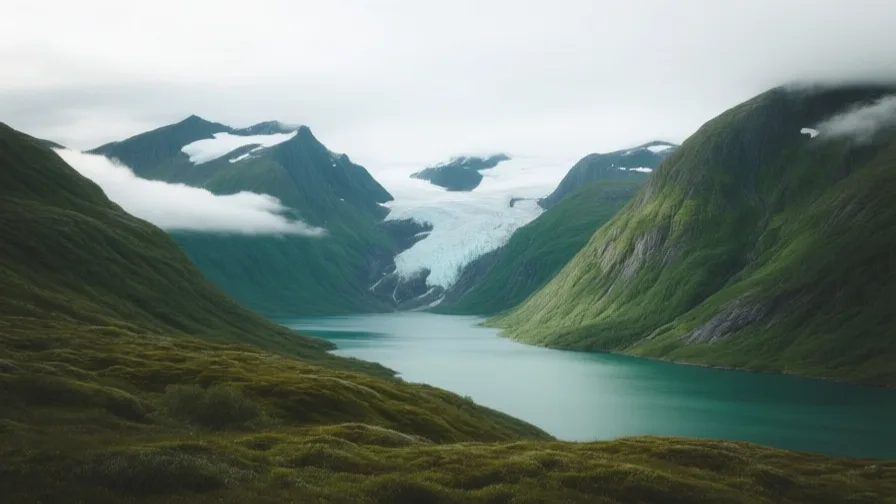 New Zealand · AI landscape illustration · Artistic impression
Country · Oceania
New Zealand
Saved in this browser — no account needed. Sign in later and it comes with you.
Where it is
Two large islands, Te Ika-a-Māui (the North Island) and Te Waipounamu (the South Island), lie across 1,600 kilometres of the south-western Pacific, with Cook Strait, 22 kilometres wide at its narrowest, between them. The nearest continent is Australia, more than 1,400 kilometres away across the Tasman Sea. The South Island is held up by the Southern Alps, Kā Tiritiri o te Moana, and a volcanic plateau fills much of the central North Island. The mountains split the weather: the West Coast is extremely wet, while Central Otago and the Mackenzie Basin are semi-arid. Most people now live in the north.
The land and water around it
Cook Straitstrait
The strait between the North and South Islands is only 22 kilometres wide at its narrowest. It splits the country into two islands with different climates and populations, and Wellington sits on its northern edge.
The Southern Alpsmountains
Kā Tiritiri o te Moana runs down the South Island and is the product of tectonic uplift, as are the country’s sharp peaks. Across it, the West Coast is extremely wet while Central Otago and the Mackenzie Basin are semi-arid.
Zealandiaplain
The islands are the visible peaks of a submerged microcontinent that broke away from Gondwana. Eighty million years of isolation followed, and about 82 per cent of the native vascular plants grow nowhere else.
Its history, in short
New Zealand was among the last large habitable lands settled by people. Polynesian voyagers arrived in oceangoing waka in the thirteenth and fourteenth centuries and developed Māori culture, organised in iwi and hapū. Dutch sailors sighted the coast in 1642 and James Cook mapped it from 1769, after which whalers, sealers and traders came. The introduction of the potato and the musket changed Māori farming and warfare, and the Musket Wars of 1801 to 1840 killed tens of thousands. Missionaries arrived from the early nineteenth century, and disease cut the Māori population to about 40 per cent of its earlier level over the century. In 1840 Māori chiefs and British representatives signed the Treaty of Waitangi, and Britain proclaimed sovereignty that year. Wars and confiscations followed, and Māori lost large amounts of land. The country became a dominion in 1907 and fully independent in 1947. Since the 1970s a Māori protest movement, the Waitangi Tribunal and the revival of te reo Māori have changed how the country understands the Treaty.
Timeline
Dates are shown on a timeline rather than as changing shapes on the map. The globe draws modern boundaries only, and tinting a modern outline to stand for a historical one would state something we cannot source.
Post-classical world
c. 1250–1350
Polynesian settlement
Genetic evidence points to the late thirteenth century, but nothing physical, whether bones, objects or buildings, can be securely dated before the Mount Tarawera eruption called Kaharoa, about 1314, and whakapapa suggests about 1350 for the arrival of several waka. Recent sources favour the fourteenth century.
Approximate dateWikipediaTraditional date c. 1350
Kupe and the voyages from Hawaiki
In most Māori oral traditions the explorer Kupe found the islands while pursuing a giant octopus, and a great fleet of settlers followed from Hawaiki. Historians now think the settlement was a planned movement of people over several decades rather than a single fleet.
Oral historyWikipediaMāori oral tradition
Early modern & oceanic
1642
Tasman’s encounter
Abel Tasman’s ships meet Ngāti Tūmatakōkiri, and four of his crew are killed. Europeans do not return until Cook in 1769.
Well attestedWikipedia
Industrial & imperial
1801–1840
The Musket Wars
More than 600 battles between iwi are fought with newly acquired muskets, supported by potato surpluses, and they kill 30,000 to 40,000 Māori.
Approximate dateWikipedia6 February 1840
Te Tiriti o Waitangi
The treaty is first signed at the Bay of Islands. On 21 May Hobson proclaims British sovereignty across the whole country, although copies were still going round for Māori to sign.
Well attestedWikipedia1907
Dominion status
At the request of Parliament, Edward VII proclaims New Zealand a dominion. The Statute of Westminster is adopted in 1947, and the last appeals to the Privy Council end in 2003.
Well attestedWikipedia
Contemporary
1975
The Waitangi Tribunal
A tribunal is created to hear claims that the Treaty was broken. From 1985 it can investigate historic grievances, and governments have negotiated settlements with many iwi.
Well attestedWikipedia1987
Māori becomes an official language
The Māori Language Act makes te reo Māori an official language, and New Zealand Sign Language follows in 2006.
Well attestedWikipedia
Places that carry meaning
Bay of Islands6 February 1840
The place where Te Tiriti o Waitangi was first signed. Hobson did not wait for every copy to be signed before declaring sovereignty later that year.
WellingtonFrom 1840
The capital, planted in the New Zealand Company’s attempt to found an independent settlement, which helped push Hobson to declare sovereignty over the whole country.
AucklandPresent
The most populous city. Its region has the greatest religious diversity in the country and the highest share of multilingual people.
Languages here
Places are usually multilingual. This lists what is actually spoken, not one language per border.
EnglishGermanic family
The dominant language of government, courts and schools.
It has been dominant since Pākehā became the majority in the 1860s, and it is spoken by 95.4 per cent of people. New Zealand English has a distinctive accent and has borrowed words from Māori such as kia ora, mana and waka. Parliament gave it formal official status in 2026.
Te reo MāoriAustronesian family
An official language since 1987 and a language in revival.
After the Second World War Māori children were discouraged from speaking it in schools, and by the 1970s it survived as a community language mainly in remote areas. Revitalisation since then has widened its use. In 2018, 185,955 people, 4.0 per cent of respondents, could hold a conversation in it.
New Zealand Sign Language
An official language since 2006.
The main language of the deaf community, which people may use in legal proceedings and government services. In 2018 about 22,986 people reported they could use it.
Immigrant languages
Spoken mostly in Auckland and the other large cities.
The largest groups are Samoan, Hindi, Mandarin, French and Cantonese. Mandarin is the second most spoken language in Auckland, Samoan in Porirua and French in Wellington city.
Learn the language here
Check yourself
When was the Treaty of Waitangi first signed?
6 February 1840
The first signing took place at the Bay of Islands on 6 February 1840. Hobson’s declaration of sovereignty came on 21 May, while copies were still being taken around the country for other chiefs to sign.
Which language became an official language of New Zealand in 1987?
Māori
The Māori Language Act of 1987 made te reo Māori official. New Zealand Sign Language followed in 2006, and English was written into statute as an official language in 2026.
Worth arguing about
- Settlements with many iwi have been negotiated since 1985, yet claims to the foreshore and seabed were controversial in the 2000s. Who should decide claims over land and water?
- A language can be official long before most of its speakers use it. What would it take for te reo Māori to become an ordinary language of daily life?
What we have not established
These are open questions, listed rather than filled in. We would rather show a gap than a plausible guess.
When did Polynesians first reach New Zealand?
DNA suggests 1250 to 1300, the earliest dated remains and artefacts come from after about 1314, and genealogies point to about 1350. These lines of evidence have not been reconciled.
Sources
- Wikipedia · New ZealandWikipedia · encyclopedia · checked 2026-11-24
- Wikipedia · Geography of New ZealandWikipedia · encyclopedia · checked 2026-11-24
- Wikipedia · Languages of New ZealandWikipedia · encyclopedia · checked 2026-11-24
Reviewed by Globe Quest editorial on 2026-11-24. Drafted with AI assistance and checked against the sources above before publication.