 Globe Quest
 Human Quest · LearningSign in
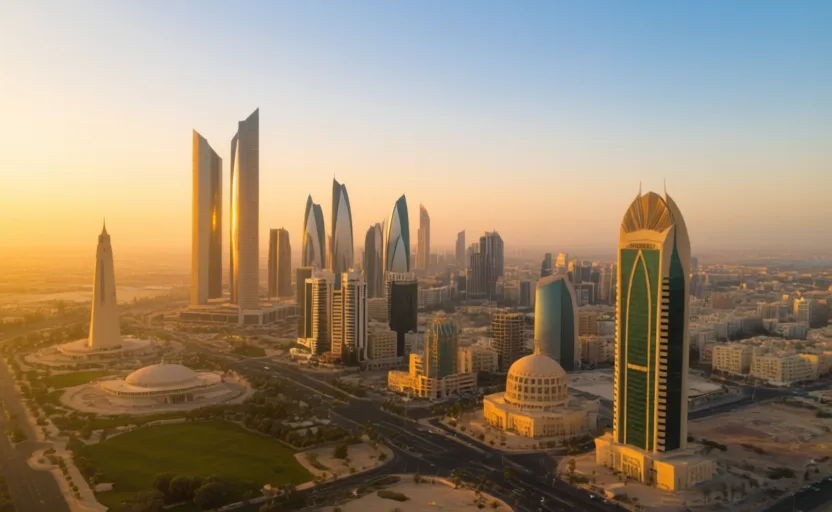 Al Ain · AI city illustration · Artistic impression
City · Middle East
Al Ain
Saved in this browser — no account needed. Sign in later and it comes with you.
Where it is
Al Ain is the one large Emirati city away from the sea. It lies in the east of Abu Dhabi emirate, about 160 kilometres from the capital and 120 kilometres south of Dubai, and runs straight into the Omani town of Buraimi on its eastern edge. Jebel Hafeet, an outlier of the Hajar range, stands just to the south, with red-tinged dunes to the north and east and, beyond them, the Empty Quarter. Rain averages under 100 millimetres a year, but a string of oases fed by underground channels makes the city green. Height limits keep new buildings to seven floors, and the dry air is a draw for coastal residents in summer.
The land and water around it
Jebel Hafeetmountains
An outlier of the main Hajar range just south of the city, and one of the highest mountains in the country. Ridges from it reach into the built-up area, one of them touching the Al Ain Oasis. The early Hafit culture is named after it.
The oases and their aflajoasis
Seven oases, Al Ain, Al Jahili, Qattara, Al Muʿtaredh, Al Jimi, Al Muwaiji and Hili, are watered by falaj channels, underground systems that carry water from boreholes and aquifers to palms and fields. This skill in building and water management allowed farming to continue for five millennia.
Gravel plains, dunes and the Empty Quarterdesert
Around the city lie gravel plains, with dunes tinged red by iron oxide to the north and east and the Empty Quarter desert to the south. A man-made lake, Lake Zakher, formed to the south where desalination plant waste water was released.
Its history, in short
The oasis has drawn people for nearly 8,000 years. Early farmers and hunters used the water here, and the Hafit culture left beehive tombs on the slopes of Jebel Hafeet. Bronze Age and Iron Age builders added circular tombs, mud-brick forts and aflaj, the underground channels that carry water from the mountains to palm groves. The oasis sits where land routes between Oman, the rest of Arabia, the Gulf and Mesopotamia crossed. In recent centuries it lay in the area of the Dhawahir tribe, and the Sultan of Muscat, the Wahhabis and the Bani Yas of Abu Dhabi all competed for influence over the Buraimi Oasis. In 1877 Sheikh Zayed bin Khalifa, “Zayed the Great”, took the main Dhawahir settlement when the tribe rebelled and built a fort to mark his control. The twentieth-century Sheikh Zayed bin Sultan spent much of his life here from about 1927 until he became ruler in 1966. A later dispute between Saudi Arabia, Abu Dhabi and Oman over Buraimi ended when Saudi forces surrendered after British intervention. After 1971 Al Ain grew quickly, far beyond its Omani neighbour, and in 2011 its prehistoric sites became the first in the UAE to be listed as World Heritage.
Timeline
Dates are shown on a timeline rather than as changing shapes on the map. The globe draws modern boundaries only, and tinting a modern outline to stand for a historical one would state something we cannot source.
First cities & states
Nearly 8,000 years ago
Settlement begins
Archaeological sites at Rumailah, Hili and Jebel Hafeet show people living in the area for nearly eight millennia.
Approximate dateWikipedia3200–2600 BCE
The Hafit period
The early Bronze Age culture buries its dead in beehive-shaped tombs on Jebel Hafeet and the plains below.
1st millennium BCE
The aflaj
Underground water channels appear at Bidaa bint Saud and elsewhere in the region, several centuries before the qanats of the Achaemenid Empire, which had been credited with the idea.
Industrial & imperial
1877
Zayed the Great takes ’Ain Dhawahir
Sheikh Zayed bin Khalifa seizes the main settlement of the Dhawahir after a rebellion and builds a fort, putting Al Ain under Abu Dhabi’s influence.
Well attestedWikipedia
Contemporary
1959
The tombs are excavated
Sheikh Zayed had come across the tombs in the 1950s and brought them to the attention of a Danish team, which excavated in 1959. Al Ain Museum is built in 1971 to hold the finds.
Well attestedWikipedia1972
The Omani border is fixed
Oman and Abu Dhabi agree final borders that divide Buraimi from Al Ain. The two towns kept an open border until November 2006, when passport controls were imposed.
Well attestedWikipedia2004
The four-storey rule
Until Sheikh Zayed’s death in 2004, the municipal code forbade buildings above four storeys, with a few hotels excepted. New buildings are now held to seven floors, which is why Al Ain remains low-rise.
Well attestedWikipedia2011
World Heritage listing
The Cultural Sites of Al Ain become the first World Heritage property in the UAE.
Places that carry meaning
Hafit tombs on Jebel Hafeet3200–2600 BCE
Beehive-shaped stone tombs that give the whole early Bronze Age period its name, and part of the World Heritage property.
Al Ain OasisPrehistoric to the present
The largest of the seven oases, near the old Sarooj district, still planted with palms and watered by falaj channels.
Hili Archaeological ParkBronze Age
An archaeological park of Bronze Age remains, and Hili is one of the areas named in the World Heritage listing.
Al Muwaiji Fort20th century
The fort where Sheikh Zayed received the explorer Wilfred Thesiger in the late 1940s.
Languages here
Places are usually multilingual. This lists what is actually spoken, not one language per border.
ArabicSemitic family
Official and national language.
Emiratis, who make up 30.8 per cent of the city’s 2021 population, the highest share in the country, speak Gulf Arabic natively.
EnglishGermanic family
The most commonly spoken language in the UAE.
It is the common language of work among residents from many countries.
Languages of the subcontinent and Afghanistan
Spoken by the largest groups of foreign residents.
Most residents are expatriates, particularly from the Indian subcontinent, with many from Bangladesh and Pakistan and a significant number of Afghans. Across the UAE, Urdu, Hindi, Malayalam, Tamil and Bengali are used enough that driving courses are offered in them.
Learn the language here
- 1Understand which languages are spoken hereAl Ain is multilingual. Start with which languages are used, by whom, and for what — the phrase list only covers one of them.Written by Globe Quest
- 2Learn 12 phrasesCurated everyday phrases for Al Ain, with audio and a written form.Written by Globe Quest
- 3Say them out loudSpeaking practice with pronunciation feedback, one phrase at a time.Globe Quest material, your own additions
- 4Come back to themSpaced review, so what you learned this week is still there next month.Written by Globe Quest
- 5Practise with people: Arabic practice · DohaAn in-person practice circle. It is a prepared plan and needs a host before it runs.Run by members
Check yourself
How does water reach Al Ain’s palm groves?
Through falaj channels, which bring water underground from the mountains
The aflaj system was introduced as early as the first millennium BCE and is a record of how water was managed in a desert region.
What was special about Al Ain’s World Heritage listing in 2011?
It was the first in the UAE
The Cultural Sites of Al Ain, covering Hafit, Hili, Bidaa Bint Saud and the oases, were the first UAE property recognised by UNESCO.
Worth arguing about
- Al Ain shares an oasis with Buraimi in Oman, and the border between them was open until 2006. What does it mean when one landscape is divided between two states?
- The city’s oases have been farmed continuously for thousands of years, yet water is scarce. Is a heritage landscape worth protecting even where modern supply could replace it?
What we have not established
These are open questions, listed rather than filled in. We would rather show a gap than a plausible guess.
Where was Sheikh Zayed bin Sultan born?
He is often said to have been born in Abu Dhabi, but some accounts say Al Ain. The sources found do not settle it.
Sources
- Wikipedia · Al AinWikipedia · encyclopedia · checked 2026-11-24
- UNESCO · Cultural Sites of Al Ain (Hafit, Hili, Bidaa Bint Saud and Oases Areas)UNESCO World Heritage Centre · intergovernmental · checked 2026-11-24
- Wikipedia · United Arab EmiratesWikipedia · encyclopedia · checked 2026-11-24
- Wikipedia · Demographics of the United Arab EmiratesWikipedia · encyclopedia · checked 2026-11-24
Reviewed by Globe Quest editorial on 2026-11-24. Drafted with AI assistance and checked against the sources above before publication.