 Globe Quest
 Human Quest · LearningSign in
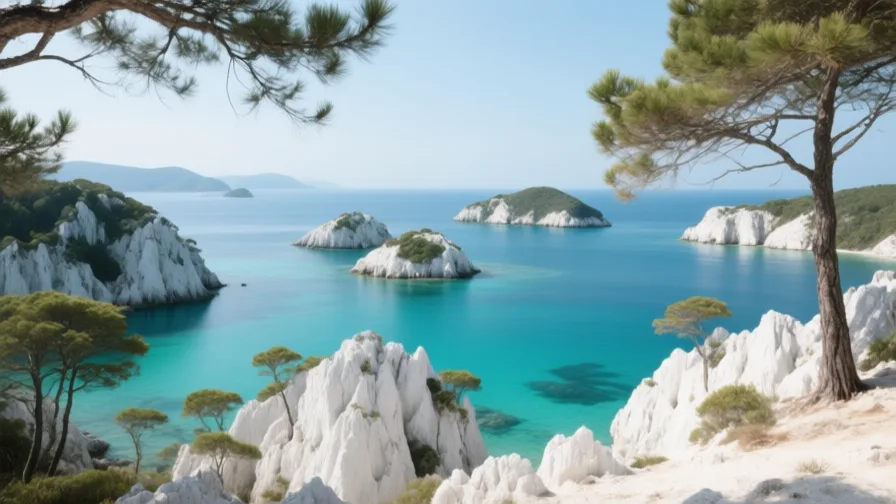 Croatia · AI landscape illustration · Artistic impression
Country · Europe
Croatia
Saved in this browser — no account needed. Sign in later and it comes with you.
Where it is
Croatia has two quite different halves. Its north and east is the flat edge of the Pannonian Basin, where the Sava, Drava and Danube drain towards the Black Sea. Its south-west is a long Adriatic coast backed by the limestone ridges of the Dinaric Alps, with more than a thousand islands offshore. More than half of the country lies below 200 metres, while the highest peak, Dinara, reaches 1,831 metres near the Bosnian border. A short strip of Bosnian coast at Neum cuts off the far south around Dubrovnik, so that part is linked to the rest by territorial waters and, now, a bridge.
The land and water around it
The Dinaric Alpsmountains
A limestone fold belt covering all of Gorski Kotar and Lika and much of Dalmatia. It is karst country with some 7,000 caves and pits, where the only known cave-dwelling vertebrate that lives in water, the olm, survives. The heaviest rainfall in the country is recorded on these slopes, at Risnjak and Snježnik.
The Pannonian plain and Slavoniaplain
Most of the lowland in the country is here, in the north and east. Rivers including the Sava, Drava and Danube feed the Black Sea drainage basin, which covers 62 per cent of the territory. Rainfall in eastern Slavonia is low, but falls mainly in the growing season.
The Adriatic coast and islandscoast
The mainland coast is almost 1,800 kilometres long and the islands add about 4,000 more. Only 48 of them are permanently inhabited, and the sea softens the climate, giving the coast and its nearby hinterland a Mediterranean character in contrast to the continental interior.
Its history, in short
The Croats arrived in the former Roman province of Illyria in the 6th century, when Avar and Croat incursions destroyed almost every Roman town and survivors fled to the coast and islands. Two duchies existed by the following century, and a kingdom was proclaimed under Tomislav in 925. Following a dynastic crisis in 1102 the crown passed in personal union to the Hungarian kings, but Croatia kept its own parliament and viceroy, the Ban. Ottoman victories at Krbava in 1493 and Mohács in 1526 led the Croatian Sabor to choose a Habsburg ruler in 1527 in return for a promise of protection, and the empire’s military frontier took shape along the Ottoman border. Venice held most of Dalmatia from 1428, though Dubrovnik stayed independent. After 1918 Croatia was joined to the Kingdom of Serbs, Croats and Slovenes, later Yugoslavia, and was occupied during the Second World War, when a puppet state ruled most of its territory; after 1945 it was a republic within socialist Yugoslavia. It declared independence in 1991, and fought a war that lasted until 1995. It joined NATO in 2009 and the European Union in 2013.
Timeline
Dates are shown on a timeline rather than as changing shapes on the map. The globe draws modern boundaries only, and tinting a modern outline to stand for a historical one would state something we cannot source.
Classical world
305 CE
Diocletian retires to Split
Emperor Diocletian, who came from this region, abdicates and retires to the large palace he had built at Split. In the 5th century the last Western emperor, Julius Nepos, ruled a small realm from it.
Well attestedWikipedia
Post-classical world
6th–7th centuries
The Croats arrive
Scholars agree that Croats and Avars destroyed the Roman towns of the Adriatic coast. Where the Croats came from is debated: the prevailing view says a Slavic group migrated from White Croatia, while another theory points to a Sarmatian-Alanic, Iranian origin, based on personal names in the Tanais Tablets.
Historians who favour a Slavic migration, versus those who propose an Iranian origin
925
Tomislav’s kingdom
Duke Branimir had been granted independence in 878, and in 925 Tomislav is raised to king. The medieval kingdom reaches its peak in the 11th century under Petar Krešimir IV, when it is styled the Kingdom of Croatia and Dalmatia.
1102
Personal union with Hungary
With the native dynasty ended and rival claimants defeated, the Hungarian king Coloman is accepted as ruler. Croatia remains a separate kingdom with its own Ban and parliament. Some historians describe a Hungarian conquest, others a negotiated agreement with the Croatian nobility.
DisputedWikipediaHistorians who see a Hungarian conquest, versus those who see an agreement with the nobility
Early modern & oceanic
1527
The Habsburgs are chosen
After the Ottoman victory at Mohács in 1526, in which King Louis II died, the Croatian Parliament meets at Cetin and chooses Ferdinand I of Habsburg, on the condition that he protects Croatia and respects its political rights.
Well attestedWikipedia
Industrial & imperial
29 October 1918
Out of Austria-Hungary
The Sabor declares independence and joins the State of Slovenes, Croats and Serbs, which merges into the Kingdom of Serbs, Croats and Slovenes on 4 December. The Croatian Parliament never ratified that union.
Well attestedWikipedia
Contemporary
1991–1995
Independence and the war
Croatia declares independence on 25 June 1991, effective from 8 October. The Yugoslav People’s Army and Serb paramilitaries attack, and by the end of 1991 Croatia controls about two-thirds of its territory. The war brings killings and the displacement of hundreds of thousands, mostly Croats, and the flight or expulsion of many Croatian Serbs as well, until 1995.
Well attestedWikipedia2013
Joins the European Union
Croatia enters the EU four years after joining NATO, and Croatian becomes an official EU language.
Places that carry meaning
Diocletian’s Palace, SplitAround 300 CE onward
A large palace built for the emperor’s retirement. Julius Nepos, the last Western emperor in law, ruled a small realm from it after fleeing Italy in 475.
KrapinaMiddle Palaeolithic
The best-presented site in northern Croatia where Neanderthal fossils have been found.
DubrovnikEarly Middle Ages onward
Founded by Roman survivors from Epidaurum. When Venice took most of Dalmatia by 1428, the city-state alone stayed independent.
Neum and the Pelješac BridgePresent day
A short stretch of Bosnia and Herzegovina’s coast at Neum separates the Dubrovnik area from the rest of Croatia on land. The Pelješac Bridge now links the exclave to the mainland.
Languages here
Places are usually multilingual. This lists what is actually spoken, not one language per border.
CroatianSlavic family
The official language, and an official EU language since 2013.
Croatian replaced Latin as the language of government in the 19th century. After the Vienna Literary Agreement of 1850 it was reformed into a combined “Croatian or Serbian” standard for Yugoslavia. A declaration during the Croatian Spring asserted a separate Croatian literary language, and from 1972 to 1989 the Yugoslav constitution named it as the “Croatian literary language” alongside “Croatian or Serbian”.
LatinItalic family
The historic language of administration and the church.
Latin remained the official language of the Croatian government until the 19th century. The oldest records of the people’s name include a Latin form, Croatorum, on a church inscription found at Bijaći near Trogir.
Learn the language here
Check yourself
Why did the Croatian Parliament choose a Habsburg king in 1527?
To gain protection against the Ottoman Empire while keeping Croatia’s political rights
Following the defeats at Krbava and Mohács, Croatian nobles offered the crown to Ferdinand I of Habsburg on the condition that he defend the country against the Ottomans and respect its political rights.
What connects Croatia’s Dubrovnik area to the rest of the country today?
The Pelješac Bridge
Bosnia and Herzegovina’s short coastline at Neum separates the south from the rest of Croatia on land, and the Pelješac Bridge now links the two parts.
Worth arguing about
- Croatia spent most of its history inside larger states, among them Hungary, the Habsburg monarchy and Yugoslavia, and kept its own parliament and Ban for much of it. What does statehood mean without sovereignty?
- Croatian was merged into a shared standard, then asserted as its own language. When does a language count as separate from a close neighbour, and who decides?
What we have not established
These are open questions, listed rather than filled in. We would rather show a gap than a plausible guess.
How many islands does Croatia have?
One count gives over 1,000 islands and islets, another 1,246, because the larger number includes every rock, including those that show only at low tide. Only 48 are permanently inhabited.
Sources
- Wikipedia · CroatiaWikipedia · encyclopedia · checked 2026-11-24
- Wikipedia · History of CroatiaWikipedia · encyclopedia · checked 2026-11-24
- Wikipedia · Geography of CroatiaWikipedia · encyclopedia · checked 2026-11-24
Reviewed by Globe Quest editorial on 2026-11-24. Drafted with AI assistance and checked against the sources above before publication.