 Globe Quest
 Human Quest · LearningSign in
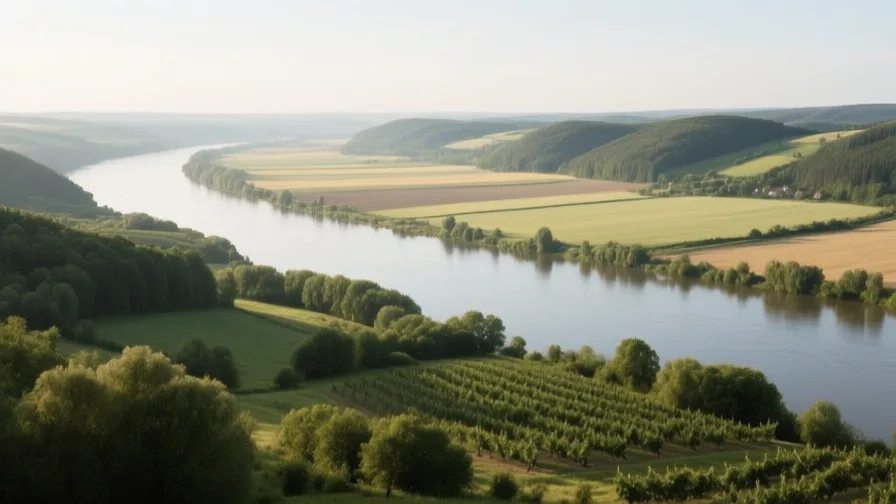 Serbia · AI landscape illustration · Artistic impression
Country · Europe
Serbia
Saved in this browser — no account needed. Sign in later and it comes with you.
Where it is
Serbia is a landlocked country where the flat southern edge of the Pannonian Plain meets the mountains of the central Balkans. The north, Vojvodina, is fertile plain dominated by the Danube. In the centre the terrain turns to hills and low mountains, and four mountain systems, the Dinaric Alps, the Carpathians, the Balkan range and the Rila-Rhodope mountains, converging on the country. Almost all of it, 92 per cent, drains to the Danube and so to the Black Sea. It has more neighbours than any other European country except Germany, and its climate is moderately continental, with cold winters and hot, humid summers in the north.
The land and water around it
The Danuberiver
The river flows 588 kilometres through or along the border of Serbia and takes in the Sava, Tisa, Drina and Morava. Serbia’s lakes are mostly small, but the dam at Đerdap on the Danube is the biggest artificial lake in the country.
The Morava corridorvalley
The valley of the Great and South Morava rivers is the main line of communication, running from Belgrade south-east toward Niš and Skopje. Most major cities, the main railway and the main highway lie along or near it, while the land to the east is sparsely populated and rises into limestone ranges.
The Pannonian plain in Vojvodinaplain
In the north the land is flat and fertile, and it was a Habsburg crownland until 1918. The glacial lake Palić and many oxbow lakes along the rivers are among the few natural lakes.
Its history, in short
Slavic groups settled this part of the Roman and Byzantine world from the 6th century, merging with the people already there, and the first Serbian proto-state appeared in the 7th century as a vassal of Byzantium. A kingdom was founded in 1217 under the Nemanjić dynasty, with its own national church, and in the 14th century it grew into an empire spanning much of the Balkan peninsula. The Ottomans absorbed the whole country by the mid-16th century, and the Habsburgs held the north from the early 18th. Serbs had been moving north into Hungarian and then Habsburg lands since the 14th century, forming what became Vojvodina. Revolution from 1804 re-created a Serbian state, which was recognised as independent in 1878 and became a kingdom in 1882. In 1918, after the First World War, Serbia absorbed Vojvodina and joined with Croats and Slovenes in the Kingdom of Yugoslavia. After the Second World War it became one of six republics in socialist Yugoslavia. When that broke up in the 1990s Serbia formed a union with Montenegro, which dissolved in 2006. Kosovo’s declaration of independence in 2008 remains disputed.
Timeline
Dates are shown on a timeline rather than as changing shapes on the map. The globe draws modern boundaries only, and tinting a modern outline to stand for a historical one would state something we cannot source.
Post-classical world
1217
The Serbian kingdom
The Nemanjić dynasty establishes a kingdom and a national church, the Serbian Orthodox Church. The medieval state reaches its greatest extent in the 14th century as an empire.
1345–1346
The Serbian Empire
The empire is proclaimed, spanning most of the Balkan peninsula. Accounts date the proclamation to either 1345 or 1346.
Early modern & oceanic
Mid-16th century
Ottoman rule
The Ottomans take the last Serbian lands, by which time the nobility has been eliminated and the peasantry enserfed. The Patriarchate of Peć, abolished in 1463, is restored in 1557 and keeps Serbian cultural life going.
Industrial & imperial
1804–1835
The Serbian Revolution
Two uprisings, the first led by Karađorđe Petrović, bring back a Serbian state after centuries of Ottoman rule. For nearly a decade the insurgents hold de facto independence before the Ottomans retake the territory.
Well attestedWikipedia1878
Recognised independence
The Great Powers recognise Serbia as an independent state at the Congress of Berlin. It is proclaimed a kingdom in 1882, and in the Balkan Wars of 1912–13 it expands into Raška, Kosovo and Vardar Macedonia.
1918
Yugoslavia
Serbia incorporates Vojvodina and unites with the Croats and Slovenes in a common South Slav state, ending its life as a separate political entity. It returns after the Second World War as one of six federal units.
Well attestedWikipedia
Contemporary
2006
Independence restored
The union of Serbia and Montenegro, formed in 1992 from the two remaining Yugoslav republics, is dissolved, and Serbia’s independence is restored.
Well attestedWikipedia17 February 2008
Kosovo’s declaration
Kosovo unilaterally declares independence, which receives mixed responses internationally. Serbia continues to regard Kosovo as part of its territory, while many other countries recognise the declaration and treat parts of the boundary with Montenegro and North Macedonia as Kosovo’s.
DisputedWikipediaThe Serbian government, which treats Kosovo as part of Serbia, and the governments that recognise Kosovo’s independence
Places that carry meaning
Vinča-Belo Brdo and Lepenski VirNeolithic
Sites on the banks of the Danube from the Starčevo and Vinča cultures, which spread across much of Southeast Europe about 8,500 years ago. Some scholars believe the signs found on Vinča objects are among the earliest known writing.
Some archaeologists regard the Vinča signs as writing; others do not
SirmiumRoman period
Modern Sremska Mitrovica, a city ranked among the four most important in the late Roman Empire, which served as a capital during the Tetrarchy. Seventeen Roman emperors were born in what is now Serbia.
The medieval frescoed monasteriesMedieval
Three celebrated frescoes are the White Angel of Mileševa, the Studenica Crucifixion and the Dormition painted at Sopoćani, which are regarded among the finest achievements of medieval painting, and Serbian painting is said to originate with the frescoes of such Orthodox monasteries.
Languages here
Places are usually multilingual. This lists what is actually spoken, not one language per border.
SerbianSlavic family
The official language, spoken by 84.4 per cent of the population.
Serbian has both a Cyrillic and a Latin alphabet in regular use, each matching the other letter for letter. The constitution makes Cyrillic the official script, but both are common. It belongs to the Shtokavian dialect group of Serbo-Croatian, with Torlakian dialects in the south-east.
HungarianUralic family
The largest recognised minority language, concentrated in Vojvodina.
Spoken by about 2.5 per cent of the population. Hungarian is one of five minority languages used officially by the provincial administration in Vojvodina, and schooling is available in it from preschool to university.
RomaniIndo-Aryan family
The language of the Roma minority.
Spoken by about 1.2 per cent of the population as a first language, while over a third of Roma in Serbia have Serbian as their mother tongue. It is taught within a school subject called Mother Tongue with Elements of Ethnic Culture.
Albanian
A recognised minority language, taught from preschool to university.
About 1 per cent of the population speak it, and it is among eight minority languages with a complete education cycle. Serbia has 14 recognised minority languages in all, and a language gains official local use where its speakers exceed 15 per cent of a municipality.
Learn the language here
Check yourself
Which script does Serbia’s constitution designate as official?
Cyrillic
The constitution makes Serbian Cyrillic the official script for legal and administrative use, although the Latin alphabet is in regular daily use too, which leaves Serbian with two scripts used side by side, a rarity among European languages.
How much of Serbia lies in the Danube drainage basin?
Almost all of it, about 92 per cent
The Sava, Tisa, Drina and Morava are all tributaries of the Danube, so nearly every stream in the country ends up in the Black Sea.
Worth arguing about
- Serbia sits at the crossing of Byzantine and Western Christendom and, later, of the Ottoman and Habsburg empires. How much does a place on a frontier shape a national culture, and how much is it a burden?
- Kosovo is a place where one government claims territory that many others treat as a separate state. How should an atlas describe a border that two sides draw differently?
What we have not established
These are open questions, listed rather than filled in. We would rather show a gap than a plausible guess.
How large is Serbia?
The area is about 77,600 square kilometres without Kosovo and about 88,500 with it, and the answer depends on whose view of Kosovo’s status is taken. The 2022 census counted 6,647,003 people excluding Kosovo, so we use that boundary for population.
Sources
- Wikipedia · SerbiaWikipedia · encyclopedia · checked 2026-11-24
- Wikipedia · History of SerbiaWikipedia · encyclopedia · checked 2026-11-24
- Wikipedia · Geography of SerbiaWikipedia · encyclopedia · checked 2026-11-24
- Wikipedia · Languages of SerbiaWikipedia · encyclopedia · checked 2026-11-24
Reviewed by Globe Quest editorial on 2026-11-24. Drafted with AI assistance and checked against the sources above before publication.