 Globe Quest
 Human Quest · LearningSign in
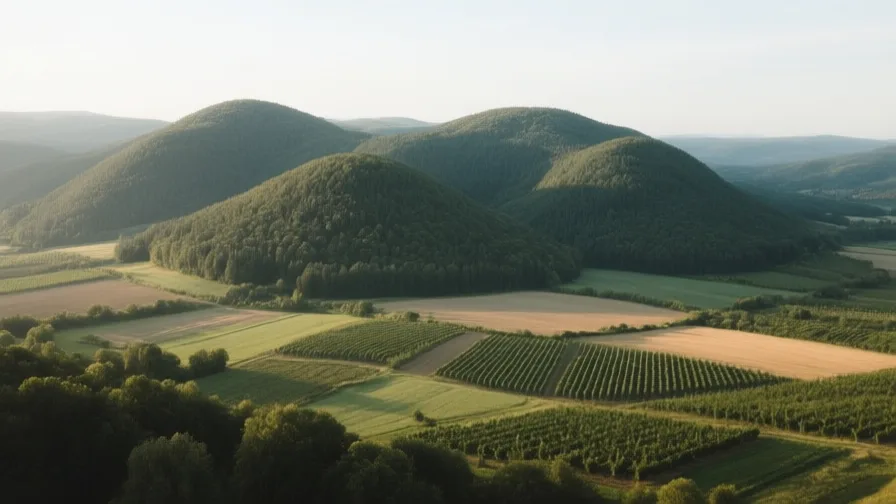 Bulgaria · AI landscape illustration · Artistic impression
Country · Europe
Bulgaria
Saved in this browser — no account needed. Sign in later and it comes with you.
Where it is
Bulgaria takes up the eastern quarter of the Balkan Peninsula, between the Danube on the north and the Black Sea on the east. Its terrain runs in four bands from north to south: the Danubian Plain, the Balkan Mountains (Stara Planina, the “Old Mountain”), a transitional region of valleys and mid-height ranges around Sofia and the Upper Thracian Plain, and the Rila–Rhodope massif, where Musala at 2,925 metres is the highest point in the Balkans. More than two-thirds of the country lies below 600 metres. Continental air flows freely across the open northern plain, while the south feels Mediterranean influence, so the climate changes quickly over short distances.
The land and water around it
The Balkan Mountainsmountains
Stara Planina runs west to east for about 555 kilometres, from the Timok valley to Cape Emine on the Black Sea, dividing the Danubian Plain from the south. It is a continuation of the Carpathians and is crossed by passes such as the Zlatitsa and Vratnik. The country’s heart of medieval power lay on either side of it.
The Danube and the Danubian Plainplain
The Danube forms most of the border with Romania. South of it the plain covers nearly a third of the country, with fertile alluvial land beside the river and hills and plateaus further east. It is the ancient Moesia, open to continental air masses.
Rila, Pirin and the Rhodopesmountains
Rila and Pirin are the country’s two highest mountains, with Alpine character; the lower but much wider Rhodopes lie to the east, densely forested and gentler. Musala in Rila is the highest summit in the Balkan Peninsula.
Its history, in short
The land has been settled for a very long time. The Varna cemetery of about 5000 BC holds some of the oldest worked gold known, and later the Thracians, then Persians, Macedonians and Celts, contested the region until Rome made it the province of Thracia in 46 CE. Slavs settled from about the 6th century. In 680–681 the Bulgars under Asparuh, a Turkic people from north of the Black Sea, defeated the Byzantines and founded the First Bulgarian Empire, which adopted Orthodox Christianity in 864 and developed the Cyrillic script at Preslav. Byzantium dismantled it in the early 11th century, a revolt in 1185 started the Second Empire at Tarnovo, and the Ottomans completed their conquest by 1396, holding the land for nearly five centuries. A Russian war led in 1878 to an autonomous principality, much smaller than Russia had planned, and independence came in 1908. Many Bulgarians were left outside the borders, which fed conflicts with neighbours and two alliances with Germany. Communist rule from 1946 ended after 1989, and the country joined NATO in 2004, the European Union in 2007 and the euro in January 2026.
Timeline
Dates are shown on a timeline rather than as changing shapes on the map. The globe draws modern boundaries only, and tinting a modern outline to stand for a historical one would state something we cannot source.
First cities & states
c. 4600–4200 BCE
The Varna gold
Ritual burials at the Varna necropolis, found in the 1970s, include golden rings, bracelets and ceremonial weapons, among the oldest worked gold known anywhere and evidence of social hierarchy in early Europe.
Classical world
46 CE
Rome creates Thracia
After decades of warfare Rome annexes the Thracian client kingdom and makes it a province. Serdica, now Sofia, develops in this period, prized for its mineral springs.
Well attestedWikipedia
Post-classical world
681
The First Bulgarian Empire
A peace treaty with Byzantium recognises the state founded by the Bulgars of Khan Asparuh, who ruled over a Slavic population as a small close-knit ruling caste.
Well attestedWikipedia864
Conversion to Orthodoxy
Boris I abolishes Bulgar paganism in favour of Eastern Orthodox Christianity. The Cyrillic alphabet, developed at Preslav, follows, making the empire a centre of Slavic culture and a source of the written word for other Slavs.
Well attestedWikipedia1185
The Second Bulgarian Empire
Led by Peter and Asen, nobles whose origin is described as Bulgarian, Cuman, Vlach or mixed, a revolt against Byzantium succeeds, and the Byzantines recognise independence the next year. The new state is centred on Tarnovo.
1393–1396
Ottoman conquest
The Ottomans sack Tarnovo in 1393 after a three-month siege, and Vidin falls in 1396 after the defeat of a crusade at Nicopolis. The nobility is eliminated and the peasantry bound to Ottoman masters; Sozopol, the last settlement to fall, is taken in 1453.
Industrial & imperial
1878
San Stefano and Berlin
Russia and the Ottomans sign the Treaty of San Stefano in March, which would have created a large autonomous Bulgaria. The Great Powers reject it and in July the Treaty of Berlin replaces it with a much smaller principality, leaving many Bulgarians outside the border.
Well attestedWikipedia5 October 1908
Independent kingdom
The principality proclaims itself the independent Kingdom of Bulgaria and becomes increasingly militarised, sometimes called the Balkan Prussia.
Well attestedWikipedia
Places that carry meaning
SofiaFrom Roman Serdica
The capital and largest city, with about 1.24 million people in 2019. Its Roman predecessor Serdica was a city of mineral springs, and the name may come from a Celtic tribe, the Serdi.
Rila MonasteryMedieval
One of nine UNESCO sites in the country, founded by Saint John of Rila, Bulgaria’s patron saint. It sits in the mountains of Rila, the range holding a third of the country’s nesting birds.
Preslav and Tarnovo10th and 13th–14th centuries
Capitals of the two medieval empires and homes of literary schools. Preslav’s is credited with the Cyrillic alphabet, and Tarnovo’s with a silver age of manuscripts under the Asen and Shishman dynasties.
Languages here
Places are usually multilingual. This lists what is actually spoken, not one language per border.
BulgarianSlavic family
The only official language.
It lacks noun cases and infinitives, uses a suffixed definite article and has a complex verb system that marks evidentiality, features that set it apart from other Slavic languages. Bulgarians who converted to Islam under Ottoman rule, the Pomaks, kept Bulgarian.
TurkishTurkic family
The language of the largest minority, about 8.4 per cent of the population.
The Turkish minority is the country’s largest. The Bulgars themselves were of Turkic origin, though the modern state’s language is Slavic.
Learn the language here
Check yourself
Where was the Cyrillic alphabet developed, according to Bulgarian tradition?
At the Preslav Literary School in the First Bulgarian Empire
After Boris I’s conversion in 864, the capital Preslav developed the script, which spread to other Slavs and shaped the empire’s role as a centre of Slavic literature.
Why were many ethnic Bulgarians left outside the new state of 1878?
The Great Powers replaced the San Stefano treaty with the smaller Principality of Bulgaria at Berlin
The big autonomous Bulgaria planned in March worried the other powers, who cut it down to Moesia and the Sofia region in July, a decision that fed Bulgarian irredentism for decades.
Worth arguing about
- Bulgaria’s modern borders are far smaller than the Bulgaria of the 1878 Treaty of San Stefano. How far does a lost “greater” state shape a country’s view of its neighbours?
- The country has been shrinking in population since 1989. What does a state do when its people leave faster than it can adapt?
What we have not established
These are open questions, listed rather than filled in. We would rather show a gap than a plausible guess.
How large is the Roma minority?
Census figures give about 4.4 per cent, but the Roma population is usually undercounted and may be as much as 11 per cent, so the real share is uncertain.
Sources
- Wikipedia · BulgariaWikipedia · encyclopedia · checked 2026-11-24
- Wikipedia · History of BulgariaWikipedia · encyclopedia · checked 2026-11-24
- Wikipedia · Geography of BulgariaWikipedia · encyclopedia · checked 2026-11-24
Reviewed by Globe Quest editorial on 2026-11-24. Drafted with AI assistance and checked against the sources above before publication.