 Globe Quest
 Human Quest · LearningSign in
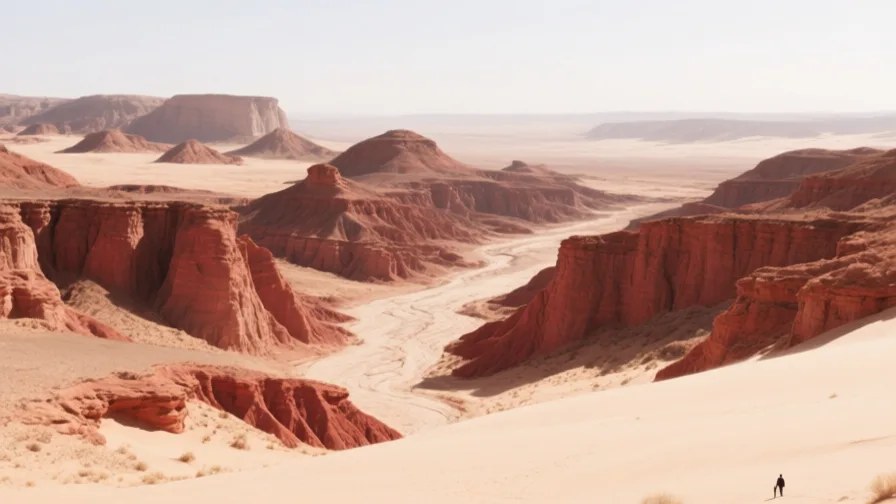 Jordan · AI landscape illustration · Artistic impression
Country · Middle East
Jordan
Saved in this browser — no account needed. Sign in later and it comes with you.
Where it is
Jordan is a country of a high plateau and a deep valley. Most of it is a limestone plateau 700 to 1,200 metres up that fades east into the Syrian and Arabian deserts, so the great majority of the land is arid and nearly empty. The western edge breaks off into the Jordan Rift Valley, where the Jordan River runs down to the Dead Sea, one of the lowest points on land. Rain is useful only in the north-western highlands, so the cities of Amman, Irbid, Zarqa, Jerash, Madaba and Karak line up there. The only coast is 26 km on the Gulf of Aqaba, and fresh water is the country’s main limit.
The land and water around it
The Jordanian plateau and highlandsplateau
A limestone steppe at about 900 metres on average, cut by deep wadis and with peaks above 1,700 metres in the south. These highlands are the area of long-settled villages, and rainfall here supports arable land and Mediterranean evergreen forest.
The Jordan Rift Valley and Dead Seavalley
A 380-km trench from the Yarmouk River to Aqaba. The Jordan River drops from about 3,000 metres at its headwaters to over 400 metres below sea level and ends in the Dead Sea, the deepest depression on the land surface. Evaporation there is extreme and the surface water carries about 250 grams of dissolved salt per litre.
The eastern desertdesert
Most of the East Bank is part of the Syrian and northern Arabian deserts, with sand, dunes and salt flats in the south and south-east, and sandstone hills that support only sparse vegetation after the winter rains. These areas are the least populated.
Its history, in short
Transjordan, the land east of the Jordan, was the home of Iron Age kingdoms, Ammon, Moab and Edom, and then of the Nabataeans, Arabs who ran the trade routes from their capital Petra from the second century BCE. Rome annexed their kingdom in 106 CE and grouped cities such as Philadelphia (Amman) and Gerasa (Jerash) in the Decapolis, and under Byzantium the land filled with churches. After the Muslim conquest of the 630s the Umayyads built desert castles here. Ottoman rule began in 1516 and left the region a thinly governed frontier of tribal confederations. The Arab Revolt of 1916, led by the Hashemites of Mecca, brought the Emirate of Transjordan under British protection in 1921, and independence followed in 1946. Jordan took the West Bank in the 1948 war, annexed it in 1950, lost it to Israel in 1967 and renounced the claim in 1988. It signed a peace treaty with Israel in 1994. Since 1948 it has taken in large numbers of refugees, Palestinians, Iraqis and Syrians, and many Palestinians have Jordanian citizenship.
Timeline
Dates are shown on a timeline rather than as changing shapes on the map. The globe draws modern boundaries only, and tinting a modern outline to stand for a historical one would state something we cannot source.
Classical world
169 BCE
The Nabataean kingdom
Arabs based south of Edom establish an independent kingdom while the Ptolemies and Seleucids fight over the region. Their wealth comes from the trade routes, and their capital is Petra.
Approximate dateWikipedia106 CE
Rome annexes Nabataea
Emperor Trajan takes the kingdom without a fight and rebuilds the King’s Highway as the Via Traiana Nova. Roman cities of Transjordan form the Decapolis league.
Post-classical world
636
The Battle of the Yarmouk
A Rashidun army defeats the Byzantines just north of Transjordan, which becomes essential ground for the conquest of Damascus. The Umayyads then build desert castles here.
Well attestedWikipedia
Early modern & oceanic
1516
Ottoman rule begins
The Ottomans take the Levant from the Mamluks. They set up an administration in Karak and a garrison at Shobak to protect the pilgrimage route, but otherwise interfere little east of the Jordan.
Well attestedWikipedia
Industrial & imperial
1916
The Arab Revolt
Sharif Hussein of Mecca and his sons rise against the Ottomans, with British and French support. Local Bedouin, Circassian and Christian communities in Transjordan help.
Well attestedWikipedia
Contemporary
1946
Independence
The treaty of London of 22 March 1946 recognises independence, and on 25 May Transjordan becomes the Hashemite Kingdom of Jordan with Abdullah as first king. Jordan joins the UN in 1955.
Well attestedWikipedia1948–1988
The West Bank
Jordan intervenes in the 1948 war, controls the West Bank, and formally annexes it in April 1950. Israel occupies the territory in 1967, and in 1988 King Hussein gives up Jordan’s claim to it in favour of the Palestinians.
Jordan, which formally annexed the territory, and the Arab League, in which some members demanded Jordan’s expulsion and which then declared the annexation a temporary practical measure, with Jordan holding the land as trustee pending a settlement. The annexation was not widely recognised.
1994
Peace with Israel
Jordan and Israel sign a peace treaty.
Well attestedWikipedia
Places that carry meaning
Petra1st century CE
The Nabataean capital, which flourished through irrigation and farming as well as trade. Its most elaborate building, Al-Khazneh, is thought to be the tomb of King Aretas IV. Petra declined as sea trade grew and after an earthquake in 363, and was eventually abandoned.
JerashRoman period
Gerasa, one of the ten Decapolis cities, is among the best-preserved Roman cities in the East and was visited by Emperor Hadrian on his journey to the province of Syria.
‘Ain GhazalNeolithic, 7250 BCE or earlier
A prehistoric village in what is now eastern Amman and among the largest known in the Near East. Dozens of plaster human figures were found there, and The Jordan Museum holds Neolithic statues from the site.
Umm ar-RasasByzantine period
A site in the south of the Amman area with at least sixteen Byzantine churches, evidence of how many churches Byzantine Transjordan built.
Languages here
Places are usually multilingual. This lists what is actually spoken, not one language per border.
ArabicSemitic family
The official language, in a standard and a spoken form.
Modern Standard Arabic is the written and school language. Most Jordanians speak a Jordanian Arabic dialect at home. Arabs are about 98 per cent of the population.
EnglishGermanic family
The de facto language of business and higher education.
It has no official status, but is widely spoken and is the language of banking and commerce. Almost all university classes are taught in English, and public schools teach it alongside Standard Arabic.
Circassian and other minority languagesNorthwest Caucasian family
Spoken within small communities.
Circassians, Armenians and Chechens from the Caucasus make up most of the non-Arab 2 per cent, and Chechen, Circassian and Armenian are still spoken in their communities. Tagalog and Russian are also spoken within their communities.
Learn the language here
- 1Understand which languages are spoken hereJordan is multilingual. Start with which languages are used, by whom, and for what — the phrase list only covers one of them.Written by Globe Quest
- 2Practise with people: Arabic practice · DohaAn in-person practice circle. It is a prepared plan and needs a host before it runs.Run by members
Check yourself
Why do most of Jordan’s major cities lie in the north-west?
They sit where soils are fertile and rainfall is relatively reliable
The east is arid plateau and desert. Amman, Irbid, Jerash, Zarqa, As-Salt, Madaba and Karak sit in the western highlands where soils and rain allow farming.
Which people built their capital at Petra?
The Nabataeans
The Nabataeans were Arabs who gained wealth by controlling regional trade routes. Rome annexed their kingdom in 106 CE.
Worth arguing about
- Jordan has taken in Palestinians, Iraqis and Syrians while having little water. What would a fair way to share the cost of hosting refugees look like?
- Jordan annexed the West Bank in 1950 and renounced its claim in 1988. How does that history shape what Jordanians and Palestinians each expect of the other?
What we have not established
These are open questions, listed rather than filled in. We would rather show a gap than a plausible guess.
How many people live in Jordan?
The 2015 census counted 9,531,712, of whom about 30 per cent were not citizens, a group that includes refugees. Later estimates of 11.3 to 11.5 million rely on projections, and refugees who are not registered fall outside both.
Sources
- Wikipedia · JordanWikipedia · encyclopedia · checked 2026-11-24
- Wikipedia · History of JordanWikipedia · encyclopedia · checked 2026-11-24
- Wikipedia · Geography of JordanWikipedia · encyclopedia · checked 2026-11-24
Reviewed by Globe Quest editorial on 2026-11-24. Drafted with AI assistance and checked against the sources above before publication.