 Globe Quest
 Human Quest · LearningSign in
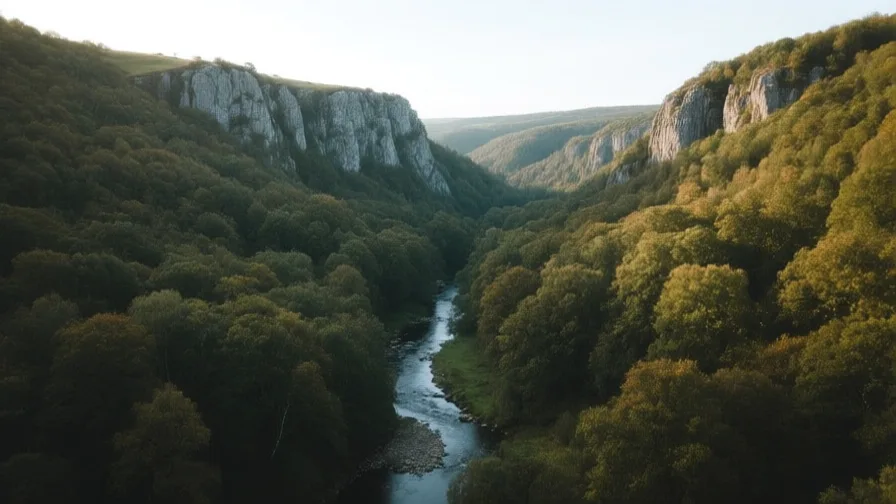 Luxembourg · AI landscape illustration · Artistic impression
Country · Europe
Luxembourg
Saved in this browser — no account needed. Sign in later and it comes with you.
Where it is
Luxembourg is a landlocked country of about 2,586 square kilometres, no more than 82 kilometres from north to south and 57 from west to east, wedged between Belgium, Germany and France. Two landscapes divide it. The northern third, the Éislek or Oesling, is part of the Ardennes, a land of hills and low peaks with poor soil, used mostly for cattle, and the country's highest point, the Kneiff, at 560 metres. The southern two thirds, the Gutland, is lower, more fertile and far more densely settled, and holds the capital, the Red Lands industrial belt and the Moselle wine valley. Rivers form much of the eastern border, and the climate is oceanic, with warm summers, cool winters and heavy rain.
The land and water around it
The Éislek (Oesling)mountains
The northern third of the country belongs to the Ardennes. Hills and low mountains fill it, and few people live there: Wiltz is the only town above five thousand inhabitants.
The Gutland and the Red Landsplain
The southern two thirds are flatter and warmer. Their sandstone plateau is the site of the capital, while iron ore under the far south made the Red Lands a mining and steel region from at least Roman times, and several of the country's largest towns, such as Esch-sur-Alzette, Dudelange and Differdange, grew there.
The Moselle, Sauer and Ourriver
These three rivers form almost the whole border with Germany. The Moselle valley in the south-east is the lowest ground in the country and carries vineyards along its slopes, and the basin of the Moselle includes almost all Luxembourg's area.
Its history, in short
Luxembourg's recorded history starts in 963, when Siegfried, Count of the Ardennes, acquired the castle on the Bock rock, around which a county of the Holy Roman Empire grew. In 1312 a member of the house became emperor, and under John the Blind, who was also king of Bohemia, the dynasty ruled over wide stretches of Central Europe. Its extinction ended the duchy's independence, and from the 15th century it passed to Burgundy and then for some three centuries to the Habsburgs, first Spanish, then Austrian. Revolutionary France annexed it in the 1790s. The Congress of Vienna of 1815 restored it as a grand duchy tied to the Dutch crown, while later partitions took land to the west, and its independence was confirmed after the Luxembourg Crisis of 1867. Germany invaded in 1914 and occupied it again from 1940 to 1944. Since then Luxembourg has been an architect of European integration, a founding member of the UN, NATO and the Benelux, and a country where foreign nationals now make up nearly half the population.
Timeline
Dates are shown on a timeline rather than as changing shapes on the map. The globe draws modern boundaries only, and tinting a modern outline to stand for a historical one would state something we cannot source.
Post-classical world
963
The castle on the Bock
Siegfried, Count of the Ardennes, acquires Lucilinburhuc, today's Luxembourg Castle, from the abbey of Saint Maximin in Trier. Recorded Luxembourgish history begins with the exchange.
Well attestedWikipedia1312
An emperor from Luxembourg
Henry VII becomes Holy Roman Emperor, and the House of Luxembourg begins to rule the empire and to exert influence across Central Europe. His son John the Blind was also king of Bohemia and died at Crécy in 1346.
Well attestedWikipedia
Early modern & oceanic
1795
French annexation
After the army of Revolutionary France invaded in 1793–94 and the fortress surrendered, the duchy is annexed and made the département of the Forêts. A peasants' revolt against the French in 1798 was quickly put down.
Industrial & imperial
1815
A grand duchy
The Congress of Vienna recreates Luxembourg as a grand duchy sharing a ruler with the Netherlands, though Prussia and the Dutch both claimed the territory.
1839
The third partition
A treaty takes more territory away, the third reduction in Luxembourg's size after 1658 and 1815, but also sets out its formal independence.
Well attestedWikipedia1867
The Luxembourg Crisis
Independence is confirmed after a crisis over the grand duchy's status. The Treaty of London requires the fortress of the capital to be dismantled.
August 1914
Invaded despite neutrality
Imperial Germany violates Luxembourg's neutrality, and the country is occupied until 1918. It was occupied by Germany again from 1940 to 1944.
Contemporary
1948–1949
Neutrality abandoned
Neutrality formally ends in 1948, and in 1949 Luxembourg becomes a founding member of NATO. It had already helped to found the United Nations in 1945.
Well attestedWikipedia
Places that carry meaning
Luxembourg City963 onward
The capital and most populous city, built around a castle on a sandstone spur. Its fortifications and old quarters were inscribed by UNESCO in 1994 for their exceptional state of preservation, and it holds several European Union institutions.
TitelbergIron Age to Roman
A 50-hectare fortified Iron Age settlement of the Treveri, the Celtic tribe that Rome named, and the best known of the archaeological sites from this period. The Treveri were more cooperative with Rome than most Gallic tribes.
The Red LandsRoman times onward
The far south, rich in iron ore and a mining and heavy-industry region. The tall chimneys of the steelworks are typical landmarks, and most of the country's main towns outside the capital are here.
Languages here
Places are usually multilingual. This lists what is actually spoken, not one language per border.
LuxembourgishGermanic family
The sole national language and the everyday language of Luxembourgers.
Luxembourgish belongs to the Moselle Franconian group of West Central German dialects and is largely intelligible across the border, though it carries more than 5,000 words of French origin. The 1984 Language Regimen Act makes it the national language, and knowing it is a condition of naturalisation.
FrenchRomance family
The only language of legislation and one of three administrative languages.
Laws are written in French, and the administration must reply to a citizen in whichever of the three languages was used to ask. Its neighbours France and Germany have both left a deep mark on how people speak and write.
GermanGermanic family
The third administrative language.
German is used in administration and the courts together with French and Luxembourgish, so all three work as administrative languages even though the country has no “official” language as such.
PortugueseRomance family
The language of the largest immigrant community.
In 2025 about 13.2 per cent of the population held Portuguese nationality, followed by French (7.2 per cent), Italian (3.7), Belgian (2.7) and German (1.8). Nearly half of permanent residents, 47 per cent, were foreign nationals.
Learn the language here
Check yourself
Which language is used for writing Luxembourg's laws?
French
Luxembourgish is the national language, but legislation is written in French alone, while all three languages may be used for administration.
What made the south of Luxembourg an industrial region?
Iron ore under the Red Lands
Iron ore deposits supported mining and steelmaking in the far south from at least Roman times, and the towns of the region grew around the works.
Worth arguing about
- Luxembourg has three administrative languages and a different national language. What does a country gain, and what does it risk, when its everyday language is not the one its laws are written in?
- Nearly half the people living in Luxembourg are foreign nationals. How should a very small state think about citizenship, language and belonging?
What we have not established
These are open questions, listed rather than filled in. We would rather show a gap than a plausible guess.
When did Habsburg rule over Luxembourg begin?
Accounts give 1477, 1482 or the 15th century in general, depending on whether the date counted is a marriage inheritance, the later accession of Philip the Handsome, or the end of the Burgundian period that began in 1443.
Sources
- Wikipedia · LuxembourgWikipedia · encyclopedia · checked 2026-11-24
- Wikipedia · History of LuxembourgWikipedia · encyclopedia · checked 2026-11-24
- Wikipedia · Geography of LuxembourgWikipedia · encyclopedia · checked 2026-11-24
Reviewed by Globe Quest editorial on 2026-11-24. Drafted with AI assistance and checked against the sources above before publication.