 Globe Quest
 Human Quest · LearningSign in
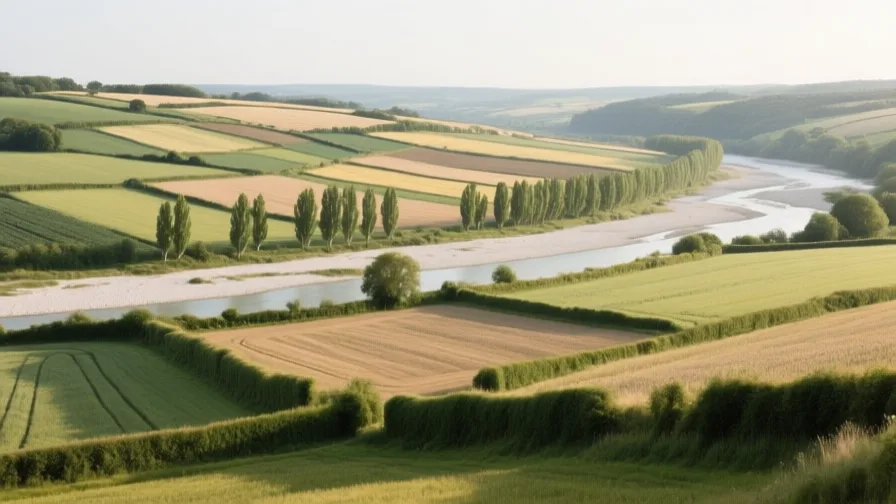 France · AI landscape illustration · Artistic impression
Country · Europe
France
Saved in this browser — no account needed. Sign in later and it comes with you.
Where it is
Metropolitan France is a six-sided country on the western edge of Europe, facing the North Sea and English Channel to the north, the Atlantic to the west and the Mediterranean to the south-east. Its borders follow natural lines in many places: the Pyrenees to the south, the Alps and the Jura to the south-east and east, and the Rhine in part of the east. Old, worn massifs such as the Massif Central, the Vosges and the Armorican Massif surround two big sedimentary basins, the Paris Basin and the Aquitaine Basin, while the Rhône valley is a natural route between the Mediterranean and the north. Mont Blanc, at 4,810 metres, is the highest point in Western Europe. The country also includes overseas regions and territories.
The land and water around it
The Alps and Mont Blancmountains
Young mountains that mark the border with Italy and Switzerland and include Western Europe’s highest peak. The Pyrenees and the Jura are also relatively young and less eroded than the older central massifs.
The Rhône valleyvalley
A natural passage that allows easy communication between the Mediterranean coast and the interior.
The Paris Basin and Aquitaine Basinplain
Two broad sedimentary lowlands fenced by the old massifs. Together with farmland that covers more than half of the country’s land, they underpin the description of France as the granary of the old continent.
Its history, in short
Greek colonists from Phocaea founded Massalia, today’s Marseille, around 600 BCE, and Celtic tribes spread across the rest of the territory over the following centuries. Rome annexed the area in 51 BCE and a Gallo-Roman culture followed. When the empire collapsed, the Frankish king Clovis I brought most of Gaul under one ruler by the end of the 5th century, and his people’s name became the country’s. The Treaty of Verdun in 843 split the Carolingian empire, and its western part became the Kingdom of France; the Capetian dynasty took the throne in 987 and slowly enlarged the royal domain until it covered over half of the modern country. A long dynastic war with England in the 14th and 15th centuries, wars of religion in the 16th and the rule of Louis XIV shaped the early modern state. The Revolution of 1789 swept away the old order and yielded a declaration of the rights of man, and Napoleon then built an empire that carried the Napoleonic Code across Europe. The Third Republic followed the defeat of 1870, France paid heavily in the First World War, was occupied from 1940, and has been governed under the Fifth Republic since 1958. Most colonies became independent in the 1960s after the Algerian War.
Timeline
Dates are shown on a timeline rather than as changing shapes on the map. The globe draws modern boundaries only, and tinting a modern outline to stand for a historical one would state something we cannot source.
Classical world
c. 600 BCE
Massalia founded
Ionian Greeks from Phocaea found a colony on the Mediterranean coast, the future Marseille, the oldest city in France.
Approximate dateWikipedia51 BCE
Rome annexes Gaul
The conquest, led by Julius Caesar in the Gallic Wars of 58 to 51 BCE, leads to a distinct Gallo-Roman culture.
481–486
Clovis and the Franks
Clovis starts as a Salian Frankish king in 481, defeats the last Roman governors in 486 and goes on to bring all the Franks under one ruler.
Approximate dateWikipedia
Post-classical world
843
Treaty of Verdun
The Carolingian empire is partitioned, and West Francia evolves into the Kingdom of France.
Well attestedWikipedia
Early modern & oceanic
1789
The Revolution
The Estates General of 1789 opens a period of political change that overthrows the ancien régime and yields a declaration of the rights of man.
Well attestedWikipedia
Industrial & imperial
Contemporary
1958
The Fifth Republic
Charles de Gaulle forms the present semi-presidential system as the Fourth Republic dissolves during the Algerian War. Algeria and most colonies become independent in the 1960s.
Well attestedWikipedia
Places that carry meaning
ParisCapital and largest city
The seat of government and the biggest urban area by far, with a metropolitan population above 13 million.
MarseilleFrom c. 600 BCE
The oldest city in France, and the country’s first port. It is still the main French maritime gateway to the Mediterranean.
Lascauxc. 18,000 BCE
A cave in the Dordogne with paintings dated to about 18,000 BCE, among the cave art that appears in the region as modern humans replace Neanderthals.
Languages here
Places are usually multilingual. This lists what is actually spoken, not one language per border.
FrenchRomance family
The official language and the language of schooling and public life.
A Romance language derived from Latin. Standardisation began in the Renaissance, and since 1635 the Académie Française has acted as the language’s official arbiter, although what it recommends is not binding in law.
Regional languages
Spoken alongside French in several regions, with varying vitality.
Occitan, Breton, Catalan, Flemish, Alsatian, Basque and Corsican are all spoken in France. Italian was the official language of Corsica until 1859.
Learn the language here
Check yourself
Which French city was founded around 600 BCE by Greeks from Phocaea?
Marseille
Massalia, now Marseille, was the first Greek colony in France and is the oldest city in the country.
What did the Treaty of Verdun in 843 do?
It partitioned the Carolingian empire, with West Francia evolving into the Kingdom of France
The western part of the empire became the kingdom that later grew into modern France.
Worth arguing about
- France has an official language backed by a long-standing academy and also several regional languages. What does a state owe to languages it does not use in government?
- The Revolution’s ideals are still invoked in French politics. How should a country remember a founding moment that also brought the Terror?
Sources
- Wikipedia · FranceWikipedia · encyclopedia · checked 2026-11-24
- Wikipedia · History of FranceWikipedia · encyclopedia · checked 2026-11-24
Reviewed by Globe Quest editorial on 2026-11-24. Drafted with AI assistance and checked against the sources above before publication.