 Globe Quest
 Human Quest · LearningSign in
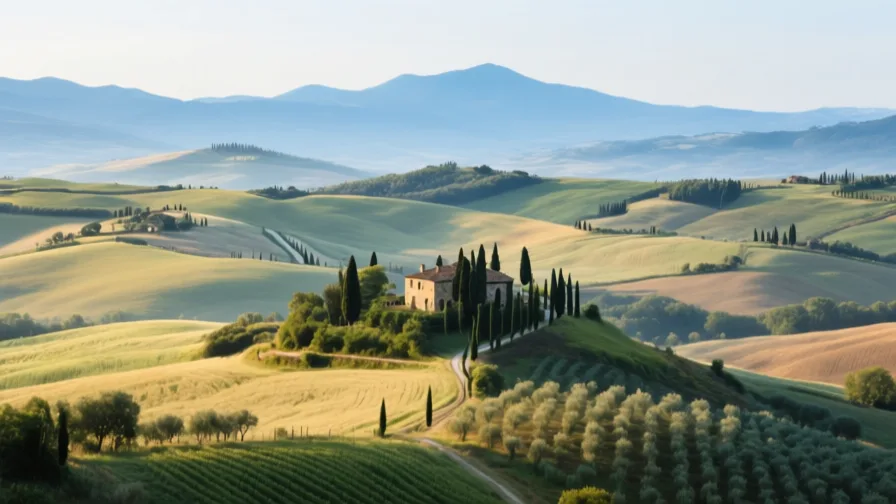 Italy · AI landscape illustration · Artistic impression
Country · Europe
Italy
Saved in this browser — no account needed. Sign in later and it comes with you.
Where it is
Italy is a long boot of a peninsula pushed into the Mediterranean, with the Alps along its northern border and the Apennines running down its spine. Between the two lies the Po Valley, home to almost half the population, and around it are about 800 islands, the largest being Sicily and Sardinia. The coast runs for roughly 7,900 kilometres across the Adriatic, Ionian, Tyrrhenian and Ligurian seas. The country is squeezed between the African and Eurasian plates, which gives it Europe’s record for earthquakes and a chain of volcanoes, Etna and Vesuvius the best known. Climate shifts with the peninsula’s length, from humid continental in the north to Mediterranean in the south.
The land and water around it
The Alps and the Apenninesmountains
The Alps close the north along the watershed, and the Apennines run the length of the peninsula, which explains why so much of the country is hilly and why the sparsely populated interior contrasts with a crowded coast and plain.
The Po Valleyplain
A broad lowland between the Alps and the Apennines with a humid subtropical climate, cool winters and hot summers. Almost half of Italians live in it, and it is the base of the industrial north.
Volcanoes and fault linesvolcano
Etna, at 3,343 metres, is the highest volcano in Europe, and Vesuvius stands over Naples, beside the Campi Flegrei caldera. The Apennines carry the greatest seismic risk, while the Alps, most of the Po Valley and Sardinia carry little.
Its history, in short
Italy’s name and its history are older than its state. Many Italic peoples, along with Etruscans, Greeks in the south and Celts in the north, lived on the peninsula before Rome, founded on the Tiber according to tradition in 753 BCE, conquered them and then the Mediterranean world. After the Western Empire fell, Ostrogoths, Byzantines and Lombards divided the peninsula, and the political unity was never restored. The pope ruled a belt across the middle, Normans and later crowns held the south, and trading cities, Venice and Genoa among them, grew rich in the north. The Renaissance of the fifteenth and sixteenth centuries came out of that fragmentation, funded by merchant wealth and the patronage of families like the Medici of Florence. Unification came in 1861 under the House of Savoy, but it left a poor south, and millions emigrated. Fascism ruled from 1922, war and the resistance followed, and a referendum made Italy a republic in 1946.
Timeline
Dates are shown on a timeline rather than as changing shapes on the map. The globe draws modern boundaries only, and tinting a modern outline to stand for a historical one would state something we cannot source.
Classical world
753 BCE
Traditional founding of Rome
Roman tradition dates the founding to 21 April 753 BCE, by Romulus and Remus. Little is certain about the kings, since few records survive and the later histories lean on legend.
Approximate dateWikipediac. 509 BCE
The Republic
Later writers date the end of the monarchy and the start of a republic of annually elected magistrates and a senate to about 509 BCE.
27 BCE
Augustus and the Empire
Octavian takes the name Augustus, which historians usually treat as the start of the Roman Empire.
Well attestedWikipedia395
The Empire divides
After the death of Theodosius I the Empire is split into Eastern and Western halves. The Western Empire later falls, and Italy passes to Odoacer, the Ostrogoths and, in the sixth century, the Lombards.
Early modern & oceanic
1400s–1500s
The Renaissance
Merchant cities and princely courts, such as the Medici of Florence, fund a flowering of art and science that spreads across Europe.
Approximate dateWikipedia
Industrial & imperial
1861
Kingdom of Italy
After the Risorgimento and a series of wars of independence, a united kingdom is proclaimed, and the constitution of Sardinia is extended to the whole country. Rome joins in 1870.
October 1922
March on Rome
Fascist demonstrations lead King Victor Emmanuel III to appoint Mussolini prime minister. A dictatorship follows, and political parties are banned in 1928.
Well attestedWikipedia
Contemporary
2 June 1946
Republic by referendum
Italians vote to replace the monarchy with a republic, and women vote nationally for the first time. The constitution follows in 1948.
Well attestedWikipedia
Places that carry meaning
Rome753 BCE (traditional) onward
The capital, once the centre of an empire and still the seat of the Catholic Church, which governs Vatican City as an enclave inside the city.
Milan19th century onward
One of Italy’s major cities, in the northern lowland that industrialised quickly after unification while the south stayed poor and sent emigrants abroad.
NaplesAntiquity onward
A large southern city beside Vesuvius and the Campi Flegrei caldera, which rose against the occupying German forces in September 1943.
Languages here
Places are usually multilingual. This lists what is actually spoken, not one language per border.
ItalianRomance family
The official language, with an estimated 64 million native speakers worldwide.
Many Italians speak a regional dialect as their first language, which is different from the recognised minority languages. A national school system and, in the 1950s and 1960s, mass media and television wore the dialects down in the twentieth century.
Sardinian, Friulian and LadinRomance family
Three of twelve historical minority languages formally recognised.
Italy also recognises Albanian, Catalan, German, Greek, Slovene, Croatian, French, Franco-Provençal and Occitan as historical minority languages, spoken near borders and in old settlements.
Immigrant languages
Spoken by arrivals since the 1980s.
Italy was linguistically and culturally homogeneous until the 1980s. Waves of migration then came from Eastern Europe after the fall of the Iron Curtain, and from North Africa, Asia, the Philippines and Latin America. In 2010 Europeans made up 54% of the foreign-born, Africans 22% and Asians 16%.
Learn the language here
Check yourself
What came out of Italy’s long political fragmentation?
Trading city-states and Renaissance courts that funded the arts
Unity was not restored after Rome fell until 1861, and in the meantime merchant cities and princely courts accumulated the wealth that paid for the Renaissance.
Where do almost half of Italy’s people live?
In the Po Valley
The Po Valley, between the Alps and the Apennines, holds nearly half the population, while the Alps, Apennine highlands and Sardinia are sparsely populated.
Worth arguing about
- Italy was a patchwork of states from the fall of Rome until 1861. How much of its regional identity, in dialect, food and politics, is still that patchwork?
- Unification left the south poor and drove emigration. Was the new state ever a single country in practice?
What we have not established
These are open questions, listed rather than filled in. We would rather show a gap than a plausible guess.
How large is Italy?
The text gives several figures between about 301,230 and 302,070 square kilometres depending on the survey and whether inland waters are counted, and the older geographical region of Italy is larger, at about 324,000, than the republic.
Sources
- Wikipedia · ItalyWikipedia · encyclopedia · checked 2026-11-24
- Wikipedia · History of ItalyWikipedia · encyclopedia · checked 2026-11-24
- Wikipedia · Geography of ItalyWikipedia · encyclopedia · checked 2026-11-24
Reviewed by Globe Quest editorial on 2026-11-24. Drafted with AI assistance and checked against the sources above before publication.