 Globe Quest
 Human Quest · LearningSign in
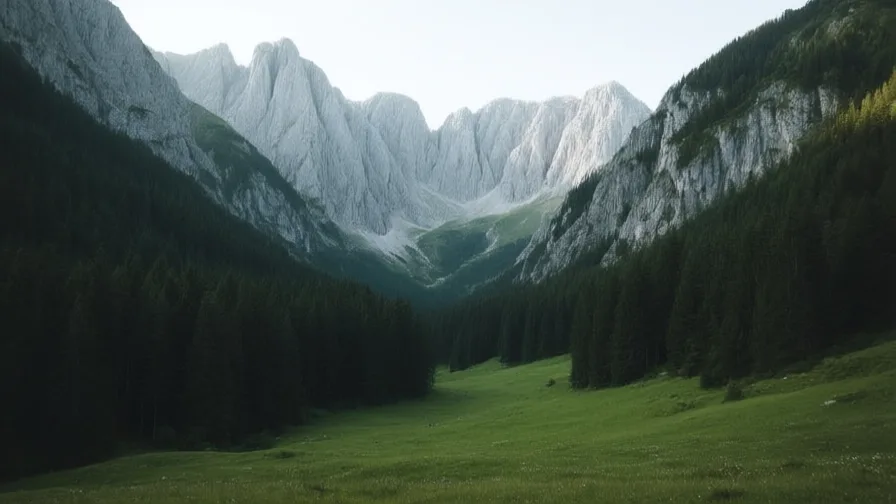 Austria · AI landscape illustration · Artistic impression
Country · Europe
Austria
Saved in this browser — no account needed. Sign in later and it comes with you.
Where it is
Austria is a landlocked country of nearly 84,000 square kilometres in the Eastern Alps, shaped like a pear, with a narrow western corridor between Germany and Italy and a broad eastern body that reaches the edge of the Pannonian plain. The Alps cover 62 per cent of the land, and only about a quarter is low-lying. The Danube crosses the north, and its tributaries from the Alps, the Inn, Salzach and Enns, run north into it, while rivers south of the watershed, the Mur and Drau, run to the Drau instead. Winters are cold and summers can be hot, but the west is alpine and wetter and the east is drier and continental.
The land and water around it
The Eastern Alpsmountains
Three ranges, the Northern Limestone Alps, the Central Alps of granite and the Southern Limestone Alps, run west to east. The Central Alps are the highest and include glaciated areas in the Ötztal Alps and High Tauern. Großglockner, at 3,797 metres, is Austria’s highest mountain. The farther east the ranges run, the lower they become.
The Danube valley and Vienna Basinvalley
North of the Alps the Danube valley and the lowlands curving through Lower Austria, Vienna, Burgenland and Styria are the parts of the country best suited to farming and settlement. The Danube is the only major European river to flow east, and since the 1992 Rhine–Main–Danube Canal it links the North Sea to the Black Sea.
The Bohemian Forestplateau
A granite massif north of the Danube, low, windswept and harsh in climate, which covers about a tenth of the country. Its ridge at Manhartsberg divides the Waldviertel from the Weinviertel.
Its history, in short
Celts of the Hallstatt culture lived here by the sixth century BCE, and the Romans took the kingdom of Noricum in 16 BCE and made it a province that lasted until 476. After the Migration Period the area passed between Ostrogoths, Bavarians, Slavs and Avars. A margraviate of the Holy Roman Empire, first called Ostarrîchi in a document of 996, became a duchy in 1156 and an archduchy in 1453. From 1273 the House of Habsburg ruled, and Vienna became the empire’s administrative capital. After 1683 and the defeat of the Ottomans at Vienna, most of Hungary came under Habsburg control. In 1804 the Habsburgs founded their own Austrian Empire, and in 1867 they agreed a dual monarchy with Hungary. Defeat in the First World War broke the empire up, and a republic was proclaimed in 1918. A dictatorship formed in 1934, and in March 1938 Nazi Germany annexed the country. After liberation in 1945 and a decade of Allied occupation, Austria regained sovereignty by the State Treaty of 1955 and declared permanent neutrality the same year. It joined the European Union in 1995.
Timeline
Dates are shown on a timeline rather than as changing shapes on the map. The globe draws modern boundaries only, and tinting a modern outline to stand for a historical one would state something we cannot source.
Classical world
16 BCE
Noricum becomes a Roman province
Romans conquer the Celtic kingdom of Noricum, which covered most of modern Austria. Roman cities including Vindobona (Vienna), Juvavum (Salzburg) and Brigantium (Bregenz) date from this period.
Post-classical world
996
Ostarrîchi first recorded
A document uses the name Ostarrîchi, “eastern realm”, from which Österreich derives. The Babenberg march was created in 976, and Austria becomes a duchy in 1156.
1273–1918
Habsburg rule
The House of Habsburg, and then Habsburg-Lorraine, dominate the lands until the end of the First World War.
Well attestedWikipedia
Early modern & oceanic
1683
The relief of Vienna
After the Ottoman siege of Vienna fails, the Great Turkish War leaves most of Hungary under Austrian control, formalised in 1699.
Well attestedWikipedia
Industrial & imperial
1804–1806
Austrian Empire
Napoleon’s victories push the Habsburgs to found an Austrian Empire in 1804, and in 1806 they dissolve the Holy Roman Empire to keep Napoleon from claiming its throne.
Well attestedWikipedia1918–1919
From empire to republic
After defeat in the First World War the empire collapses. The Republic of German-Austria is proclaimed in 1918 and the First Austrian Republic in 1919.
Well attestedWikipedia12–13 March 1938
The Anschluss
Austrian Nazis take over the government as German troops enter, and the union with Germany is declared on 13 March. A referendum held in April confirmed it.
Well attestedWikipedia
Contemporary
1955
State Treaty and neutrality
On 15 May the Austrian State Treaty restores full independence. On 26 October, after the last occupation troops leave, parliament declares permanent neutrality, and the date is now the national day.
Well attestedWikipedia
Places that carry meaning
ViennaRoman to present
The capital and one of the nine states, with just over two million people, about a quarter of the country’s total.
Graz12th century onward
The second-largest city, with about 305,000 people, and the capital of Styria.
HallstattBronze and Iron Age
A town with the oldest archaeological evidence of Celts in Europe, at the core of the Hallstatt culture, and where salt mining began in the late Bronze Age.
Languages here
Places are usually multilingual. This lists what is actually spoken, not one language per border.
GermanGermanic family
The official language, set by the constitution.
Written Austrian German is a variety of Standard High German, standardised since 1951 by the Österreichisches Wörterbuch. Spoken dialects in the east and south belong to the Austro-Bavarian group.
Recognised minority languages
Spoken by officially recognised indigenous minorities.
The country recognises non-German-speaking indigenous populations, a legacy of the multi-ethnic Habsburg monarchy.
Languages of immigrant communities
Spoken mainly in Vienna and the larger cities.
In Vienna, about 38.8 per cent of people have a full or partial migrant background, mostly from the former Yugoslavia and Turkey, so Turkish and languages of the western Balkans are widely heard.
Learn the language here
Check yourself
What does Österreich mean?
Eastern realm
The name comes from Old High German Ostarrîchi, first recorded in 996. It probably translates the Latin Marchia orientalis, the eastern march of Bavaria.
What happened in 1955?
Austria regained full independence and declared permanent neutrality
The State Treaty ended the occupation, and by 26 October all troops had left and parliament declared neutrality.
Worth arguing about
- Austria was the heart of a vast multi-ethnic empire and is now a small republic with one dominant language. What did that change in how its people see themselves?
- The Alps provide wealth from tourism and trade, but heavy transit traffic damages narrow valleys. How should a mountain country balance both?
What we have not established
These are open questions, listed rather than filled in. We would rather show a gap than a plausible guess.
Which languages are spoken by Austria’s recognised minorities, and by how many people?
The sizes of the recognised minority communities depend on whether people are counted by language, by ethnicity or by citizenship, so no single figure is given.
Sources
- Wikipedia · AustriaWikipedia · encyclopedia · checked 2026-11-24
- Wikipedia · History of AustriaWikipedia · encyclopedia · checked 2026-11-24
- Wikipedia · Geography of AustriaWikipedia · encyclopedia · checked 2026-11-24
Reviewed by Globe Quest editorial on 2026-11-24. Drafted with AI assistance and checked against the sources above before publication.