 Globe Quest
 Human Quest · LearningSign in
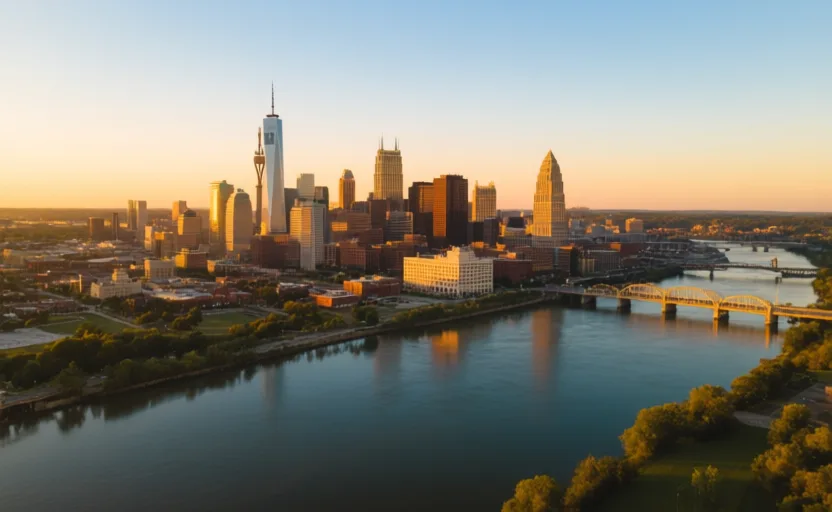 Riverside · AI city illustration · Artistic impression
City · North America
Riverside
Saved in this browser — no account needed. Sign in later and it comes with you.
Where it is
The Santa Ana River gave this city its name, and it lies about fifty miles east of downtown Los Angeles on a semi-arid plain ringed by mountains, some of which get a dusting of snow in winter. Downtown stands at around 860 feet, and Mount Rubidoux rises within the city limits. The climate borders on desert. Summers are hot and dry, winters mild and wetter, so almost everything grown here depended on irrigation from the start. Today it is the biggest city of the Inland Empire, with 314,998 people in 2020 and a metropolitan area, shared with San Bernardino, of about 4.74 million. Smog is a persistent problem for the whole region.
The land and water around it
The Santa Ana Riverriver
A river in an otherwise dry region, from which the settlement took its name. De Anza's expedition crossed it in the 1770s, and a marker in a park by the Anza Narrows commemorates the crossing point.
Mount Rubidouxmountains
A hill inside the city limits and one of its landmarks. Grain-grinding holes in the rocks to the south are among the traces of Native American activity, and the summit hosts the annual Easter sunrise service.
A semi-arid climateclimate
Rainfall is low and the heat is real: temperatures reach 100 °F on average 21.6 days a year, and the record is 118 °F. Orange growing here depended on canals and, for one famous early tree, on its owner's dishwater.
Its history, in short
Before the Spanish arrived the valley was home to the Cahuilla and Serrano. Juan Bautista de Anza passed through in 1774, praised the grass and rosemary and called it the Valley of Paradise, and in the first half of the nineteenth century Californios such as Bernardo Yorba and Juan Bandini ran ranches here. A failed silk-farming scheme in the 1860s left behind land and water rights, and in 1870 John W. North's colony association bought them and renamed the settlement Riverside. North was a temperance-minded abolitionist from New York, and the early town excluded saloons while investors from England and Canada brought golf and polo. The decisive event was the arrival of Brazilian navel orange trees from the US Department of Agriculture in the 1870s, planted by Eliza Tibbets, whose fruit travelled well and suited the dry climate. Irrigation canals, refrigerated rail cars and a rush of planting made Riverside one of the richest cities in the country per head by the 1890s, and it became county seat in 1893. Citrus has since been squeezed out by urban growth and water scarcity, and the city's workforce is now largely in light industry, education and services.
Timeline
Dates are shown on a timeline rather than as changing shapes on the map. The globe draws modern boundaries only, and tinting a modern outline to stand for a historical one would state something we cannot source.
Early modern & oceanic
20 March 1774
De Anza reaches the valley
Juan Bautista de Anza, seeking a land route from Mexico to Alta California, names the area Valle de Paraiso. He returns with a colonising party at the end of 1775.
Well attestedWikipedia
Industrial & imperial
1870
The colony is founded
John W. North's Southern California Colony Association buys the land and water of a failed silk venture. It first uses the name Jurupa, after the old rancho, and adopts Riverside in December.
1873–1874
Eliza Tibbets plants navel oranges
Seedless oranges from Bahia, Brazil, sent by a US Department of Agriculture horticulturist, are planted in her garden. They flourish, and the Washington navel orange becomes the basis of California's citrus industry.
1879
The fruit is shown at a fair
Its quality, colour, seedlessness and thick skin, which let it be packed and shipped, are immediately recognised. By 1882 nearly half of California’s half-million citrus trees stand in Riverside.
1893
Riverside County established
The city becomes the seat of the new county. By this decade it is counted among the wealthiest cities in the United States by income per person.
1915
The Harada house
Jukichi Harada, a Japanese immigrant and restaurant owner, buys a home in his American-born children's names so that they can attend the public schools. The Japanese and Korean labour that picked citrus lived in settlements along the railway tracks.
Well attestedWikipedia1944
California citrus at its height
The state ships over 65 million boxes of citrus of all kinds, up from a million boxes of oranges in 1887, a growth that began with two or three trees in Riverside.
Well attestedWikipedia
Contemporary
2008
Save Our Chinatown
A committee forms to protect the archaeological site of the city's second Chinatown, which had been placed on the National Register of Historic Places after excavations in the 1980s. Its last resident had died in the 1970s.
Well attestedWikipedia
Places that carry meaning
Mission InnHistoric downtown hotel
A hotel regarded as the country's largest Mission Revival building, standing downtown close to the restored packing houses of the Marketplace district. The nearby Metropolitan Museum displays artefacts from the city's Chinatown.
California Citrus State Historic Park and the Parent Washington Navel Orange Tree1870s onward
The park and the surviving original tree commemorate the industry that made the city's fortune. Tibbets kept her trees alive with household water because her lot had no canal supply.
Riverside Chinatown siteLate 19th–20th century
The first Chinatown stood downtown, but anti-Chinese sentiment and ordinances, including one that banned laundries from the Mile Square, pushed the community to a new site. That area is now a landmark protected for its archaeology.
Mount Rubidoux Easter sunrise serviceFrom 1909
Religious gatherings take place on the summit, and the Easter sunrise service is described as the oldest continuing non-denominational outdoor Easter service in the country. Its hundredth anniversary was marked in 2009.
Languages here
Places are usually multilingual. This lists what is actually spoken, not one language per border.
EnglishGermanic family
The common language of public life.
Founders from New York and investors from England and Canada set the early tone of the colony, and English remains the shared language of a city alongside a Hispanic majority.
SpanishRomance family
The language of the majority-Hispanic community.
More than half of residents, 54.7 per cent, were Hispanic or Latino in 2020. In 2010 about 41.8 per cent of the city had Mexican origins, with smaller Guatemalan and Salvadoran communities. The Cheech Marin Center for Chicano Art & Culture is one of the city's museums.
Chinese, Korean and other Asian languages
Languages of long-established Asian American communities.
Many Asian American residents live in Arlington and La Sierra, most of them Chinese American and Korean American, and the largest Korean American church in the city stands near Arlington. The 2010 census also counted Filipino, Vietnamese and Indonesian residents.
Cahuilla and SerranoUto-Aztecan family
The languages of the area's first inhabitants.
The Cahuilla and Serrano peoples lived here in the late eighteenth and early nineteenth centuries, and the Sherman Indian Museum stands at Sherman Indian High School.
Learn the language here
- 1Understand which languages are spoken hereRiverside is multilingual. Start with which languages are used, by whom, and for what — the phrase list only covers one of them.Written by Globe Quest
- 2Learn 14 phrasesCurated everyday phrases for Riverside, with audio and a written form.Written by Globe Quest
- 3Say them out loudSpeaking practice with pronunciation feedback, one phrase at a time.Globe Quest material, your own additions
- 4Come back to themSpaced review, so what you learned this week is still there next month.Written by Globe Quest
Check yourself
What started Riverside's citrus industry?
Brazilian navel orange trees planted by Eliza Tibbets
The seedless, thick-skinned fruit travelled well and suited the dry climate, so growers across Southern California copied it.
Where does Riverside's name come from?
Its position beside the Santa Ana River
The colony was first called Jurupa after the old rancho and was renamed Riverside in December 1870, after the river it stood beside.
Worth arguing about
- A single imported tree helped build a regional economy that is now squeezed by water scarcity and housing. What should a city do with the memory of an industry that has left?
- Chinese and Japanese workers were central to the citrus economy and were also pushed to the margins of the city. How should their histories be preserved when the land has other uses?
What we have not established
These are open questions, listed rather than filled in. We would rather show a gap than a plausible guess.
When were the first navel oranges planted, and how many trees were there?
Accounts give 1873 and 1874, and say three trees, two trees, or two surviving trees. The date that Riverside first became the richest city per head is likewise given as 1893 and 1895.
Sources
- Wikipedia · Riverside, CaliforniaWikipedia · encyclopedia · checked 2026-11-24
- Wikipedia · History of Riverside, CaliforniaWikipedia · encyclopedia · checked 2026-11-24
- Wikipedia · United StatesWikipedia · encyclopedia · checked 2026-11-24
Reviewed by Globe Quest editorial on 2026-11-24. Drafted with AI assistance and checked against the sources above before publication.