 Globe Quest
 Human Quest · LearningSign in
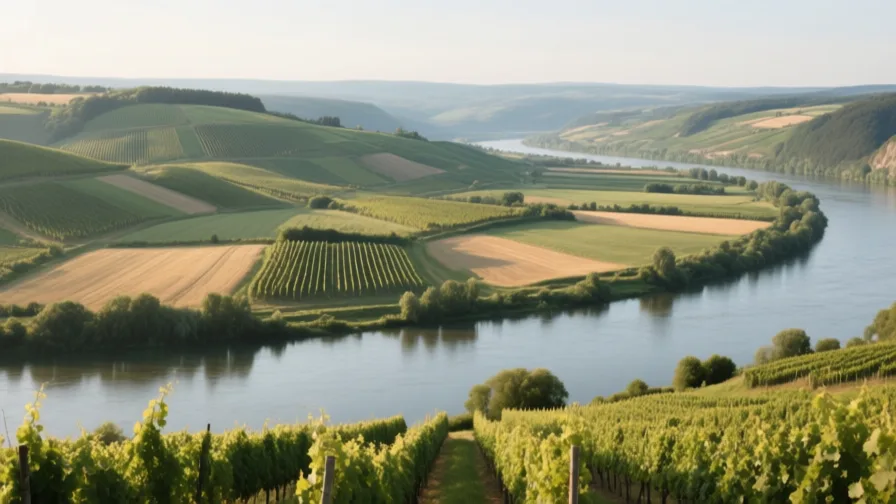 Moldova · AI landscape illustration · Artistic impression
Country · Europe
Moldova
Saved in this browser — no account needed. Sign in later and it comes with you.
Where it is
Moldova is a small landlocked country of about 33,800 square kilometres, squeezed between Romania and Ukraine east of the Carpathians. Two rivers frame it: the Prut forms the whole western boundary with Romania, and the Dniester (Nistru) runs through the east, separating the main part of the country from a narrow strip on its far bank. The land is a hilly plateau cut deeply by streams, with forested hills in the centre and about 75 per cent of the soil a black earth, chernozem, that suits grain, sunflowers and grapes. The climate is moderately continental, with warm summers, mild dry winters and rainfall from about 600 millimetres in the north to 400 in the south, and long dry spells are common.
The land and water around it
The Prut and the Dniesterriver
The Prut makes up the entire border with Romania in the west. The Dniester, or Nistru, cuts through the east and splits Bessarabia from the Transnistrian strip on the far bank. The country also touches the Danube, at its southern tip, over a river frontage of under half a kilometre acquired from Ukraine in 1999.
The Codri hillsplateau
The wooded central hills, part of the Moldavian Plateau, are folded into ridges with deep ravines and landslide hollows. Codri means forest, and the hornbeam, oak and linden growing there are what remains of the woodland that once covered more of the country. Forests now cover only 11 per cent of Moldova.
The black earth plainssteppe
Chernozem covers around three quarters of the country, and the soil grows grapes, sunflowers, fruit and grain. Moldova lies where the forest steppe merges into the Pontic steppe, and most of its former steppe is now farmland. Heavy summer rains on the irregular terrain cause erosion and silting of rivers.
Its history, in short
Moldova sat on a corridor between Asia and Europe, and successive peoples crossed it, from Scythians, Goths and Huns to Cumans and Mongols. The Principality of Moldavia took shape in the 1350s around the valley of the Moldova river, reached its height under Stephen the Great, and from 1538 was a vassal of the Ottoman Empire. In 1812 the Ottomans ceded its eastern half to Russia, which called it Bessarabia. The territory changed hands again as the empires broke up: it joined Romania in 1918, was taken by the Soviet Union in 1940, and became the Moldavian Soviet Socialist Republic, a unit with borders that did not match old Bessarabia. As the Soviet Union dissolved, Moldova declared independence on 27 August 1991. The Gagauz minority in the south and the Slavic population of the east bank of the Dniester had already formed breakaway authorities in 1990, and a war in 1992 left Transnistria under de facto separate control. Since independence the country has been pulled between Romania and the European Union on one side and Russia on the other. It gained EU candidate status in June 2022, and accession talks began in December 2023.
Timeline
Dates are shown on a timeline rather than as changing shapes on the map. The globe draws modern boundaries only, and tinting a modern outline to stand for a historical one would state something we cannot source.
Post-classical world
1350s
The Principality of Moldavia
The state forms in the valley of the Moldova river, which gives the country its name. A legend recorded by chroniclers has Prince Dragoș naming the river after his hound Molda, which drowned there after a hunt.
Early modern & oceanic
1538
Ottoman suzerainty
Moldavia becomes a vassal of the Ottoman Empire, though it keeps its autonomy. The arrangement lasted until the 19th century.
Well attestedWikipedia
Industrial & imperial
28 May 1812
Bessarabia
The Treaty of Bucharest, which ended a Russo-Turkish war, gives the eastern half of Moldavia to Russia, which names it Bessarabia. Local autonomy lasted until 1828, after which officials had to know and use Russian.
1918
Union with Romania
Bessarabia declares itself the Moldavian Democratic Republic in February, and its assembly, Sfatul Țării, votes later in the year to unite with Romania. In 1924 Soviet Russia set up a Moldavian autonomous republic on land east of the Dniester.
Romanian and Moldovan accounts present the union as a decision of Bessarabia's own assembly, while Soviet Russia disputed it and treated the region as its own.
June 1940
Soviet ultimatum and annexation
After the Molotov–Ribbentrop Pact placed Bessarabia in the Soviet sphere, Moscow issued an ultimatum to Romania on 26 June, and Soviet troops crossed the Dniester on 28 June. The Moldavian SSR was established on 2 August 1940.
Soviet and later Russian accounts describe the Soviet Union as reclaiming Bessarabia, while Romanian and Moldovan accounts describe an occupation that forced Romania to cede territory.
Contemporary
31 August 1989
Language law
After large demonstrations by the Popular Front, Moldovan is designated the official language of the Soviet republic, with a return to the Latin alphabet. Minorities in Transnistria and the south feared the nationalising policy.
Well attestedWikipedia27 August 1991
Independence
The republic declares independence and takes the name Moldova. A breakaway government has held de facto control of the strip east of the Dniester since 1990, and the Transnistria War of 1992 left that arrangement in place.
Well attestedWikipediaJune 2022
Candidate for the EU
Moldova submits an application and is granted EU candidate status, and accession talks begin on 13 December 2023.
Well attestedWikipedia
Places that carry meaning
Chișinău1436 onward
The capital and largest city, in the middle of the country, where roughly a third of the country's people live in the metropolitan area. It is the main cultural and commercial centre.
Transnistria1990 onward
A strip of territory on the east bank of the Dniester, under the control of a breakaway government since 1990. Moldova and most of the world treat it as part of Moldova, while its authorities govern it as a separate state that is not recognised internationally.
The Moldovan government and international bodies regard it as Moldovan territory under separatist control, while the authorities in Tiraspol claim independence.
Gagauzia1989 onward
A region in the south around Comrat, home to the Gagauz, a Turkic-speaking minority. A Gagauz republic was declared there in August 1990 after the government refused cultural and territorial autonomy,.
Languages here
Places are usually multilingual. This lists what is actually spoken, not one language per border.
RomanianRomance family
The only official language, called “Moldovan” in many census returns.
Since 2023 the law has used “Romanian” throughout, following a Constitutional Court ruling. In the 2024 census 49.2 per cent gave their mother tongue as “Moldovan” and 31.3 per cent as Romanian, a total of 80.5 per cent. Most linguists treat the literary languages as identical, and the choice of label follows political identity.
RussianSlavic family
A recognised minority language, widely used in public life since Soviet times.
In 2024, 11.1 per cent named Russian as a mother tongue and 15.3 per cent as the language they usually speak. A 2021 law making it the language of communication between ethnic groups was struck down by the Constitutional Court.
GagauzTurkic family
The Turkic language of the southern autonomous region.
Gagauz was the mother tongue of 3.8 per cent of residents in 2024. Its speakers live mostly in the south, on the Ialpug Plain.
UkrainianSlavic family
The language of the largest Slavic community after Russians.
Ukrainian was the mother tongue of 2.9 per cent in 2024, with Bulgarian at 1.2 per cent and Romani at 0.3 per cent.
Learn the language here
Check yourself
Which river forms Moldova's whole western boundary?
The Prut
The Prut separates Moldova from Romania. The Dniester runs through the east and divides the main part of the country from the Transnistrian strip.
What soil covers about three quarters of Moldova?
Chernozem, a fertile black earth
Black earth underlies most of the country and supports grapes, sunflowers, fruit and grain, which is why farming and wine are so central to Moldova.
Worth arguing about
- Moldova is a country whose people, in the census, name their language in two different ways. Is that a linguistic question, a political one, or both?
- A state recognised by the world and a breakaway territory it does not control share the same river. What would it take for the two sides to settle their status?
What we have not established
These are open questions, listed rather than filled in. We would rather show a gap than a plausible guess.
Are “Moldovan” and Romanian one language or two?
Most linguists consider the literary languages identical, and Moldovan law now says Romanian. Census respondents, however, were allowed to choose their own label, and the Moldovan government rejects any distinction. How many people say each depends on politics as much as on speech, so the counts cannot settle the question.
Sources
- Wikipedia · MoldovaWikipedia · encyclopedia · checked 2026-11-24
- Wikipedia · History of MoldovaWikipedia · encyclopedia · checked 2026-11-24
- Wikipedia · Geography of MoldovaWikipedia · encyclopedia · checked 2026-11-24
Reviewed by Globe Quest editorial on 2026-11-24. Drafted with AI assistance and checked against the sources above before publication.