 Globe Quest
 Human Quest · LearningSign in
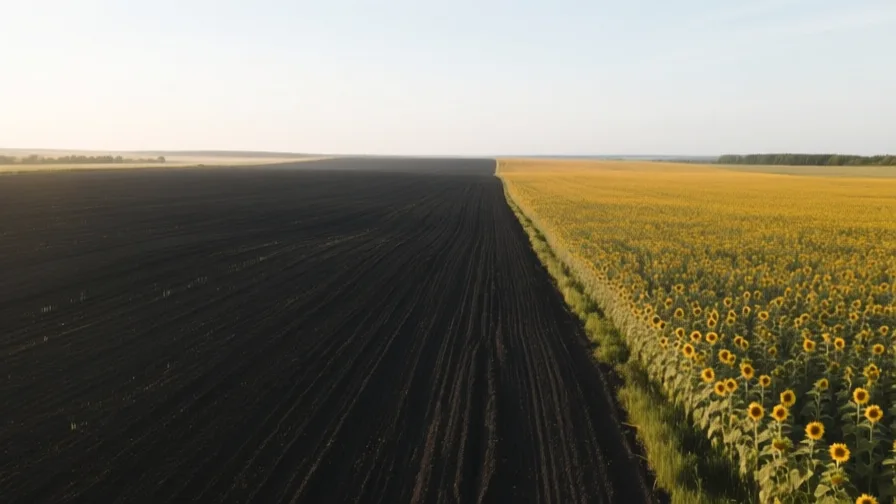 Ukraine · AI landscape illustration · Artistic impression
Country · Europe
Ukraine
Saved in this browser — no account needed. Sign in later and it comes with you.
Where it is
Ukraine is the largest country lying wholly in Europe, about 603,550 square kilometres, with 2,782 kilometres of coast on the Black Sea and the Sea of Azov. Almost all of it is flat: fertile steppe and plateaus on the East European Plain, crossed by the Dnieper, Siverskyi Donets, Dniester and Southern Bug, which run south to the sea. The only mountains are the Carpathians in the west, where Hoverla reaches 2,061 metres, and the Crimean Mountains on the southern coast. In the south-west the Danube Delta forms the border with Romania. Rain falls most in the west and north, around 1,200 millimetres in the Carpathians against about 400 on the Black Sea coast.
The land and water around it
The steppe and the black-earth plainssteppe
Fertile steppe and plateaus cover most of the country. The abundance of arable land is why it is a major grain exporter, and why drier summers to come, with falling river flows, are seen as a risk to farming in the south.
The Dnieper and the Black Sea riversriver
The Dnieper, Siverskyi Donets, Dniester and Southern Bug run south into the Black Sea or the Sea of Azov. The Dnieper road linked Scandinavia and Byzantium from the 7th or 8th century, and the Danube Delta in the south-west is internationally important wetland.
The Carpathians and the Crimean Mountainsmountains
The country’s only mountains. The highest peak, Hoverla, is 2,061 metres, and the rivers and waterfalls are fed by water from melting mountain snow.
Its history, in short
Humans have lived here since at least 32,000 BCE, and farmers of the Cucuteni–Trypillia culture were widespread by 4500 BCE. Greek colonists settled the coast, and in the 9th century Kyiv became the centre of Kyivan Rus’, the first East Slavic state, which in the 10th and 11th centuries was the biggest and strongest state in Europe, until the Mongols destroyed it in the 13th. For the next six hundred years Ukrainian lands were divided among Lithuania, Poland, the Ottoman and Russian empires and Austria. In the 17th century the Cossack Hetmanate emerged in the centre, and was partitioned between Russia and Poland and gradually absorbed by the Russian Empire. A Ukrainian People’s Republic appeared after 1917 and the Ukrainian SSR joined the Soviet Union in 1922. Millions of Ukrainians died in the Holodomor, a famine described as human-made, in the early 1930s, and the Second World War killed some 7 million civilians, including most Ukrainian Jews. Ukraine became independent in 1991. After the Euromaidan of 2014, Russia occupied and annexed Crimea and a war began in Donbas, and in 2022 Russia launched a full-scale invasion that continues.
Timeline
Dates are shown on a timeline rather than as changing shapes on the map. The globe draws modern boundaries only, and tinting a modern outline to stand for a historical one would state something we cannot source.
Post-classical world
882
Oleh takes Kyiv
According to the Primary Chronicle, Prince Oleh conquers Kyiv from Askold and Dir and makes it the capital of the Rus’, whose rulers the chronicle describes as Varangians from Scandinavia. The origins of the state remain obscure.
Approximate dateWikipediaThe Primary Chronicle gives this account; anti-Normanist historians argue East Slavic tribes along the Dnieper were forming a state independently.
13th century
The Mongols destroy Kyivan Rus’
After disintegrating into rival regional powers, the Rus’ state is destroyed by the Mongols, and the lands are contested for the next 600 years by Lithuania, Poland, the Commonwealth, Austria, the Ottomans and Russia.
Well attestedWikipedia
Early modern & oceanic
1654
The Treaty of Pereiaslav
After the 1648 Cossack rebellion against the Polish–Lithuanian Commonwealth, Hetman Bohdan Khmelnytsky seeks a protection treaty with Russia. The Hetmanate is later divided and absorbed by Russia in the 18th century.
Industrial & imperial
1917–1922
From Republic to Soviet republic
The short-lived Ukrainian People’s Republic is formed after the Russian Revolution of 1917. The Bolsheviks then set up the Ukrainian SSR, one of the founding republics of the Soviet Union in 1922.
Well attestedWikipediaEarly 1930s
The Holodomor
Millions of Ukrainians die in a human-made famine. The sources reviewed here do not give a figure.
Well attestedWikipedia
Contemporary
24 August 1991
Independence
After the failed coup against Gorbachev in Moscow, the Ukrainian parliament proclaims outright independence. Ukraine declares itself neutral and adopts a new constitution in 1996.
Well attestedWikipedia2014
Euromaidan, Crimea and Donbas
Mass demonstrations lead to a revolution. At its end Russia unilaterally occupies and annexes Ukraine’s Crimean Peninsula, and pro-Russian unrest turns into fighting in Donbas against separatists backed by Russia.
Well attestedWikipediaFebruary 2022 onward
Full-scale invasion
The Russian invasion begins a new phase of the war. Martial law is declared in February 2022 and continues, grain production has fallen and the environmental damage has been described as ecocide. The sources reviewed here give no reliable casualty or displacement totals.
Well attestedWikipedia
Places that carry meaning
KorolevoLower Palaeolithic
A site in western Ukraine where stone tools 1.4 million years old are among the oldest securely dated traces of early humans in Europe.
The Danube DeltaNatural
A delta in the south-west that forms the border with Romania and is among the internationally important wetlands, which cover over 7,000 square kilometres in all.
The northern contaminated zoneFrom 1986
Radiation contamination from the Chernobyl accident of 1986 affects land in the north-east of the country, one of the environmental legacies the country carries.
Languages here
Places are usually multilingual. This lists what is actually spoken, not one language per border.
UkrainianSlavic family
The state language under the constitution.
Ukrainian is the main language in most of the country and dominant in the west and centre. Surveys give different shares: one finds 88 percent speaking it regularly at home, another that 81 percent used it in personal life in 2022, and another that 67 percent gave it as their primary language.
RussianSlavic family
Widely spoken, especially in the east and south.
About 30 percent give it as their primary language and 34 percent use it in personal life. Most native Ukrainian speakers also know Russian as a second language, and Russian is dominant in the cities of the east and south. A 2012 law let regional languages gain status in oblasts where 10 percent spoke them, was repealed by parliament in February 2014 and was ruled unconstitutional in 2018.
Minority languages
Dozens of smaller languages, including Rusyn, Yiddish and Romani.
Ethnologue lists 40 minority languages and dialects. Rusyn had 6,725 speakers in 2001 and Eastern Yiddish 11,500 in 2007, and Romani varieties include Vlax, Carpathian and Balkan. The 2001 census counted Russians as 17.3 percent of the population and groups such as Romanians and Moldovans, Crimean Tatars, Bulgarians and Hungarians as under 1 percent each.
Learn the language here
Check yourself
What are Ukraine’s only mountains?
The Carpathians and the Crimean Mountains
Most of the country is flat. The Carpathians in the west, topped by Hoverla at 2,061 metres, and the Crimean Mountains on the southern coast are the only true mountains.
How do the two main languages of Ukraine divide geographically?
Ukrainian dominates the west and centre, Russian the cities of the east and south
The pattern is regional, though most native Ukrainian speakers also know Russian, and surveys show a shift towards Ukrainian since 2022.
Worth arguing about
- Ukraine spent six hundred years divided among several empires. How does that shape who counts as Ukrainian and how people disagree about it?
- Both Ukrainian and Russian are widely spoken. Should a state’s language policy follow what people speak, or what it wants them to speak?
What we have not established
These are open questions, listed rather than filled in. We would rather show a gap than a plausible guess.
How many people live in Ukraine now?
The main article gives around 32 million in its opening and over 41 million before 2022, and the World Bank lists about 39 million for 2025. The war has displaced and killed people on a scale no single figure captures, and there has been no census since 2001.
How many people speak each language?
Surveys disagree: 67 percent primary Ukrainian speakers in one, 88 percent regular home use in another, and results change with how the question is asked and whether Crimea and occupied areas are included.
Sources
- Wikipedia · UkraineWikipedia · encyclopedia · checked 2026-11-24
- Wikipedia · History of UkraineWikipedia · encyclopedia · checked 2026-11-24
- Wikipedia · Geography of UkraineWikipedia · encyclopedia · checked 2026-11-24
- Wikipedia · Languages of UkraineWikipedia · encyclopedia · checked 2026-11-24
Reviewed by Globe Quest editorial on 2026-11-24. Drafted with AI assistance and checked against the sources above before publication.