 Globe Quest
 Human Quest · LearningSign in
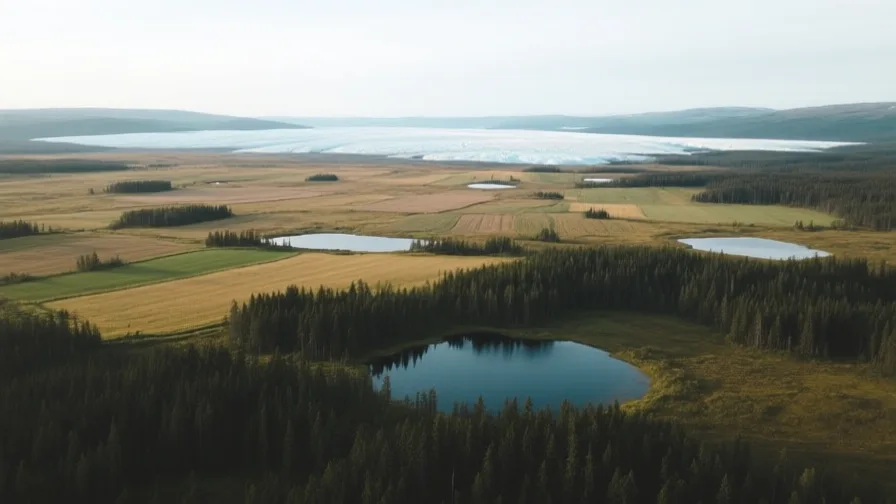 Poland · AI landscape illustration · Artistic impression
Country · Europe
Poland
Saved in this browser — no account needed. Sign in later and it comes with you.
Where it is
Poland is mostly flat. A broad lowland, shaped by ice-age glaciers, runs from the Baltic coast in the north across the middle of the country, with glacial lakes and low moraine hills near the sea and the Lithuanian border. Only the south rises: the Sudetes and the Carpathians, with the Tatras holding the highest ground at Rysy, about 2,500 metres. The average elevation is 173 metres. With no strong natural frontier to east or west, the country sits where oceanic conditions in the north-west give way to a continental climate towards the south-east, and where its neighbours have repeatedly reached across the plain.
The land and water around it
The Vistulariver
The longest river, at 1,047 kilometres, which defines the lowland of east-central Poland and forms a large delta at the head of the Gulf of Gdańsk. The Oder, 741 kilometres within the borders, drains the south-west instead and reaches the sea in the Pomeranian Bay.
The Polish Plain and its lakesplain
The central lowlands were formed by glacial erosion in the ice age, and the north holds the lake districts of Pomerania and Masuria, where about 9,300 lakes of any size occupy a tenth of the surface. The very name of the country is tied to this flatness, since the Polans were named for people living in open fields.
The Sudetes and the Carpathiansmountains
A mountain belt on the southern border. The Carpathians are the highest part, formed in the recent Tertiary Era, and the Tatras rise there; the Sudetes reach 1,602 metres at Śnieżka. Neither range is forbidding enough to prevent settlement. In the western uplands, the Silesia–Kraków Upthrust holds rich coal deposits.
Its history, in short
The name comes from the Polans, a West Slavic tribe around the Warta river whose word for open field gave the country its name. Their ruler Mieszko I accepted Western Christianity in 966, and his son Bolesław the Brave was crowned the first king in 1025. After a long fragmentation among Piast princes, Poland joined Lithuania by the marriage of 1386, and the Union of Lublin in 1569 made a single Commonwealth, run largely by the nobility, which at its height was the largest state in Europe. In the late eighteenth century its neighbours partitioned it, and from the defeat of the 1794 Kościuszko Uprising the country had no independent existence for 123 years. It returned in 1918, was invaded by Germany and the Soviet Union in September 1939, and suffered the Holocaust and millions of deaths. The postwar communist state ended with the Solidarity movement and the free elections of 1989.
Timeline
Dates are shown on a timeline rather than as changing shapes on the map. The globe draws modern boundaries only, and tinting a modern outline to stand for a historical one would state something we cannot source.
Post-classical world
966
The baptism of Poland
Mieszko I accepts Western Christianity after marrying a Bohemian princess, and the date is often used as the symbolic start of Polish statehood. A missionary bishopric is set up at Poznań two years later.
1025
The first king
Bolesław I the Brave is crowned king near the end of his life, and the realm is formally a kingdom. The Congress of Gniezno in 1000 had already confirmed an archbishopric there.
1386
The union with Lithuania
Queen Jadwiga marries Grand Duke Jogaila of Lithuania, founding the Jagiellonian dynasty and bringing the large Lithuanian territories into Poland's sphere.
Early modern & oceanic
1569
The Commonwealth
The Union of Lublin creates the Polish–Lithuanian Commonwealth, a federal state with an elected monarch and a powerful nobility. At its peak it covers about a million square kilometres.
Well attestedWikipedia1794
The Kościuszko Uprising
A rising led by Tadeusz Kościuszko wins at Racławice but is defeated, ending Poland's independent existence for 123 years under the partitioning powers.
Well attestedWikipedia
Industrial & imperial
1918
Independence regained
After the armistice with Germany in November 1918 the Second Polish Republic is born. About 2 million Poles had served in the three partitioning empires' armies, and over 450,000 died.
Well attestedWikipedia1 and 17 September 1939
Invasion from two sides
Germany invades on 1 September and the Soviet Union on 17 September, splitting the country into two occupation zones under the Molotov–Ribbentrop Pact. The Home Army fights the occupation.
Well attestedWikipedia
Contemporary
1989
The end of communist rule
Growing out of the Solidarity movement of 1980, Poland becomes the first communist country to re-establish a liberal democracy and holds free elections.
Well attestedWikipedia
Places that carry meaning
Gniezno10th century
Named as the capital in the early document Dagome iudex, and the seat of the archbishopric that Otto III recognised at the Congress of Gniezno in the year 1000. It is where the sovereign Polish church was anchored.
Krzemionki flint mines3900–1600 BC
One of Europe's largest Neolithic flint-mining sites, worked by the Funnelbeaker and Globular Amphora cultures. A charcoal figure in one shaft is the only surviving ancient wall art in Poland.
WarsawCapital and largest city
About 1.8 million people, with another two to three million in its wider metropolitan area. It is also the seat of the Sejm and the Senate.
Languages here
Places are usually multilingual. This lists what is actually spoken, not one language per border.
PolishSlavic family
The official language and mother tongue of nearly all residents.
About 97 per cent of respondents name Polish as their mother tongue, so Poland is a notably homogeneous country linguistically. It is also one of the European Union's official languages.
KashubianSlavic family
The recognised regional language of the north.
About 100,000 people use Kashubian daily in Kashubia and Pomerania. Fourteen other minority languages are recognised, and bilingual municipalities carry signs and place names in two languages.
EnglishGermanic family
The most commonly studied foreign language.
Around 32 per cent of citizens declared a knowledge of English in a 2015 survey.
Learn the language here
Check yourself
Where does the name Poland come from?
The Polans, a tribe whose name means people of the open fields
The Polans lived around the Warta in Greater Poland. Their name comes from a Proto-Slavic word for field, so the country's name points to its flat landscape.
What did the Union of Lublin of 1569 create?
A Polish–Lithuanian Commonwealth with an elected monarch
It turned the dynastic link with Lithuania into one federal state. The nobility governed it, and the elected monarch was a feature that set it apart from most of Europe at the time.
Worth arguing about
- Poland vanished from the map for 123 years yet kept its language and a sense of nation. What holds a country together when it has no state?
- With almost everyone speaking Polish, the country is more homogeneous than most of Europe. How much of that is a result of the borders and population shifts of the twentieth century?
What we have not established
These are open questions, listed rather than filled in. We would rather show a gap than a plausible guess.
How many people live in Poland?
Published figures differ by source and year: over 37 million in the introduction, about 38.2 million for 2021 in the demographics section, and about 37.6 million for 2024 in open data. We do not pick one total.
Sources
- Wikipedia · PolandWikipedia · encyclopedia · checked 2026-11-24
- Wikipedia · History of PolandWikipedia · encyclopedia · checked 2026-11-24
- Wikipedia · Geography of PolandWikipedia · encyclopedia · checked 2026-11-24
Reviewed by Globe Quest editorial on 2026-11-24. Drafted with AI assistance and checked against the sources above before publication.