 Globe Quest
 Human Quest · LearningSign in
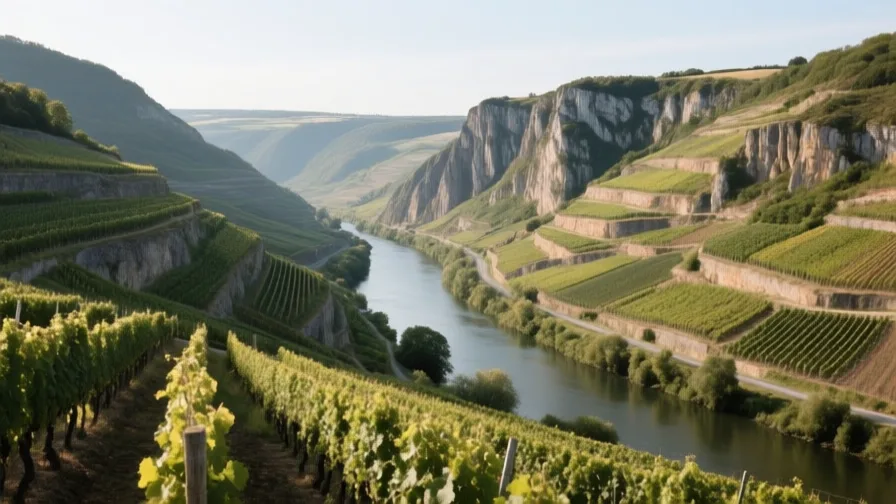 Portugal · AI landscape illustration · Artistic impression
Country · Europe
Portugal
Saved in this browser — no account needed. Sign in later and it comes with you.
Where it is
Portugal is the Atlantic edge of the Iberian Peninsula: a long strip of coast, about 940 kilometres of it on the mainland, with Spain behind it along a land border of roughly 1,200 kilometres. The Minho, Douro, Tagus and Guadiana all rise in Spain and cross Portugal east to west into the ocean. The terrain is mountainous and hilly north of the Tagus and opens into rolling plains to the south. Two volcanic archipelagos, Madeira and the Azores, lie far out in the Atlantic and count as part of the country. Mainland and Madeira are Mediterranean in climate, while the Azores are temperate and oceanic.
The land and water around it
The northern uplandsmountains
Most of the mainland sits on an ancient massif, hilly in the north and rising to the Serra da Estrela, which at 1,993 metres is the highest point on the mainland. The highest summit in the whole country is on Pico Island in the Azores, at 2,351 metres.
The rivers that come from Spainriver
The five main rivers run from Spanish headwaters westward to the Atlantic, from the Minho in the north through the Douro, Mondego and Tagus to the Guadiana in the south. Porto stands on the estuary of the Douro.
Madeira and the Azoresisland
Both archipelagos are volcanic. Madeira lies on the African plate, while the Azores straddle the Mid-Atlantic Ridge where three plates meet, so earthquakes are common there and the Capelinhos volcano on Faial appeared as recently as 1957–58. The ocean around them is the reason Portugal’s exclusive economic zone is among the largest in Europe.
Its history, in short
Portugal began as a frontier county at the north-western end of the Iberian peninsula. Rome had divided the region into the provinces of Lusitania, to the south, and Gallaecia, to the north; Suebi and Visigoths followed, and after the Muslim conquest of 711–716 the area was fought over for centuries. The county of Portugal dates from 868, and Afonso Henriques proclaimed himself king in 1139. Pushing south, his successors took the Algarve in 1249 and made Lisbon the capital in 1255, after which the land boundaries hardly changed. From the 15th century the kingdom turned to the sea, taking Ceuta in 1415 and building an empire in Africa, Asia and the Americas. A Spanish union of crowns from 1581 ended with the restoration of 1640–41, and Brazil, the largest colony, became independent in 1822. The monarchy gave way to a republic in 1910, then to the dictatorship of the Estado Novo, which a military coup ended in 1974. The collapse of empire and the move to democracy happened together, and Macau, the last overseas territory, was handed to China in 1999.
Timeline
Dates are shown on a timeline rather than as changing shapes on the map. The globe draws modern boundaries only, and tinting a modern outline to stand for a historical one would state something we cannot source.
Post-classical world
868
The county of Portugal
The Christian rulers pushing south from Asturias and León set up Portugal as a county, taking its name from the Roman port of Portus Cale on the Douro. In the 11th and 12th centuries the name came to mean the land between the Douro and the Minho.
Well attestedWikipedia1139
Afonso Henriques becomes king
The son of Count Henry of Burgundy proclaims himself king of Portugal, after the county had broken away from Galicia in 1095. The kingdom grows south by conquest until the Algarve is taken in 1249.
Well attestedWikipedia1255
Lisbon becomes the capital
The seat of the kingdom moves to Lisbon. The country’s land frontiers have barely moved since that date.
Well attestedWikipedia1415
Ceuta and the start of the empire
A Portuguese fleet with King John I and his sons, including Prince Henry, sails for the trading city of Ceuta in North Africa and takes it in August. The expedition is usually taken as the beginning of the Portuguese Empire.
Well attestedWikipedia
Early modern & oceanic
1 November 1755
The Lisbon earthquake
An earthquake estimated at magnitude 9, followed by a tsunami and fires, razes the capital. The chief minister, later the Marquis of Pombal, rebuilds the centre to a plan meant to withstand later quakes.
Well attestedWikipedia
Industrial & imperial
1801 onward
Olivença
Spain occupies the border town of Olivença in 1801. Spain governs it today, while Portugal has never recognised the transfer, so for Portugal the boundary around the town is not a settled border.
Spanish administration and the Portuguese government
1910
From monarchy to republic
King Carlos I and his heir are assassinated in 1908 and the monarchy is replaced two years later. The unstable First Republic is overthrown in 1926, and the Estado Novo under António de Oliveira Salazar is established in 1933.
Well attestedWikipedia
Contemporary
1974
The Carnation Revolution
A military coup overthrows the Estado Novo and begins the move to democracy. It also begins the dissolution of the colonial empire, from the African colonies to the handover of Macau in 1999.
Well attestedWikipedia
Places that carry meaning
Lisbon’s Pombaline centreAfter 1755
The grid of streets and squares laid out to replace the quarter destroyed in the earthquake. Models of the new buildings were tested by marching troops around them to imitate the shaking, and the district is still the heart of the capital.
ConímbrigaRoman period
One of the largest urban ruins from Roman Lusitania, with Miróbriga, and a reminder that Rome ruled the region for centuries before the Suebi and Visigoths.
Côa Valley rock artPrehistoric
Engraved rock surfaces, shared with the Siega Verde site across the border in Spain, include early attempts to show movement.
Languages here
Places are usually multilingual. This lists what is actually spoken, not one language per border.
PortugueseRomance family
The official and predominant language.
Portuguese is also an official language of the European Union and has around 250 million native speakers worldwide, which makes it the fifth most widely spoken first language. Most of those speakers live outside Portugal, as a result of the empire.
MirandeseRomance family
A recognised regional language in the north-east.
Mirandese is spoken in the Terra de Miranda. Portuguese law names it among the country’s recognised regional languages.
BarranquenhoRomance family
A recognised local speech of Barrancos.
Spoken in the town of Barrancos, and recognised among the country’s regional languages and dialects alongside Mirandese.
EnglishGermanic family
The main second language.
About two-thirds of Portuguese people speak at least two languages, and Portugal ranked sixth in the world in a 2025 English proficiency index. The Anglo-Portuguese alliance, dating from the Treaty of Windsor in 1386, is the oldest standing alliance in the world.
Learn the language here
Check yourself
When did Lisbon become the capital of Portugal?
1255
After the Algarve was taken from the Moors in 1249, Lisbon became the capital in 1255. The year 1755 is when an earthquake destroyed it, and 868 is when the county of Portugal was founded.
Where do Portugal’s main rivers rise?
In Spain, flowing west across Portugal to the Atlantic
The Minho, Douro, Tagus and Guadiana all rise in Spain.
Worth arguing about
- Portugal’s land borders have scarcely moved since the 13th century, yet its empire stretched across four continents. How does a small, stable homeland shape the way a country remembers an empire?
- Olivença is governed by Spain but claimed by Portugal in principle. When two close allies disagree about one town, what kind of border is it?
What we have not established
These are open questions, listed rather than filled in. We would rather show a gap than a plausible guess.
How many people live in Portugal?
Published figures differ: about 11.4 million in one recent estimate, and about 10.3 million for 2021. The gap reflects different dates and different treatment of foreign residents, and the country has been a net recipient of immigrants since 1993, so we describe the trend without a single total.
Sources
- Wikipedia · PortugalWikipedia · encyclopedia · checked 2026-11-24
- Wikipedia · History of PortugalWikipedia · encyclopedia · checked 2026-11-24
- Wikipedia · Geography of PortugalWikipedia · encyclopedia · checked 2026-11-24
Reviewed by Globe Quest editorial on 2026-11-24. Drafted with AI assistance and checked against the sources above before publication.