 Globe Quest
 Human Quest · LearningSign in
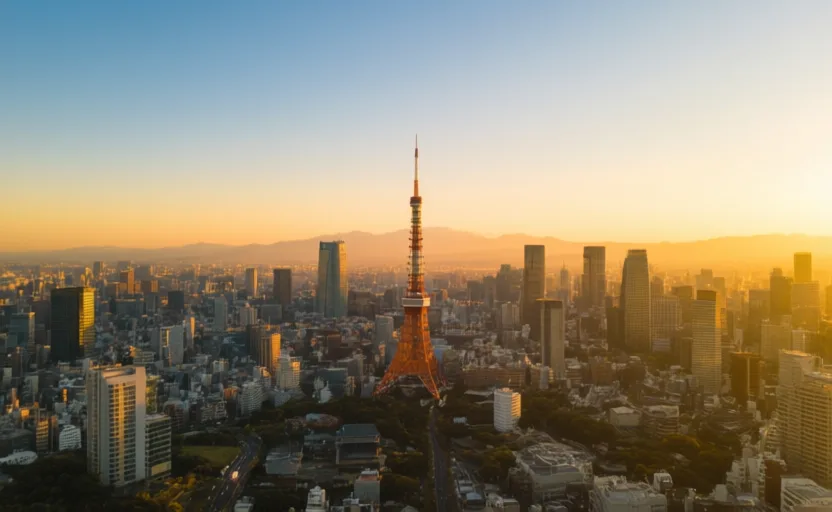 Kobe · AI city illustration · Artistic impression
City · East Asia
Kobe
Saved in this browser — no account needed. Sign in later and it comes with you.
Where it is
Kobe is a long, narrow city squeezed between the north shore of Osaka Bay and the mountains behind it, about 35 kilometres west of Osaka. Mount Rokkō rises to 931 metres almost above the downtown, and rail lines run east to west along the strip of flat ground between hills and water. A cape at Wada in the west gave natural shelter for a harbour, and when the city ran out of room it built two artificial islands, Port Island and Rokkō Island. The climate is humid subtropical, with hot summers and cool winters and little snow. It also lies in an active seismic region, as the earthquake of 1995 showed.
The land and water around it
Osaka Bay shore and Wada Capecoast
The shape of the cape at Wada made natural harbour shelter, and the port that grew there has stayed the economic centre of the city.
Mount Rokkō and the Rokkō rangemountains
At 931 metres, Rokkō overlooks the city, and the range, with Mount Maya, fills the northern Kita ward. It leaves only a thin ribbon of flat land, which is why the city is so long and narrow.
Port Island and Rokkō Islandisland
Two artificial islands built in the bay to give the cramped city room to grow. Port Island holds Kobe Airport.
Its history, in short
For most of its history the area was not one political unit at all. The harbour at Ōwada was one of the ports from which embassies sailed to China, and in 1180 the Taira leader Taira no Kiyomori briefly made it the seat of the court by moving his grandson, the child emperor, to Fukuhara-kyō for about five months. The Genpei War battle of Ichi-no-Tani was fought here in 1184. In the Edo period the east belonged to one domain, the west to another and the centre to the shogunate directly, so the port was in no sense a single city. It was opened to foreign trade on 1 January 1868, and the foreign merchants left a legacy of Western-style houses in the Kitano hill district. Kobe was founded as a municipality only in 1889. Firebombing in March 1945 destroyed a fifth of the urban area. In 1975 the city council banned warships carrying nuclear weapons from the port, and in 1995 a magnitude 6.9 earthquake killed about 6,400 people in the city and wrecked the port, which has never regained its place as Japan’s busiest.
Timeline
Dates are shown on a timeline rather than as changing shapes on the map. The globe draws modern boundaries only, and tinting a modern outline to stand for a historical one would state something we cannot source.
Classical world
201 CE (traditional)
Ikuta Shrine
The Nihon Shoki describes Empress Jingū founding the shrine, one of the earliest written mentions of the area. The city’s name comes from an archaic word for those who supported the shrine.
Oral historyWikipediaThe Nihon Shoki, a traditional chronicle of the court.
Post-classical world
1180
A brief capital
Taira no Kiyomori moves Emperor Antoku to Fukuhara-kyō, in present-day Hyōgo ward. The court returns to Kyoto after about five months.
Well attestedWikipedia1184
Battle of Ichi-no-Tani
In the Genpei War the Minamoto take the Taira fortress and force the Taira remnants to flee to Shikoku.
Well attestedWikipedia
Industrial & imperial
1 January 1868
Port opened to foreign trade
Hyōgo Port opens at the same time as Osaka, amid fighting of the Boshin War. Soon after, the Kobe Incident wounds several Western soldiers.
Well attestedWikipedia1 April 1889
Kobe founded
The city exists in its present form only from this date. It becomes a designated city in 1956.
Well attestedWikipedia
Contemporary
16–17 March 1945
Firebombing
Incendiary raids by B-29 bombers kill 8,841 residents and destroy 21 per cent of the urban area. The raids inspired the film Grave of the Fireflies.
Well attestedWikipedia18 March 1975
The Kobe formula
After sustained pressure from citizens, the city council bans vessels carrying nuclear weapons from Kobe Port. Because US warships are never declared nuclear-free, they stay out.
Well attestedWikipedia17 January 1995
Great Hanshin earthquake
A magnitude 6.9 quake at 5:46 am kills about 6,434 people in the city and leaves 212,443 homeless. A section of the elevated Hanshin Expressway topples, and much of the port is destroyed.
Well attestedWikipedia
Places that carry meaning
Ikuta ShrineTraditionally 201 CE
The shrine from which the city takes its name, and the site, with the Taira fortress, of the 1184 battle.
The Nihon Shoki, a traditional chronicle of the court.
Kitano and the old foreign residencesMeiji era
Western-style houses of the 19th century that still stand on the hillside, linked to the opening of the port. The Kobe Mosque, built in 1935, was the first in Japan.
Nada sake districtEdo period onward
Nada ward, with Fushimi in Kyoto, accounts for 45 per cent of Japan’s sake production.
Languages here
Places are usually multilingual. This lists what is actually spoken, not one language per border.
Japanese (Kobe-ben)Japonic family
The local speech, a sub-dialect of Kansai.
Kobe-ben belongs to the Kansai group of dialects, which includes the speech of Osaka and Kyoto.
KoreanKoreanic family
The language of the largest foreign community.
Of about 44,000 registered foreign nationals, 22,237 are Korean, followed by 12,516 Chinese.
ChineseSino-Tibetan family
The second-largest foreign community.
Chinese residents are the second most common nationality, and the city’s Chinatown, Nankin-machi, is one of its best-known shopping areas.
Learn the language here
- 1Understand which languages are spoken hereKobe is multilingual. Start with which languages are used, by whom, and for what — the phrase list only covers one of them.Written by Globe Quest
- 2Learn 11 phrasesCurated everyday phrases for Kobe, with audio and a written form.Written by Globe Quest
- 3Say them out loudSpeaking practice with pronunciation feedback, one phrase at a time.Globe Quest material, your own additions
- 4Come back to themSpaced review, so what you learned this week is still there next month.Written by Globe Quest
Check yourself
What did the “Kobe formula” of 1975 do?
Banned nuclear-armed ships from the port
Because the US does not say which warships carry nuclear weapons, the city’s ban effectively kept US warships out of Kobe.
When did Kobe first exist as a single city?
In 1889
The port was long split among domains and the shogunate, and the city in its current form was only founded in 1889.
Worth arguing about
- Kobe’s port was the busiest in Japan before the 1995 earthquake and never fully regained that rank. When a disaster breaks a trade route, how much can recovery restore it?
- The city is known for its Western houses and its cosmopolitan image. Whose history does that image tell, and whose does it leave out?
What we have not established
These are open questions, listed rather than filled in. We would rather show a gap than a plausible guess.
When did Kobe open to the West?
One account ties the opening to the end of the policy of seclusion in 1853, while the detailed history says Hyōgo Port opened to foreign trade on 1 January 1868. The earlier date appears to refer to the wider opening of Japan, not the port itself.
Sources
- Wikipedia · KobeWikipedia · encyclopedia · checked 2026-11-24
Reviewed by Globe Quest editorial on 2026-11-24. Drafted with AI assistance and checked against the sources above before publication.