 Globe Quest
 Human Quest · LearningSign in
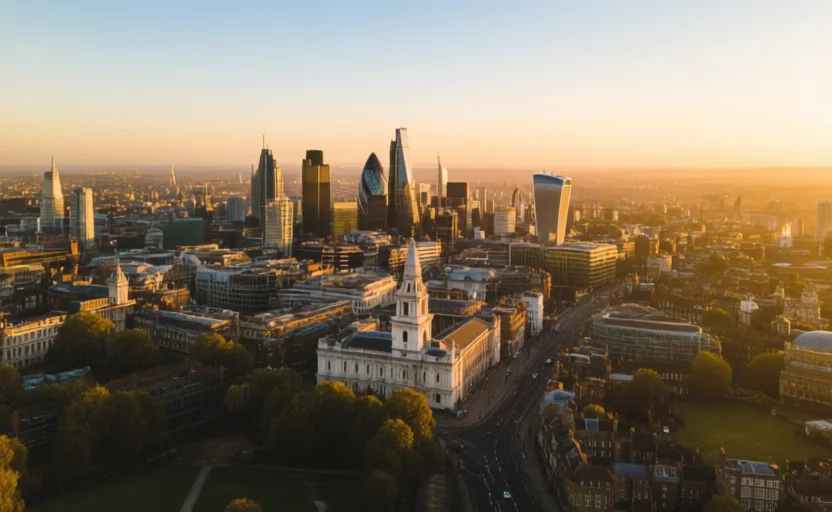 Reading · AI city illustration · Artistic impression
City · Europe
Reading
Saved in this browser — no account needed. Sign in later and it comes with you.
Where it is
A low ridge between two rivers carries the old centre of Reading, close to where the Kennet joins the Thames. A little upstream of the junction the Kennet squeezes through a narrow, steep gap in the hills that border the Thames flood plain on the south, and the settlement grew around a crossing of that river about a mile upstream. The valley floors on both rivers are still largely unbuilt floodplain, which is why only one road crosses the Kennet flood plain apart from the M4. Suburbs climb into the Berkshire Downs to the west and the Chilterns to the north across the Thames. The climate is maritime and moderate, with a record high of 37.6°C in July 2022.
The land and water around it
The Thames–Kennet confluenceriver
The town grew around a crossing of the Kennet a mile above its junction with the Thames, a spot that made it a river port. The Kennet naturally split into several shallow streams here and was embanked for the canal in the 18th century to allow wharves.
The Kennet gapvalley
A short way above the meeting of the rivers the Kennet runs through a steep-walled gap in the southern hills. It gave the town a natural line to the west, and the Kennet Navigation of 1723 and the Kennet and Avon Canal of 1810 used it.
The floodplainsplain
The floodplains next to both rivers flood occasionally and remain largely unimproved, so the built-up area is split into three parts that connect mostly through the central area.
Its history, in short
Reading was a river port and market town before it was a county town. Its name is Old English, from a tribe called the Readingas, and the first written record is a battle: in the winter of 870 to 871 a Danish army camped here and King Ethelred and his brother Alfred failed to break its defences. Henry I founded Reading Abbey in 1121 and was buried there. It became one of the great pilgrimage centres of medieval England, and tax returns of 1525 ranked it tenth in England for taxable wealth and first in Berkshire. The abbey was largely destroyed in 1538. The Civil War siege of 1643 ruined the cloth trade, and the town’s economy took until the 20th century to mend. A second battle in 1688 was the only significant fighting of the Glorious Revolution. Canal and river navigation, then the Great Western Railway in 1841, built the Three Bs of beer, bulbs and biscuits, and the town grew from about 9,400 people in 1801 to 59,000 by 1900. Today it is a centre for information technology and insurance.
Timeline
Dates are shown on a timeline rather than as changing shapes on the map. The globe draws modern boundaries only, and tinting a modern outline to stand for a historical one would state something we cannot source.
Post-classical world
4 January 871
First Battle of Reading
Ethelred of Wessex and his brother Alfred fail to break a Danish camp. The Anglo-Saxon Chronicle’s account is the earliest written record of the town.
1121
Reading Abbey
Henry I founds the abbey and endows it with his lands in Reading. It holds more than 230 relics, including the hand of St James, and draws pilgrims.
Well attestedWikipedia
Early modern & oceanic
1538
The abbey destroyed
Henry VIII dissolves the monasteries. The last abbot, Hugh Faringdon, is convicted of treason and executed in front of the abbey church.
April 1643
Siege of Reading
Parliamentary forces take the town, which had a Royalist garrison imposed on it the year before. The cloth trade is badly damaged.
1688
Second Battle of Reading
Townspeople ask William’s army for help against James II’s Irish troops, and a force of about 250 drives them out. It is the only substantial military action of the Revolution.
Well attestedWikipedia1723
Kennet Navigation
The river is opened to boats as far as Newbury over local opposition, which stopped once the town saw the benefit. The Kennet and Avon Canal of 1810 later connected the town by barge to the Bristol Channel.
Well attestedWikipedia
Industrial & imperial
1841
The Great Western Railway
The first railway arrives, followed by two more by 1856. Beer, seeds and biscuits grow into the town’s three main industries.
Well attestedWikipedia1869
Sole county town
The privy council confirms Reading as the only county town of Berkshire, after the summer assizes had been moved there from Abingdon in 1867.
Places that carry meaning
Reading Abbey ruins1121 to 1538
The rubble cores of the abbey’s main buildings, a much restored gateway and an intact hospitium survive of what was one of the largest and richest monasteries in medieval England.
Reading MinsterBy the 9th century, possibly earlier
The town’s oldest church foundation, overshadowed by the abbey and again important since the abbey’s destruction.
Forbury Gardens and the Maiwand Lion19th century
The lion commemorates 329 soldiers of the Royal Berkshire Regiment killed at Maiwand and in the Second Anglo-Afghan War, and is an unofficial symbol of the town.
Huntley and Palmers and the Three Bs19th–20th century
Biscuits (1822–1976), bulbs and seeds (1837–1974) and beer (1785–2010) each defined the town’s economy for generations, and none of the three firms survives in the town.
Languages here
Places are usually multilingual. This lists what is actually spoken, not one language per border.
EnglishGermanic family
The common language of a commuter town for London and the Thames Valley.
In 2011 about 65 per cent of the borough’s people were White British, and a report in 2010 counted about 150 languages spoken in the town.
PolishSlavic family
The language of one of the town’s largest long-established immigrant communities.
The Polish community dates back more than 30 years, and in October 2006 the local newspaper printed 5,000 copies of a Polish-language edition, the Kronika Reading.
Learn the language here
- 1Understand which languages are spoken hereReading is multilingual. Start with which languages are used, by whom, and for what — the phrase list only covers one of them.Written by Globe Quest
- 2Learn 13 phrasesCurated everyday phrases for Reading, with audio and a written form.Written by Globe Quest
- 3Say them out loudSpeaking practice with pronunciation feedback, one phrase at a time.Globe Quest material, your own additions
- 4Come back to themSpaced review, so what you learned this week is still there next month.Written by Globe Quest
Check yourself
What were Reading’s “Three Bs”?
Beer, bulbs and biscuits
Beer from Simonds, bulbs and seeds from Suttons, and biscuits from Huntley and Palmers were the town’s three largest industries in the 19th and 20th centuries.
What is the earliest written record of Reading about?
A battle against a Danish army in 871
The Anglo-Saxon Chronicle describes the first Battle of Reading, when Ethelred and Alfred failed to storm a Danish camp, and that is the first time the town appears in writing.
Worth arguing about
- Reading is among the largest urban areas in the UK without city status and has bid unsuccessfully four times. What does a title add to a place that already works?
- The town’s three old industries have all gone, replaced by information technology and insurance. How much of a place’s identity survives the loss of what it was famous for?
Sources
- Wikipedia · Reading, BerkshireWikipedia · encyclopedia · checked 2026-11-24
- Wikipedia · History of Reading, BerkshireWikipedia · encyclopedia · checked 2026-11-24
Reviewed by Globe Quest editorial on 2026-11-24. Drafted with AI assistance and checked against the sources above before publication.