 Globe Quest
 Human Quest · LearningSign in
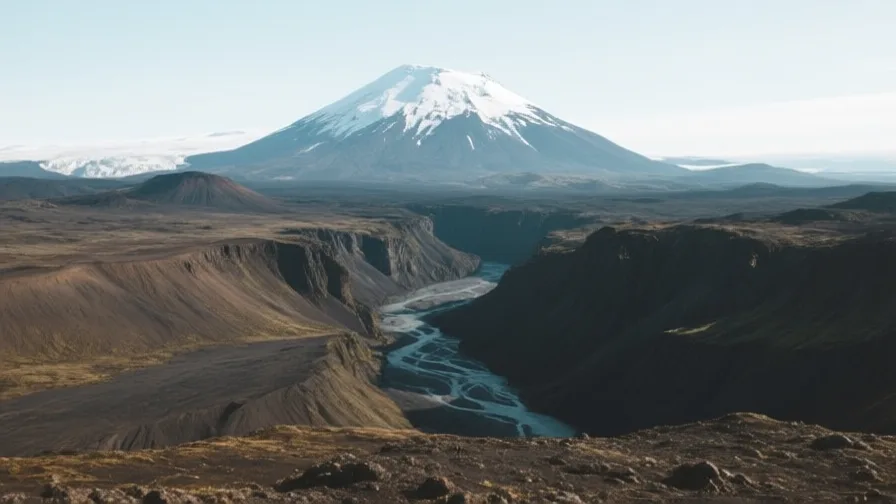 Armenia · AI landscape illustration · Artistic impression
Country · Europe
Armenia
Saved in this browser — no account needed. Sign in later and it comes with you.
Where it is
Armenia is a landlocked country of about 29,700 square kilometres in the South Caucasus, on the Armenian Highlands between the Black and Caspian Seas. It is mountainous: 85.9 per cent of the land is mountain, no point lies below 390 metres, and the peak of Aragats reaches 4,090. Mount Ararat, the tallest peak in the region at 5,137 metres, stands across the border in Turkey but is visible from Armenia and appears on its emblem. Volcanic soils on the plateau fed some of the earliest agriculture anywhere, while winters are harsh and mountains block the moderating influence of the seas. The country borders Turkey, Georgia, Azerbaijan and Iran.
The land and water around it
The Armenian Highlandsplateau
The Armenian Plateau was pushed up about 25 million years ago, and about half the country lies at 2,000 metres or higher. The Lesser Caucasus runs through the north and along the border with Azerbaijan, which makes travel from north to south difficult, and earthquakes remain a danger: the 1988 quake killed more than 25,000 people in Gyumri.
Lake Sevanlake
By far the largest lake, at 1,900 metres above sea level. Measured against its altitude, it ranks second in the world, and the Hrazdan, which flows from it, drains much of the country.
The Araks valleyvalley
The Araks forms most of the border with Turkey and Iran and drains most of the country. Its lower valley is the most moderate terrain in the country, with only about 250 mm of rain a year, and it runs next to the historic centres of Armenian civilisation.
Its history, in short
Armenian history begins in a highland that held several early states, among them Hayasa-Azzi, the Nairi confederation and, from the ninth century BCE, Urartu. After Urartu fell around 585 BCE, a satrapy of Armenia arose under the Orontid dynasty and later became an independent kingdom, which reached its height under Tigranes the Great. In 301 CE it became the first state to make Christianity its official faith, and the Armenian Apostolic Church remains the main religious body. The kingdom was split between Byzantium and Sasanian Persia in the fifth century, restored under the Bagratuni dynasty in the ninth, and fell in 1045. A separate Armenian principality and then kingdom held the Cilician coast from the eleventh to fourteenth centuries. From the sixteenth to nineteenth centuries the homeland was divided between the Ottoman and Persian empires, and Russia took Eastern Armenia in the nineteenth century. In the First World War up to 1.5 million Armenians were killed in the Armenian genocide. A First Republic declared independence in 1918 and was absorbed into the Soviet Union in 1920. Independence came in 1991. The population peaked at 3.6 million that year and has since fallen through emigration, while a diaspora of perhaps 8 million lives abroad.
Timeline
Dates are shown on a timeline rather than as changing shapes on the map. The globe draws modern boundaries only, and tinting a modern outline to stand for a historical one would state something we cannot source.
Classical world
782 BCE
Erebuni founded
The Urartian king Argishti I builds a fortress on the site of modern Yerevan.
Well attestedWikipediac. 585 BCE
Satrapy of Armenia
After the fall of Urartu, the Orontid dynasty governs Armenia as a Persian satrapy until the Persian empire breaks up in 330 BCE, when it becomes an independent kingdom.
301
Christianity adopted
Armenia is the first nation to make Christianity its state religion. The church later split from both Catholic and Eastern Orthodox churches by rejecting the Council of Chalcedon in 451.
387
Partition
The Byzantines and Sasanians divide Armenia, the smaller western half going to Byzantium. The Sasanians abolish the Arsacid dynasty in 428.
Well attestedWikipedia
Post-classical world
1045
The Bagratid kingdom falls
The kingdom restored in the ninth century falls. Armenians continue in the Cilician principality, later a kingdom, until the fourteenth century.
Well attestedWikipedia
Industrial & imperial
First World War
The Armenian genocide
Up to 1.5 million Armenians are systematically killed in the Ottoman Empire. The First Republic of Armenia declares independence in 1918.
Well attestedWikipedia1920
Soviet Armenia
The republic is absorbed into the Soviet Union as a Soviet socialist republic, and the treaties of Moscow and Kars fix its borders with Turkey.
Well attestedWikipedia
Contemporary
21 September 1991
Independence
Armenia declares statehood after the failed August coup in Moscow. Levon Ter-Petrosyan, prominent in the Karabakh movement, is elected first president in October.
Well attestedWikipedia19–20 September 2023
Nagorno-Karabakh
Azerbaijan launches a large-scale offensive against Artsakh, the breakaway state declared by Karabakh Armenians. The region, which seceded from Azerbaijan in 1991, was internationally recognised as part of Azerbaijan but populated by Armenians.
DisputedWikipediaArmenian and Azerbaijani accounts differ: Armenia supported the Republic of Artsakh, while Azerbaijan describes reincorporating its own territory; the European Parliament called the offensive a violation of the 2020 ceasefire.
Places that carry meaning
Yerevanfrom 782 BCE
The capital and primate city, a little over a million people, built around the Urartian fortress of Erebuni and capital since 1918.
Areni-1 cavec. 4000 BCE
Surveys in 2010 and 2011 found the world’s earliest known leather shoe, a straw skirt and a wine-making facility in this cave complex.
Mount Araratancient to today
Historically within Armenia and now in Turkey, it remains the national symbol, in view from the capital and on the emblem.
Languages here
Places are usually multilingual. This lists what is actually spoken, not one language per border.
ArmenianIndo-European family
The only official language.
It has its own alphabet of 39 letters, invented by Mesrop Mashtots. A form of Proto-Armenian had spread across the highlands by about 600 BCE. Ethnic Armenians make up 98.1 per cent of the population.
RussianSlavic family
The main foreign language, a legacy of Russian and Soviet rule.
In 2013, 95 per cent of Armenians reported some knowledge of Russian, and most older people speak it well.
EnglishGermanic family
A growing second foreign language.
About 40 per cent said they knew some English in 2013, and half of adults wanted it taught in public secondary schools, against 44 per cent who preferred Russian.
Minority languages
Spoken by small communities.
Armenia’s minorities include Yazidis (1.1 per cent), Russians, Assyrians, Ukrainians, Greeks and Kurds,.
Learn the language here
Check yourself
What is Armenia’s distinction in the history of religion?
It was the first state to adopt Christianity as its official religion, in 301
The date is traditionally 301. The Armenian Apostolic Church is today part of the Oriental Orthodox family, separate from the Catholic and Eastern Orthodox churches.
How much of Armenia is mountainous?
About 86 per cent
More than Switzerland or Nepal, 85.9 per cent of the country is mountain, and no point lies below 390 metres.
Worth arguing about
- Armenia’s diaspora is estimated at about 8 million, far more than the roughly 3 million at home. What does a nation owe the people who live abroad, and what do they owe it?
- Mount Ararat is a national symbol but lies across the border in Turkey. How does a country live with a central emblem it cannot reach?
What we have not established
These are open questions, listed rather than filled in. We would rather show a gap than a plausible guess.
How many Armenians died in the Armenian genocide?
Estimates of the toll are given as a ceiling, up to 1.5 million, and not as one agreed number, so this entry gives the upper figure and does not claim a precise count.
Sources
- Wikipedia · ArmeniaWikipedia · encyclopedia · checked 2026-11-24
- Wikipedia · History of ArmeniaWikipedia · encyclopedia · checked 2026-11-24
- Wikipedia · Geography of ArmeniaWikipedia · encyclopedia · checked 2026-11-24
Reviewed by Globe Quest editorial on 2026-11-24. Drafted with AI assistance and checked against the sources above before publication.