 Globe Quest
 Human Quest · LearningSign in
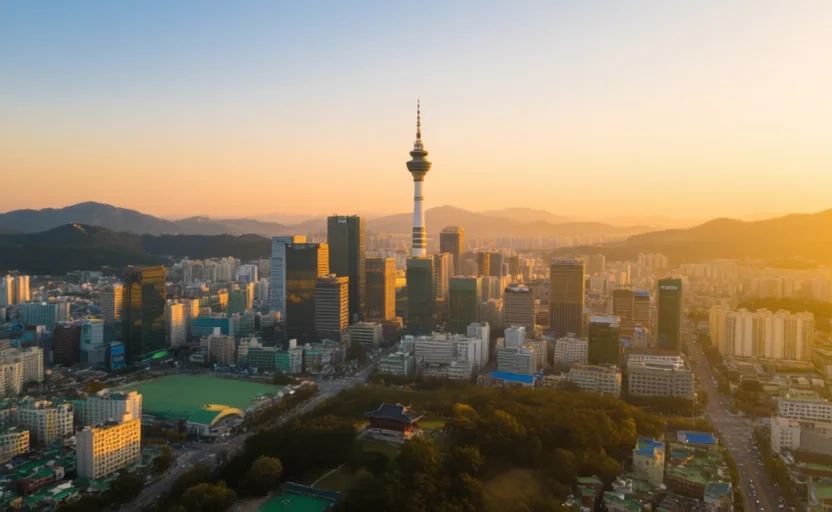 Daegu · AI city illustration · Artistic impression
City · East Asia
Daegu
Saved in this browser — no account needed. Sign in later and it comes with you.
Where it is
Daegu lies in a bowl. About 80 kilometres from the coast, the city fills the central plain of the Yeongnam region, enclosed by low mountains: Palgongsan on the north, Biseulsan on the south, Waryongsan on the west, and small hills in the east. The Geumho River skirts the northern and eastern edges and joins the Nakdong west of the city. The ring of mountains traps heat and humidity in summer and holds cold air in winter, which gives Daegu some of the hottest summers on the Korean Peninsula, with a record high of 40.0 °C, and has produced the local nickname “Daefrica”. Rain falls mostly in the summer monsoon, and much of the year is sunny.
The land and water around it
The Daegu basinvalley
A bowl-shaped plain at the heart of the Yeongnam region, ringed by Palgongsan, Biseulsan and Waryongsan. The mountains trap heat in summer, which is why Daegu is among the hottest cities in Korea, and cold air in winter.
Geumho Riverriver
A tributary of the Nakdong that skirts the north and east sides of the city before joining the larger river west of it. The junction of the two rivers made the area a natural crossing point for travel and trade.
Palgongsanmountains
The mountain to the north, with the famous stone Buddha called Gatbawi on one of its peaks. Apsan, to the south, is the nearest mountain to the built-up area.
Its history, in short
Archaeological finds show farming villages and dolmen burials here from the Mumun pottery period, and the walled settlement known as Dalgubeol was absorbed by Silla no later than the fifth century. In 689 King Sinmun considered moving the Silla capital from Gyeongju to Daegu, a plan that failed in the face of resistance from Gyeongju’s elite, and the city received its present name in 757. In 927 Wang Geon of Goryeo was crushed by Later Baekje at the Battle of Gong Mountain north of the city, a defeat that legend remembers in place names such as Ansim, “peace of mind”. In Joseon times Daegu stood on the great Yeongnam Road between Seoul and Busan, and in 1601 it became the administrative capital of Gyeongsang Province, a status that lasted nearly three centuries. A modern post office opened in 1895 and the Gyeongbu railway arrived soon after. Daegu was a centre of the independence movement under Japanese rule, and in 1950 it stayed in South Korean hands behind the Pusan Perimeter. In the 1960s to 1980s it was an economic engine of the country, known for textiles and, for its apples, as “Apple City”.
Timeline
Dates are shown on a timeline rather than as changing shapes on the map. The globe draws modern boundaries only, and tinting a modern outline to stand for a historical one would state something we cannot source.
Classical world
c. 850–550 BCE
Mumun farming village at Dongcheon-dong
A village of pit-houses and agricultural fields, dated to the Middle Mumun period, is one of the substantial early farming sites found in the area.
Approximate dateWikipedia
Post-classical world
689
A failed plan to move Silla’s capital
King Sinmun considers moving the capital from Gyeongju to Daegu but does not manage it. The episode is known from a single line in the Samguk sagi and is read as an attempt to strengthen royal authority against Gyeongju’s entrenched elite.
Approximate dateWikipedia927
Battle of Gong Mountain
Goryeo’s army under Wang Geon is crushed by Later Baekje, and Wang Geon is saved only by his general Sin Sung-gyeom. Local sympathy shifts toward Wang Geon after the atrocities of the Later Baekje forces, and he later becomes king of Goryeo.
Well attestedWikipedia
Early modern & oceanic
1601
Capital of Gyeongsang
Daegu becomes the administrative capital of Gyeongsang Province, then covering the area of today’s Daegu, Busan, Ulsan and the two Gyeongsang provinces. It keeps that role for nearly 300 years.
Well attestedWikipedia
Industrial & imperial
1905
The city wall comes down
The old fortress wall is destroyed. Four streets named for the directions, including Dongseongno, now run where it stood, and one gate survives in Dalseong Park.
1919
March First demonstrations
Four large demonstrations take place in Daegu during the March First movement, involving about 23,000 people.
Approximate dateWikipedia
Contemporary
1946
Daegu October Incident
On 1 October national police kill three student demonstrators and injure many others, setting off one of the most serious civil disturbances since the republic’s foundation.
Well attestedWikipedia1950
Battle of Taegu
Heavy fighting along the Nakdong River stops North Korean troops from crossing. Daegu sits inside the Pusan Perimeter and remains in South Korean hands throughout the war.
Well attestedWikipedia
Places that carry meaning
Dalseong ParkPrehistoric to 1905
The site of the old walled settlement, where remains and relics have been excavated. It also holds the First Yeongnam Gate, the one surviving part of the city fortress.
Yangnyeongsi herbal medicine marketLate Joseon
One of the first regular markets in the city, which became a major centre of the herbal trade and drew buyers from neighbouring countries. Japanese traders, who were not allowed to leave the Nakdong valley, sent messengers to buy for them.
BuinsaGoryeo period
A temple that housed the first edition of the Tripitaka Koreana, a Buddhist canon, during the Goryeo period.
Languages here
Places are usually multilingual. This lists what is actually spoken, not one language per border.
Korean
The everyday language, spoken in the Gyeongsang dialect.
Daegu was the capital of Gyeongsang Province, and the Gyeongsang dialect is one of the four regional varieties of Korean, next to the Seoul standard. Hangul is the writing system.
EnglishGermanic family
A school subject.
Almost all South Korean students study English. The city is described as largely homogeneous, though some immigrants from South and Southeast Asia hold jobs in car-component plants in the west of the city.
Learn the language here
- 1Understand which languages are spoken hereDaegu is multilingual. Start with which languages are used, by whom, and for what — the phrase list only covers one of them.Written by Globe Quest
- 2Learn 11 phrasesCurated everyday phrases for Daegu, with audio and a written form.Written by Globe Quest
- 3Say them out loudSpeaking practice with pronunciation feedback, one phrase at a time.Globe Quest material, your own additions
- 4Come back to themSpaced review, so what you learned this week is still there next month.Written by Globe Quest
Check yourself
Why are Daegu’s summers so hot?
The mountains around the basin trap hot, humid air
Palgongsan, Biseulsan and Waryongsan ring the basin, and in summer the hot air stays inside it, while in winter cold air settles there.
What role did Daegu take in 1601?
The administrative capital of Gyeongsang Province
From 1601, for nearly three centuries, the city governed the whole Gyeongsang region. A plan to move Silla’s capital here in 689 had failed.
Worth arguing about
- Daegu is sometimes described as a conservative city and has produced four presidents. Does a city’s political character come from its economy, its history, or its geography?
- The old wall is gone and only street names remember it. Is a name enough to keep a lost place alive?
Sources
- Wikipedia · DaeguWikipedia · encyclopedia · checked 2026-11-24
- Wikipedia · History of DaeguWikipedia · encyclopedia · checked 2026-11-24
- Wikipedia · South KoreaWikipedia · encyclopedia · checked 2026-11-24
Reviewed by Globe Quest editorial on 2026-11-24. Drafted with AI assistance and checked against the sources above before publication.