 Globe Quest
 Human Quest · LearningSign in
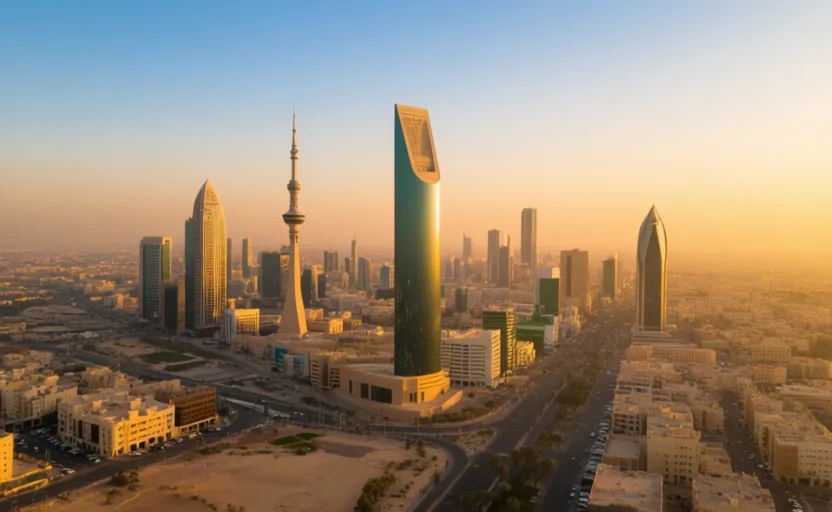 Jeddah · AI city illustration · Artistic impression
City · Middle East
Jeddah
Saved in this browser — no account needed. Sign in later and it comes with you.
Where it is
Jeddah stretches along the Red Sea coast of the Hejaz, on the flat coastal strip called the Tihamah that lies at the foot of the Hejaz mountains. Mecca is 65 kilometres inland to the east and Medina 360 kilometres to the north, and the city has long been the sea door to both. The climate is arid but unlike other Saudi cities it stays warm in winter, with mornings near 15 degrees and afternoons near 28. Summers are heavy with humidity, and the highest temperature ever recorded in the whole kingdom, 52.0 degrees, was measured here on 22 June 2010.
The land and water around it
The Tihamah coastal plainplain
A narrow, low strip between the Red Sea and the Hejaz escarpment. Wadis such as Briman to the east and Boweb to the north-west run down onto it, and early inscriptions have been found along them.
The Red Seasea
Jeddah Islamic Port is the second-busiest seaport in the Middle East and the thirty-sixth largest in the world. The sea gave the city both its pilgrims and its merchants, and it brought Ottoman defensive walls when the Portuguese arrived.
Heat, humidity and dustclimate
Rain is rare and falls in small amounts in November and December, though winter thunderstorms can be heavy, as in December 2008. Dust storms arrive from the peninsula’s deserts or from North Africa, sometimes along with thunder.
Its history, in short
Excavations in the old town suggest a fishing hamlet, settled by the Yemeni Quda’a tribe after the collapse of the Marib Dam in 115 BCE. Its future was set in about 647, when the caliph Uthman made it the port for Mecca in place of the older harbour of Al Shoaib. From then on Jeddah lived off pilgrims, who arrived by sea for the Hajj, and off Red Sea trade, passing between Abbasid, Tulunid, Fatimid, Ayyubid and Mamluk rule. After the Ottomans took Egypt in 1517 they walled the city against Portuguese raids. A last, rich phase of Indian Ocean trade followed the Suez Canal of 1869 and the steamships that used it, and merchants built tall coral-stone houses with carved wooden screens. Ibn Saud took the city in December 1925 from the Hashemite king of the Hejaz, and Jeddah lost its role as a political centre when Mecca became the provincial capital. Its walls were pulled down in 1947. It is now the second-largest city in Saudi Arabia and its main commercial port.
Timeline
Dates are shown on a timeline rather than as changing shapes on the map. The globe draws modern boundaries only, and tinting a modern outline to stand for a historical one would state something we cannot source.
Classical world
About 115 BCE
A Quda’a fishing hamlet
Excavations in the old city are read as showing that a fishing settlement was founded by the Quda’a tribe. Other accounts hold that the site was inhabited earlier, by fishermen before the time of Alexander the Great.
Approximate dateWikipedia
Post-classical world
About 647
Port of Mecca
Caliph Uthman designates Jeddah as the port serving Mecca, and its prominence begins. Pilgrims arriving by sea gather here for centuries.
1177
Ayyubid rule
After Saladin ends the Fatimid caliphate, the Hejaz including Jeddah joins the Ayyubid dynasty. Earlier, the Fatimids had tied the Red Sea to trade routes reaching China.
Well attestedWikipedia
Early modern & oceanic
1525
Ottoman walls
After defending the city against a Portuguese fleet in 1517, the Ottomans build a stone wall with six watchtowers and six gates, among them the gates of Mecca, Medina and Al-Magharibah, which faced the port.
Well attestedWikipedia
Industrial & imperial
1813
Battle of Jeddah
Nejdi forces had taken Mecca and Jeddah in 1802. Muhammad Ali Pasha of Egypt, ordered by the sultan, retakes Jeddah.
Well attestedWikipedia1869
The Suez Canal opens
Steamships and the new canal link Europe, India and Asia, and enrich the merchants of Jeddah. Many of the tall merchant houses that survive in the old city date from the decades that follow.
Well attestedUNESCO World Heritage CentreDecember 1925
Ibn Saud takes Jeddah
After the fall of Mecca in December 1924 and the abdication of King Hussein, Ibn Saud takes Medina and Jeddah by agreement with the people of Jeddah. In 1926 he adds the title King of Hejaz to that of Sultan of Nejd.
Well attestedWikipedia
Contemporary
1947
Walls demolished
The remaining city walls and gates come down, opening the old town to the growing modern city.
Well attestedWikipedia
Places that carry meaning
Historic Jeddah (Al-Balad)16th to early 20th century
The old city, inscribed by UNESCO as the gate to Mecca. It keeps tall tower houses with large wooden screens, coral-stone houses, mosques, markets and small squares, and is described as the last surviving urban site of its kind on the Red Sea coast.
The old gatesFrom 1525
The Ottoman walls had gates facing the compass points, including Mecca to the east, the port gate of Al-Magharibah to the west and the gate of Sharif to the south. In the nineteenth century the original seven were reduced to four large gates with towers.
Khuzam Palace1928–1932
Built south of the old walled city as a residence for King Abdulaziz. After 1963 it served as a guesthouse, and from 1995 it became the city’s regional museum of archaeology and ethnography.
The Tomb of EveFolk tradition
According to a popular belief, Eve, regarded as the grandmother of humanity, is buried in Jeddah. One of two accounts of the city’s name links it with the Arabic word for grandmother.
Local folk belief in Jeddah
Languages here
Places are usually multilingual. This lists what is actually spoken, not one language per border.
Hejazi ArabicSemitic family
The local dialect of the Red Sea coast.
Residents call their speech one of the most recognisable accents in the Arabic language. About 10.3 million people across Saudi Arabia speak Hejazi, the second largest dialect group after Najdi.
Tagalog and UrduAustronesian and Indo-European family
Languages of the large foreign workforce, mainly from the Philippines and Pakistan.
Pilgrimage made Jeddah a cosmopolitan city long before oil, and Muslims from Asia, Africa and the Middle East settled and worked here. Its multi-ethnic past still flavours the local cooking.
Learn the language here
- 1Understand which languages are spoken hereJeddah is multilingual. Start with which languages are used, by whom, and for what — the phrase list only covers one of them.Written by Globe Quest
- 2Learn 11 phrasesCurated everyday phrases for Jeddah, with audio and a written form.Written by Globe Quest
- 3Say them out loudSpeaking practice with pronunciation feedback, one phrase at a time.Globe Quest material, your own additions
- 4Come back to themSpaced review, so what you learned this week is still there next month.Written by Globe Quest
- 5Practise with people: Arabic practice · DohaAn in-person practice circle. It is a prepared plan and needs a host before it runs.Run by members
Check yourself
Why did Jeddah become important in the seventh century?
Caliph Uthman made it the port serving Mecca
In about 647 Uthman replaced the harbour of Al Shoaib with Jeddah as the landing place for pilgrims bound for Mecca. That role shaped the city for more than a thousand years.
How did the Suez Canal change Jeddah?
With steamships it brought a final flourishing of Indian Ocean commerce
After 1869 steamships linked Europe, India and Asia, merchants grew rich, and more pilgrims could arrive by sea. The surviving tower houses of the old city are the visible result.
Worth arguing about
- Jeddah has been a gateway to Mecca for fourteen centuries but lost its political importance to the new Mecca province in the twentieth century. What happens to a gateway city when it stops being a gate?
- The old walls came down in 1947, yet the merchant houses inside were later recognised as world heritage. How should a city decide what to demolish while it modernises?
What we have not established
These are open questions, listed rather than filled in. We would rather show a gap than a plausible guess.
How long has Jeddah been settled?
The Ministry of Hajj states more than 2,500 years, while excavations in the old city point to a Quda’a hamlet from about 115 BCE. Early traces are limited to inscriptions in nearby wadis.
How many people live in Jeddah?
A figure of about 3.7 million is given for 2022, but other estimates for the metropolitan area run higher, and the result depends on the boundary used.
Sources
- Wikipedia · JeddahWikipedia · encyclopedia · checked 2026-11-24
- Wikipedia · Saudi ArabiaWikipedia · encyclopedia · checked 2026-11-24
- UNESCO · Historic Jeddah, the Gate to MakkahUNESCO World Heritage Centre · intergovernmental · checked 2026-11-24
Reviewed by Globe Quest editorial on 2026-11-24. Drafted with AI assistance and checked against the sources above before publication.