 Globe Quest
 Human Quest · LearningSign in
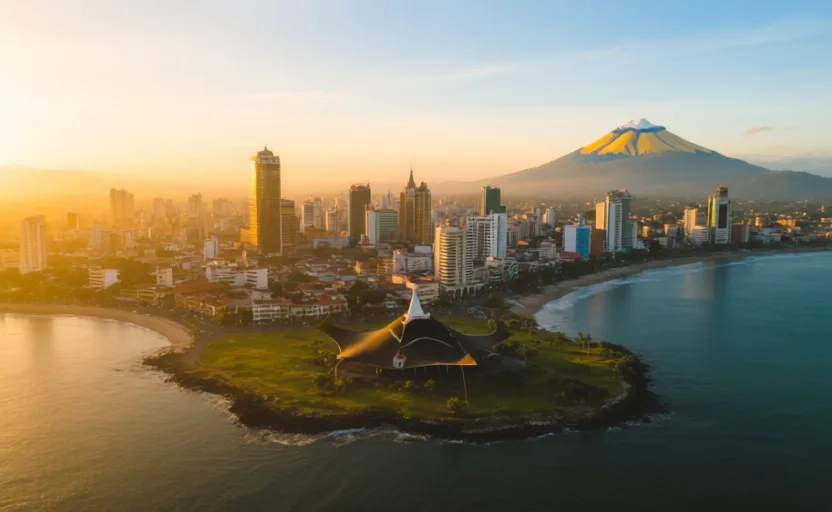 Manta · AI city illustration · Artistic impression
City · Latin America
Manta
Saved in this browser — no account needed. Sign in later and it comes with you.
Where it is
Manta is a Pacific port straddling a coast that sits almost on the Equator, yet its climate is arid rather than tropical. The Humboldt Current runs cold along this shore, so the city is cloudy and hot for most of the year and rain is erratic, confined largely to January to April and heaviest when the current weakens in El Niño years. The ground is low, a few metres above the sea. A coast with little rain helps explain a city built on shipping, fishing and trade rather than farming.
The land and water around it
The Manabí coastcoast
A shore with long beaches, strong surf at San Lorenzo and steady wind at Santa Marianita, which draws kitesurfers. Manta’s harbour on it has grown into Ecuador’s largest seaport.
The Humboldt Currentclimate
Cold water offshore gives Manta a hot desert climate despite its latitude. Rain arrives mainly in El Niño years, when the current weakens.
Its history, in short
Manta’s story begins before Europeans: it was a trading post of the Manta, or Manteños, people, and the name of the modern city comes from them. In 1735 the French geodesic mission led by Charles Marie de La Condamine landed here to measure the position of the Equator, and from Manta he set off inland to Quito. The port grew to be the largest seaport in Ecuador and the base of a fishing economy whose main product became tuna, canned and sent to Europe and the United States. Cooking oils, cleaning products and other manufacturing also settled in the city. From 1999 to 2009 the nearby air base was used by United States forces for anti-narcotics surveillance flights, and the lease was not renewed by the Ecuadorian government. Today Manta is the largest city in Manabí Province and the seventh largest in Ecuador, with 258,697 people at the 2022 census, and cruise ships call at its harbour.
Timeline
Dates are shown on a timeline rather than as changing shapes on the map. The globe draws modern boundaries only, and tinting a modern outline to stand for a historical one would state something we cannot source.
Post-classical world
Pre-Columbian era
A trading post of the Manteños
Long before Spanish arrival, the Manta people used the site as a trading post. Their name was passed on to the modern city.
Approximate dateWikipedia
Early modern & oceanic
Early 17th century
Montecristi founded nearby
The small town of Montecristi, a short way along the coast, was founded and became known for weaving, the original home of what the world calls Panama hats.
Approximate dateWikipedia1735
La Condamine lands
The leader of the French mission to measure the Equator used Manta as his port of arrival, then travelled inland to Quito.
Well attestedWikipedia
Contemporary
1999–2009
Manta Air Base
United States air forces used the Eloy Alfaro air base for surveillance and anti-narcotics operations against Colombian trafficking networks. The Ecuadorian government chose not to renew the lease.
Well attestedWikipedia2022
Census
Manta counted 258,697 residents, making it the largest city of Manabí and the seventh largest in the country.
Well attestedWikipedia
Places that carry meaning
Port of MantaPre-Columbian to today
The largest seaport in Ecuador. It is the base for tuna canning and processing and a stop for cruise ships crossing the south Pacific.
MontecristiEarly 17th century
A small colonial town near Manta known for wickerwork and straw-hat weaving. Despite the name, the Panama hat was historically made in Ecuador.
Central Bank MuseumModern
A museum in the city holding an important collection of pre-Columbian craft, a reminder of the coast’s long history before the port.
Languages here
Places are usually multilingual. This lists what is actually spoken, not one language per border.
SpanishRomance family
The language of the city and of Ecuador’s official life.
About 93 per cent of Ecuadorians speak Spanish as a first language. Manta’s film and theatre festivals and its coastal economy are conducted largely in it.
Kichwa and other native languagesQuechuan family
Recognised national languages, mostly spoken far from this coast.
Ecuador officially recognises 13 native languages, including Quechua and Shuar, but they are spoken mainly in the Andes and the Amazon rather than on the Manabí coast.
Learn the language here
- 1Understand which languages are spoken hereManta is multilingual. Start with which languages are used, by whom, and for what — the phrase list only covers one of them.Written by Globe Quest
- 2Learn 12 phrasesCurated everyday phrases for Manta, with audio and a written form.Written by Globe Quest
- 3Say them out loudSpeaking practice with pronunciation feedback, one phrase at a time.Globe Quest material, your own additions
- 4Come back to themSpaced review, so what you learned this week is still there next month.Written by Globe Quest
Check yourself
Why is Manta arid although it lies on the Equator?
The Humboldt Current cools the coast and keeps rain scarce
The cold Humboldt Current gives the coast a hot, cloudy and mostly dry climate. Rain comes mainly when the current weakens during El Niño years.
What is Manta’s best-known industry?
Tuna fishing and canning
The port is the base of Ecuador’s tuna industry, with large processing plants exporting canned tuna to Europe and the United States.
Worth arguing about
- A foreign military base operated here for ten years before the lease was dropped. Who benefits when a port city hosts another country’s forces?
- The straw hat is named after Panama but made in Ecuador. How do products end up with names that point away from where they come from?
Sources
- Wikipedia · Manta, EcuadorWikipedia · encyclopedia · checked 2026-11-24
- Wikipedia · EcuadorWikipedia · encyclopedia · checked 2026-11-24
Reviewed by Globe Quest editorial on 2026-11-24. Drafted with AI assistance and checked against the sources above before publication.