 Globe Quest
 Human Quest · LearningSign in
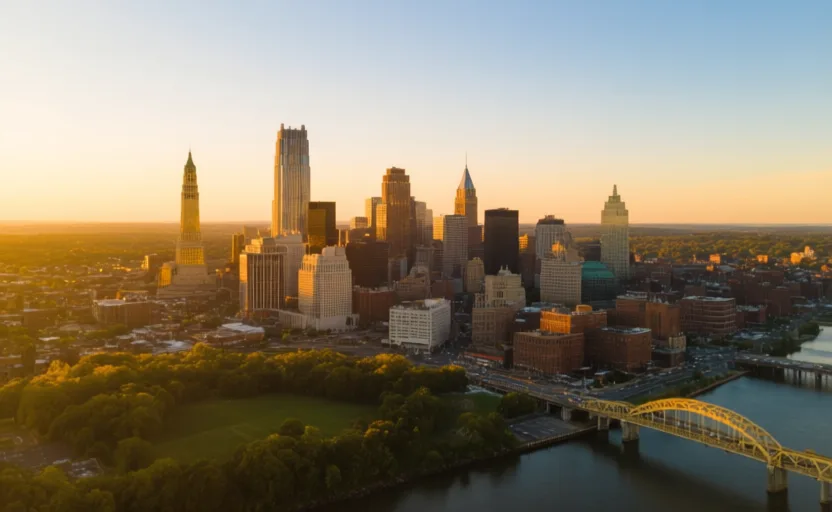 Yonkers · AI city illustration · Artistic impression
City · North America
Yonkers
Saved in this browser — no account needed. Sign in later and it comes with you.
Where it is
Yonkers occupies the first slice of land north of New York City: the Bronx lies to its south, the Hudson River forms its western edge, and the Bronx River separates it from Mount Vernon and the other suburbs on the east. The ground rises from near sea level on the Hudson shore to hills about 416 feet high, and the city calls itself the City of Seven Hills. Of its roughly 20 square miles, about two are water. The Saw Mill River runs down from the north and enters the Hudson at Getty Square, the old downtown.
The land and water around it
The Hudson River shoreriver
The western boundary of the city. Farm produce went by river to New York, and the first factories and the elevator works stood on the riverfront, where the Saw Mill River joins it.
The Saw Mill Riverriver
The stream beside which the Native American village of Nappeckamack stood, later a power source for mills, and in places a buried channel beneath parking lots. Parts have since been uncovered again, a process called daylighting, to restore habitat.
The seven hillshills
The city's nickname comes from seven hills, among them Park Hill, Nodine Hill and Church Hill. The spire of Sacred Heart Church, at 416 feet above sea level, is visible from Long Island, the city and New Jersey.
Its history, in short
The land was a Dutch estate before it was a city. In 1645 Adriaen van der Donck, known as the Jonkheer, received the 24,000-acre grant of Colen Donck, and his title, shortened to Jonker, gave the place its name. He built a sawmill where the Nepperhan Creek meets the Hudson, close to where the Philipse family later built Philipse Manor Hall, around 1682. Farming, shipped to Manhattan by river, came first; then water power brought factories. In 1853 Elisha Otis invented a safety elevator, and the Otis company opened the first elevator factory anywhere, on the riverfront, while the Alexander Smith carpet works grew to employ over 4,000 people. Yonkers became a village in 1854 and a city in 1872. In 1898, when Brooklyn, Queens and Staten Island voted to join New York City, Yonkers and Mount Vernon were left out, which is why some residents call it the sixth borough. In the 1980s the city became known for a long legal struggle with the NAACP and the federal government over where subsidised housing was built.
Timeline
Dates are shown on a timeline rather than as changing shapes on the map. The globe draws modern boundaries only, and tinting a modern outline to stand for a historical one would state something we cannot source.
Early modern & oceanic
July 1645
Colen Donck
Adriaen van der Donck is granted the 24,000-acre estate that stretched twelve miles north from the present Manhattan–Bronx border. His honorific, Jonkheer, becomes Yonkers.
Well attestedWikipediac. 1682
Philipse Manor Hall
Workers, white and enslaved, build the original structure for the wealthy Dutchman Frederick Philipse, whose estate came to include the Bronx, Yonkers and much of southern Westchester County.
Approximate dateWikipedia
Industrial & imperial
1853
The safety elevator
Elisha Otis devises a safe elevator, and his company starts up the first factory in the world to build elevators, beside the Hudson.
Well attestedWikipedia1854 and 1872
Village, then city
The Village of Yonkers is incorporated in 1854, and Yonkers becomes a city in 1872.
Well attestedWikipedia1898
The merger that missed it
A referendum on joining New York City passes in Brooklyn, Queens and Staten Island, but Yonkers and neighbouring Mount Vernon are not included and remain independent.
Well attestedWikipedia
Contemporary
1980
United States v. Yonkers
The NAACP and the federal government sue the city and its board of education. At issue is the city's concentration of subsidised housing in already poor western neighbourhoods; the city had been warned about this in 1971.
Well attestedWikipedia2020
Highest census count
The 2020 census counts 211,569, the highest in Yonkers's history and enough to overtake Rochester as the third-largest city in New York State.
Well attestedWikipedia
Places that carry meaning
Philipse Manor Hallc. 1682
A state historic site near the mouth of the Saw Mill River. It served as the first village hall and city hall from 1868 to about 1906, and a Sailors and Soldiers Memorial dedicated in 1891 stands on its grounds.
Getty Squarehistoric downtown
The old downtown and civic centre, where the Saw Mill River reaches the Hudson and where much of southwest Yonkers grew along rail and trolley lines.
The Alexander Smith carpet lofts19th century
Two former loft buildings of the carpet company on Nepperhan Avenue now house the YoHo Artist Community. In its day the company was counted among the leading carpet makers anywhere.
Languages here
Places are usually multilingual. This lists what is actually spoken, not one language per border.
EnglishGermanic family
The language of public life.
Nationally about 77 percent of people speak only English at home, but in Yonkers the share is lower, since about a third of residents spoke Spanish in 2018.
SpanishRomance family
The most widely spoken language after English.
About a third of residents spoke Spanish in 2018, and Hispanic or Latino residents rose to 40 percent of the population by 2020.
ArabicSemitic family
The language of a sizeable community from the Levant.
Many residents have roots in the Levant, notably Jordan and Palestine, and Arabic is the language of that community.
AlbanianIndo-European family
The language of a sizeable community.
A sizeable Albanian population also lives in the city.
Learn the language here
- 1Understand which languages are spoken hereYonkers is multilingual. Start with which languages are used, by whom, and for what — the phrase list only covers one of them.Written by Globe Quest
- 2Learn 12 phrasesCurated everyday phrases for Yonkers, with audio and a written form.Written by Globe Quest
- 3Say them out loudSpeaking practice with pronunciation feedback, one phrase at a time.Globe Quest material, your own additions
- 4Come back to themSpaced review, so what you learned this week is still there next month.Written by Globe Quest
- 5Practise with people: Arabic practice · DohaAn in-person practice circle. It is a prepared plan and needs a host before it runs.Run by members
Check yourself
Where does the name Yonkers come from?
From the honorific of its Dutch landowner, the Jonkheer
Adriaen van der Donck, who received the Colen Donck grant in 1645, was called Jonkheer, shortened to Jonker, and the possessive Jonkers became Yonkers.
Why do some residents call Yonkers the “sixth borough”?
It borders New York City, is urban in character and was left out of the 1898 merger
The 1898 referendum passed elsewhere but Yonkers and Mount Vernon stayed independent, even though the city sits directly north of the Bronx.
Worth arguing about
- Yonkers voted in 1898 on joining New York City and stayed independent, yet it is part of the same metropolitan area. What does a city gain and lose by staying separate from a giant neighbour?
- The city's downtown has gentrified as new residential towers attract Manhattan commuters, and critics fear poorer residents will be priced out. Who should benefit from a waterfront revival?
Sources
- Wikipedia · Yonkers, New YorkWikipedia · encyclopedia · checked 2026-11-24
- Wikipedia · Languages of the United StatesWikipedia · encyclopedia · checked 2026-11-24
Reviewed by Globe Quest editorial on 2026-11-24. Drafted with AI assistance and checked against the sources above before publication.